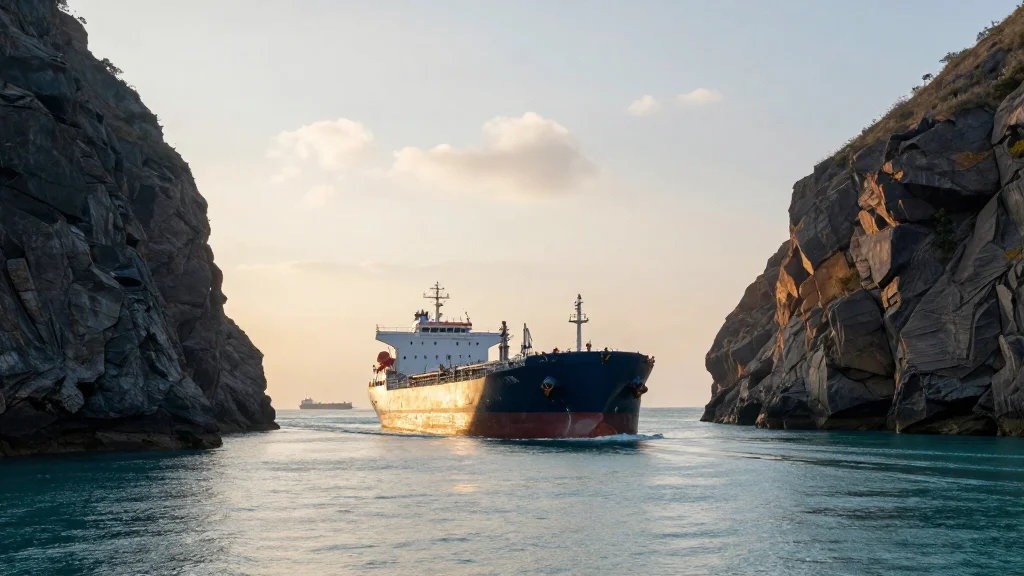
Product Tankers Exit Hormuz Amid Iran U‑turn
Companies Mentioned
Why It Matters
The limited transits highlight persistent geopolitical risk that constrains global product supplies and inflates premiums, affecting refiners and downstream markets worldwide.
Key Takeaways
- •Three clean product tankers transited Hormuz despite Iran's policy reversal
- •All three vessels flagged high sanctions risk, but carried no Iranian cargo
- •Vessels loaded naphtha or gasoil weeks earlier, now heading to Asia, Africa
- •Two additional tankers turned back, indicating uncertainty for future transits
- •April flow through Hormuz fell to 25,000 t/d, far below 300,000 t/d last year
Pulse Analysis
The Strait of Hormuz, a chokepoint for over a third of the world’s oil trade, has become a flashpoint again as Iran oscillates between diplomatic overtures and hard‑line control. After the U.S.–Iran ceasefire in early February, Tehran’s foreign minister signaled a temporary opening, only to have the parliamentary speaker later declare the waterway would remain closed. This policy whiplash leaves shipowners scrambling for real‑time clearance, a situation reflected by the three clean product tankers that managed to slip through on April 18 under special permission, while two others aborted their attempts.
The vessels—LR1 Navig8 Macallister, MR Akti A, and MR Torin—had been loading naphtha and gasoil weeks before the conflict escalated. Despite being rated high sanctions‑risk, none were reported to carry Iranian‑origin products, suggesting traders are leveraging non‑Iranian cargoes to maintain market flow. Their destinations span East Asia and East Africa, indicating that despite the bottleneck, demand for refined products remains robust. The turn‑back of LR1 Khairpur and LR2 Sea Condor further illustrates the operational ambiguity; even low‑sanctions‑risk tankers are hesitant to risk detention.
The market impact is immediate and pronounced. With only about 25,000 t/d of clean products exiting Hormuz in April—roughly one‑tenth of the same period last year—regional price premiums have surged to multi‑decade highs. European and Asian refiners are facing tighter spreads and may defer purchases, while traders hedge against supply shocks by locking in forward contracts. The ongoing uncertainty could prolong elevated price levels and incentivize alternative routing, such as longer voyages around the Cape of Good Hope, reshaping global product logistics for the foreseeable future.
Product tankers exit Hormuz amid Iran U‑turn
Comments
Want to join the conversation?
Loading comments...