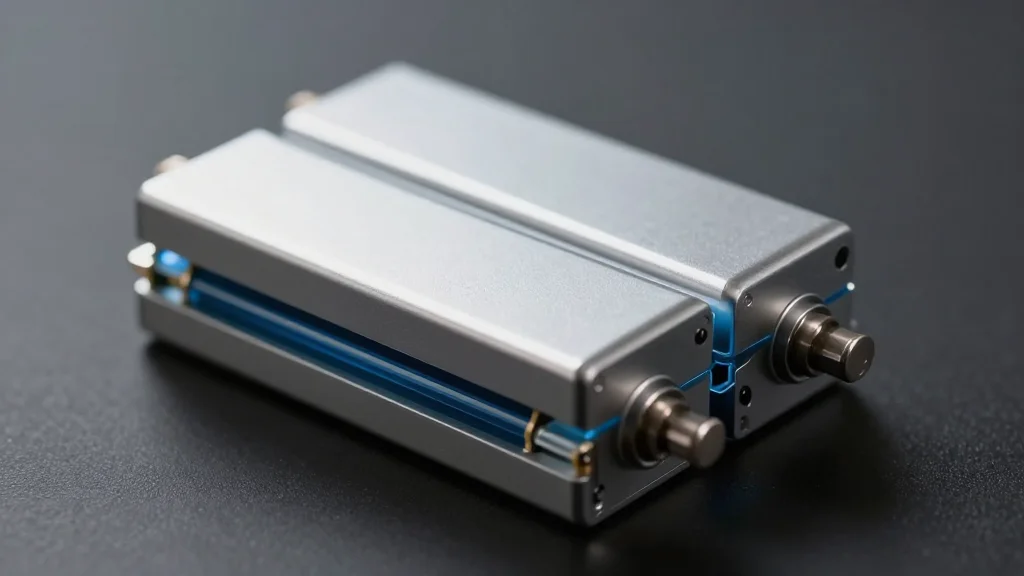
Pylontech Launches 8 MWh Storage System with 426 Wh/L Energy Density
Why It Matters
The higher energy density and cost‑saving design improve project economics, accelerating large‑scale storage adoption for renewables and AI workloads.
Key Takeaways
- •PyOcean-M9-8000 delivers 8 MWh with 426 Wh/L density.
- •Larger cells cut component count 50% and land use 38%.
- •12,000‑cycle LFP cells achieve 96.5% round‑trip efficiency.
- •Direct investment reduced >10% for 800 MWh projects.
- •Supports grid‑forming and AI data‑center workloads.
Pulse Analysis
The global energy‑storage market is racing to squeeze more power into smaller footprints as renewable penetration and data‑center demand surge. Pylontech’s full‑stack approach—designing cells, BMS, and system architecture in‑house—allows it to push energy density to 426 Wh/L, a notable jump over typical LFP modules that hover around 250‑300 Wh/L. By leveraging larger 601 Ah cells and liquid‑cooling, the PyOcean platform reduces the number of modules, simplifying thermal management and improving reliability, which is critical for grid‑forming applications that must meet stringent Chinese standards.
From a project economics perspective, the claimed 38% reduction in land use and a 10% cut in direct investment for an 800 MWh deployment translate into faster ROI and lower barriers for utilities and independent power producers. The 96.5% round‑trip efficiency and over 12,000 cycle life further extend the asset’s revenue window, making it attractive for long‑duration storage that balances intermittent solar output. Moreover, the system’s low‑noise, low‑heat operation and three‑layer fire protection address safety concerns that have historically slowed large‑scale battery rollouts.
Strategically, Pylontech’s announcement positions it against rivals such as CATL and BYD, which are also pursuing high‑density, cost‑effective solutions. The company’s focus on AI data‑center (AIDC) workloads—where millisecond response and virtual inertia are paramount—opens a niche that blends renewable storage with high‑performance computing. Partnerships forged at SNEC hint at rapid market penetration, and with deliveries expected in Q3 2026, the PyOcean series could become a benchmark for next‑generation grid‑side storage in both China and export markets.
Pylontech launches 8 MWh storage system with 426 Wh/L energy density
Comments
Want to join the conversation?
Loading comments...