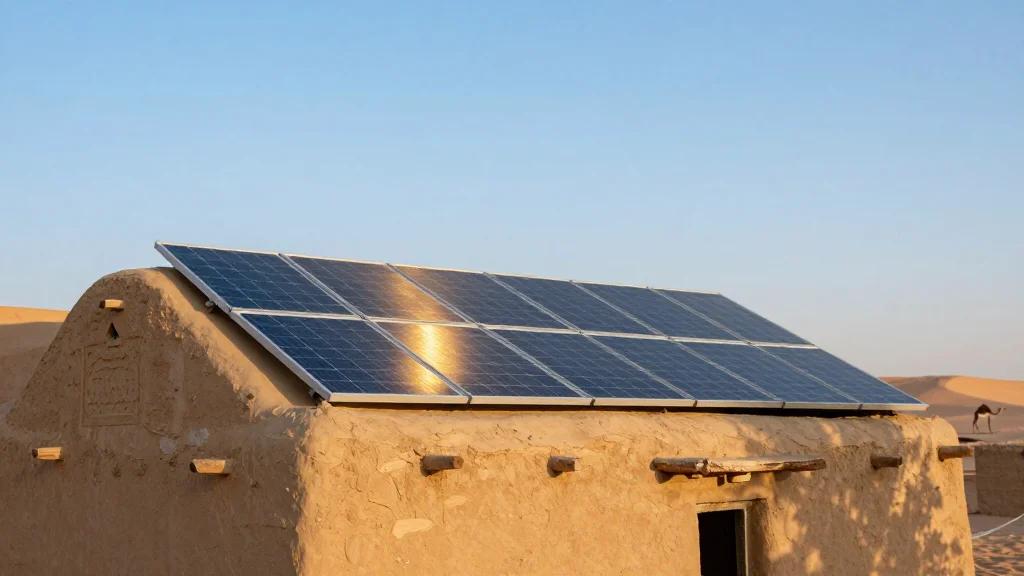
Rajasthan Emerges as Third-Largest State in Rooftop Solar Installation
Why It Matters
The surge demonstrates how targeted subsidies and streamlined financing can accelerate rooftop solar adoption, reducing grid load and advancing India’s climate goals while creating a replicable model for other states.
Key Takeaways
- •Rajasthan installed 2,090 MW rooftop solar capacity, third in India
- •Daily, 675‑700 consumers adopt solar, adding ~700 kW per day
- •PM Surya Ghar scheme funded 177,468 plants, 686 MW since 2024
- •₹78,000 subsidy (~$940) paid within 45 days to beneficiaries
- •Over $143 million transferred to 152,350 households, covering 85% of beneficiaries
Pulse Analysis
India’s rooftop solar market is gaining momentum, and Rajasthan’s recent performance underscores the effectiveness of state‑level incentives. With 2,090 MW of installed capacity, the state trails only Gujarat and Maharashtra, yet its growth rate outpaces many regions. The PM Surya Ghar scheme, launched in 2024, has been a catalyst, delivering 177,468 installations and 686 MW of power in just two years. By coupling streamlined approvals with generous subsidies, Rajasthan has created a fertile environment for both residential and commercial adopters, driving daily sign‑ups of 675‑700 new consumers.
Financial incentives are central to this expansion. Beneficiaries receive up to ₹78,000 (approximately $940) within 45 days of commissioning, and an additional ₹17,000 ($205) under the state’s free‑electricity program. To date, about $143 million has been transferred to 152,350 households, covering roughly 85% of eligible participants. These subsidies have enabled over 143,965 consumers to reduce their electricity bills to zero, illustrating the direct economic benefit of rooftop solar and reinforcing demand for further rollout.
The broader implications extend beyond cost savings. By decentralizing generation, Rajasthan eases pressure on the central grid, mitigates transmission losses, and contributes to India’s 2030 renewable‑energy targets. The state’s success offers a blueprint for other regions seeking to replicate rapid adoption through policy certainty and financial support. As installation numbers are projected to exceed 100,000 in the current fiscal half, investors and equipment manufacturers can anticipate sustained demand, while policymakers gain evidence that well‑designed subsidy schemes can accelerate the nation’s clean‑energy transition.
Rajasthan emerges as third-largest state in rooftop solar installation
Comments
Want to join the conversation?
Loading comments...