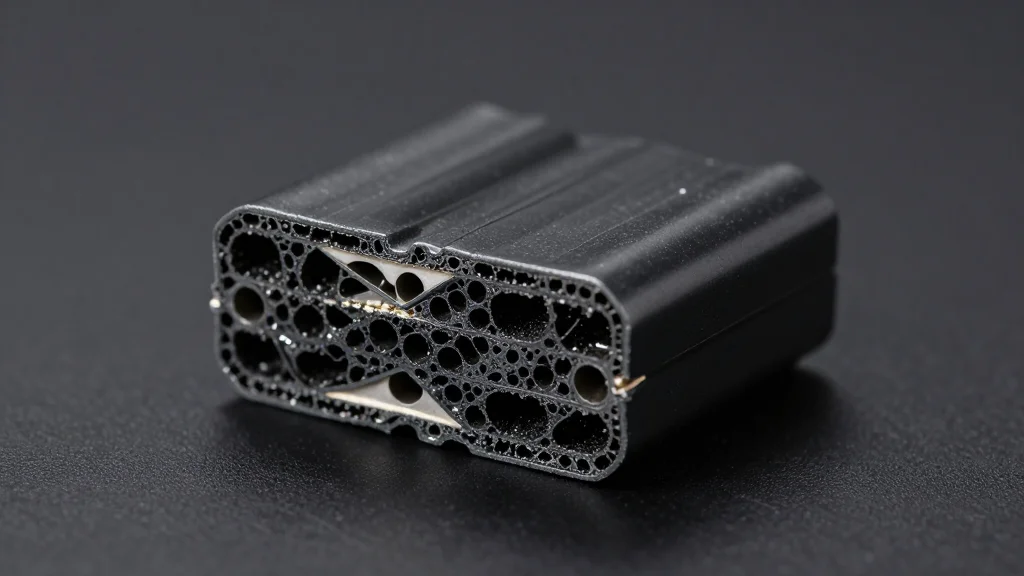
Recent Challenges and Optimization Strategies of Thick Electrodes in High‐Energy‐Density Batteries
Why It Matters
Thick electrodes promise higher areal energy density, a key lever for extending EV range and lowering storage costs, but only if transport and mechanical issues are resolved. Their successful deployment could reshape battery economics and accelerate clean‑energy adoption.
Key Takeaways
- •Reducing tortuosity accelerates ion diffusion in thick electrodes
- •Engineered pore structures balance electrolyte access and mechanical strength
- •Dry‑process fabrication cuts binder usage, improving energy density
- •Crack‑suppression coatings maintain electrode integrity during cycling
Pulse Analysis
The relentless push for longer electric‑vehicle ranges and more affordable grid‑scale storage has placed areal energy density at the forefront of battery research. Traditional thin‑film electrodes cap the amount of active material per unit area, limiting total capacity. Thick electrodes—often exceeding 200 µm—offer a straightforward route to pack more lithium‑ion active material into the same footprint, potentially increasing cell energy by 30‑50 %. However, the added thickness introduces a cascade of challenges: ion pathways become tortuous, internal resistance spikes, and mechanical stresses during charge‑discharge cycles can initiate cracks that jeopardize safety and lifespan.
Researchers are converging on five strategic levers to tame these drawbacks. First, reducing tortuosity through aligned conductive networks shortens ion travel distances, mitigating polarization. Second, tailoring pore geometry—size, distribution, and connectivity—optimizes electrolyte infiltration while preserving structural rigidity. Third, adjusting thermodynamic parameters such as electrolyte composition and temperature improves ion mobility within the dense matrix. Fourth, innovative fabrication methods, especially dry‑process techniques that minimize binder and solvent use, boost volumetric energy density and simplify scaling. Finally, applying crack‑suppression coatings or gradient material designs distributes stress more evenly, extending cycle life. Recent laboratory demonstrations have shown that combining these tactics can lift areal capacities above 5 mAh cm⁻² without sacrificing rate performance.
For manufacturers, the payoff is compelling. Scaling thick‑electrode production could lower material costs per kilowatt‑hour by reducing the number of layers and simplifying cell assembly lines. Moreover, the enhanced energy density translates directly into longer driving ranges or fewer battery modules for stationary storage, improving the economics of renewable integration. As the industry refines these five optimization pathways, investors and OEMs should watch for pilot‑scale plants that integrate dry‑process roll‑to‑roll coating and in‑situ crack‑monitoring. Successful commercialization will likely trigger a new generation of high‑energy batteries that meet the dual demands of performance and durability, reinforcing the momentum toward a decarbonized energy future.
Recent Challenges and Optimization Strategies of Thick Electrodes in High‐Energy‐Density Batteries
Comments
Want to join the conversation?
Loading comments...