Redwood Materials Introduces Open-Air Grid Storage Batteries
Companies Mentioned
Why It Matters
The approach proves that low‑cost, high‑density storage can be deployed without expensive cooling, accelerating EV‑battery reuse and reducing data‑center carbon footprints. It signals a new revenue stream for battery recyclers and a scalable model for renewable‑plus‑storage projects.
Key Takeaways
- •Open‑air layout eliminates refrigeration, cutting O&M costs.
- •12 MWh of second‑life packs paired with 20 MW solar power pilot.
- •Proprietary pack manager unifies varied EV batteries into single DC stream.
- •Health‑aware algorithm cycles older packs gently, extending lifespan.
- •Crusoe plans rollout to 20 additional data centers after pilot.
Pulse Analysis
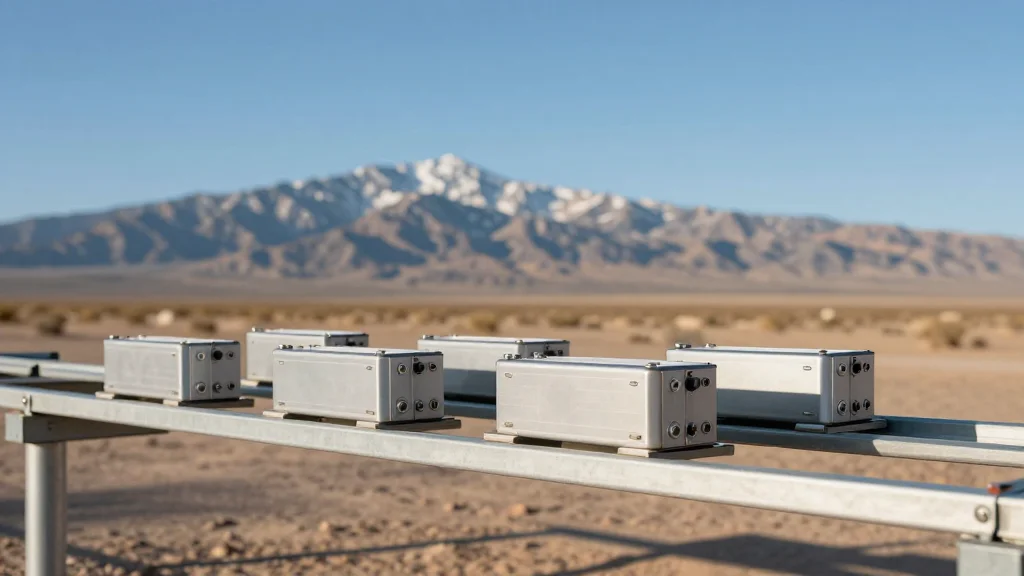
The open‑air configuration pioneered by Redwood Materials challenges conventional battery‑farm designs that rely on climate‑controlled warehouses. By mounting repurposed EV packs on elevated cable trays, the system leverages natural ventilation, sidestepping costly refrigeration units and moving parts such as fans and filters. This simplicity not only reduces capital expenditures but also improves reliability—critical for data‑center operators that demand uninterrupted power. The pilot’s integration with a 20 MW solar installation demonstrates how renewable generation and storage can be co‑located for optimal grid support.
At the heart of Redwood’s solution is a proprietary pack‑management platform that acts as a universal adapter for batteries of varying voltages, chemistries, and health states. The technology aggregates individual modules into a single DC bus, then feeds a standard inverter, simplifying system architecture. Advanced algorithms continuously monitor each pack’s state of health, dynamically balancing charge and deliberately “unbalancing” usage to protect older cells while extracting more performance from newer ones. This health‑aware cycling extends the functional life of second‑life packs, improving the economics of battery reuse and delaying the need for final recycling.
The commercial implications are significant. Data centers are among the fastest‑growing electricity consumers, and many operators are seeking greener, cost‑effective backup solutions. Redwood’s model offers a turnkey, low‑maintenance storage option that can be scaled quickly across multiple sites, as evidenced by Crusoe’s commitment to deploy similar systems at 20 more facilities. By turning retired EV batteries into grid‑scale assets, the approach reduces waste, lowers emissions, and creates a new revenue stream for recyclers, positioning the company at the intersection of the circular economy and renewable‑energy integration.
Redwood Materials introduces open-air grid storage batteries
Comments
Want to join the conversation?
Loading comments...