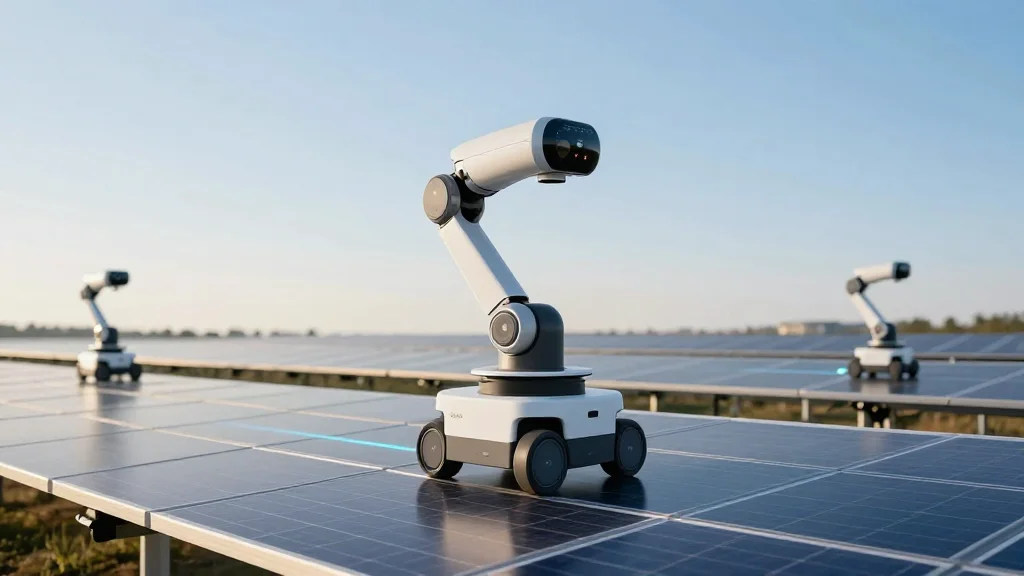
Remote Control Robots that Talk to Each Other Are Building Solar Farms in Australia
Companies Mentioned
Why It Matters
Remote‑controlled, collaborative robots promise to lower the cost of utility‑scale solar and address chronic labor shortages, accelerating the transition to cheaper renewable energy.
Key Takeaways
- •Luminous deployed remote‑controlled robots on 350 MW Culcairn solar farm.
- •Robots create shared digital twin of panel placement via GPS mapping.
- •Fleet autonomy reduces labor needs, speeds installation across 500 MW+ projects.
- •ARENA aims to cut large‑scale solar cost below $20 per MWh.
- •Remote monitoring enables Boston‑based control of Australian construction sites.
Pulse Analysis
The solar‑construction sector is turning to robotics to overcome a perfect storm of labor scarcity, rising material costs, and the need for faster project delivery. Luminous Robotics, a Boston‑based firm, has rolled out a "synchronised heterogeneous fleet autonomy" platform that links dozens of panel‑installing units across a site. By allowing each robot to share sensor data and a continuously updated digital twin, the fleet can coordinate movements, avoid collisions, and adapt to terrain variations without human intervention. This level of coordination mirrors consumer‑grade robot vacuums but scales to megawatt‑size projects, delivering precision placement and real‑time as‑built documentation.
Technical innovation lies in the robots' ability to map a solar field in three dimensions, tagging every panel with before‑and‑after imagery and GPS coordinates. The shared map captures topography, trench locations, and grading, enabling developers to verify construction against design specifications instantly. Remote operators in Boston can monitor the fleet via a secure interface, stepping in only when safety technicians deem it necessary. This hybrid autonomy model satisfies strict construction safety guidelines while leveraging the speed and consistency of machines, reducing the need for three to four human workers per robot.
Industry analysts see this approach as a catalyst for achieving the Australian Renewable Energy Agency's cost target of under $20 per megawatt‑hour for large‑scale solar. By cutting labor expenses and compressing installation timelines, developers can bring projects to market faster and at lower capital cost. As Luminous scales its fleet to 500 MW+ sites and competitors like Built Robotics and Nexttracker test complementary technologies, the broader renewable market is likely to see a surge in robot‑driven construction, reshaping supply chains and accelerating the global clean‑energy transition.
Remote control robots that talk to each other are building solar farms in Australia
Comments
Want to join the conversation?
Loading comments...