
Why It Matters
The shift accelerates Africa’s industrialization, cuts reliance on expensive fuel imports, and positions the continent as a pivotal player in the global clean‑energy transition, attracting capital to bankable projects.
Key Takeaways
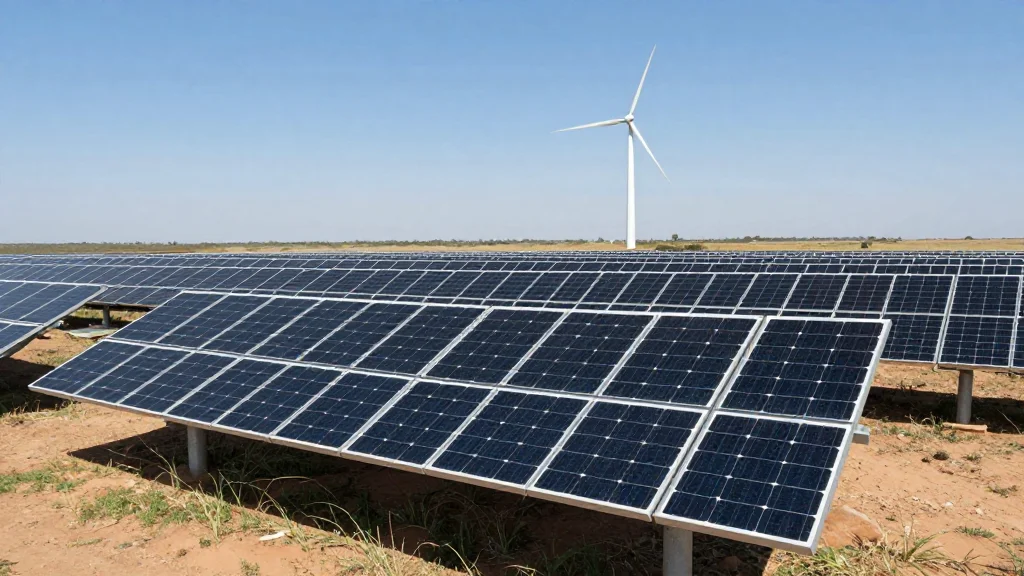
- •Solar projects account for over half of Africa's 2025 energy announcements.
- •Utility‑scale solar costs fell ~90% since 2010, driving rapid adoption.
- •China‑Zambia $1.5 bn deal mixes solar, wind, and coal capacity.
- •Distributed solar and batteries now power mines, factories, and telecom towers.
- •Africa’s renewable resources place the continent at the global transition’s core.
Pulse Analysis
Africa’s renewable boom reflects a confluence of falling technology costs and urgent energy needs. Since 2010, utility‑scale solar prices have dropped nearly 90%, while onshore wind has become about 70% cheaper, reshaping the economics of new power generation. These cost curves, combined with abundant solar irradiance and wind corridors, enable projects to be built faster and at lower capital outlay than traditional coal or large‑hydro schemes, directly addressing chronic grid unreliability and soaring fuel import bills caused by geopolitical tensions.
Investors are responding with unprecedented scale. The continent logged 322 announced energy projects for 2025, 173 of which are solar, and the Africa Solar Industry Association recorded 23.4 GW of operational solar capacity. Yet Chinese export data hint at a hidden layer of growth, with 58.1 GW of panels shipped since 2017, suggesting on‑the‑ground installations outpace official metrics. The $1.5 bn China‑Zambia pact, spanning solar, wind, and coal, illustrates a pragmatic mix: renewables for rapid expansion and coal for baseload stability, a pattern likely to repeat as nations balance climate goals with reliable supply.
The implications for the broader market are profound. Renewable assets are now the most bankable projects in Africa, drawing interest from sovereign wealth funds, development banks, and private equity seeking stable returns. Distributed solar and battery systems are bypassing legacy utilities, powering mines, factories, telecom towers, and homes directly. As Africa cements its role at the heart of the global energy transition, stakeholders who embed flexibility, local partnerships, and climate‑aligned financing will capture the upside of a continent poised for sustained, clean‑energy‑driven growth.
Renewable Energy is Surging in Africa
Comments
Want to join the conversation?
Loading comments...