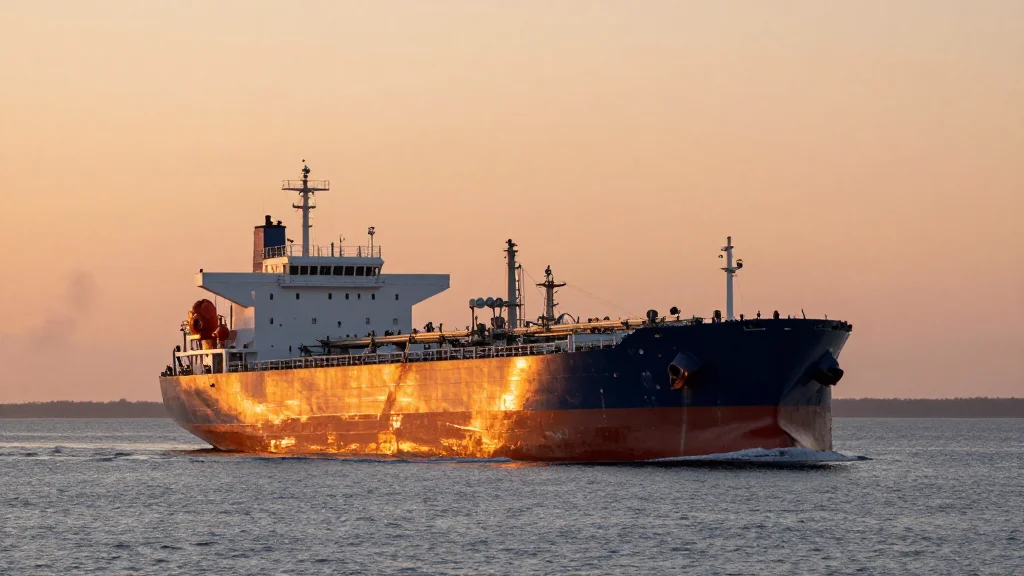
Renewed US‑Iran Strikes Push Oil to $92 a Barrel, Threaten Hormuz Supply

Companies Mentioned
Why It Matters
The Strait of Hormuz is a chokepoint for roughly 20% of daily global oil shipments. Its closure not only lifts crude prices but also forces governments to tap strategic reserves, tightening fiscal space and amplifying inflation risks. Prolonged disruption could reshape trade routes, accelerate investment in alternative supply lines, and influence policy decisions on energy security and climate transition. For investors, the heightened volatility underscores the importance of exposure to inflation‑hedging assets and companies with pricing power. For policymakers, the episode highlights the fragility of supply chains that depend on narrow maritime passages and the need for diversified energy sources to mitigate geopolitical risk.
Key Takeaways
- •US‑Iran airstrikes close the Strait of Hormuz, cutting 12‑13 million barrels per day from supply
- •WTI crude rises 4% to $92 a barrel; Brent climbs to $97 amid renewed strikes
- •Chevron CEO Mike Wirth warns of dwindling market buffers and upward price pressure into June‑July
- •Dallas Fed President Lorie Logan cautions that global oil consumption may need to fall if flows stay restricted
- •Strategic reserves and limited U.S. production capacity (≈250k bpd increase) constrain the market’s ability to offset the loss
Pulse Analysis
The latest flare‑up in the Iran‑US conflict has turned a geopolitical flashpoint into a tangible market shock. While the immediate price jump is evident, the deeper risk lies in the erosion of inventory buffers that have insulated markets since the 2022‑23 supply crunch. JPMorgan’s stress‑test shows that global commercial stocks could dip below operational thresholds by June if the strait remains closed, a scenario that would force a rapid drawdown of strategic reserves and could trigger a second‑round price surge.
Historically, oil markets have rebounded once chokepoints reopened, but the current environment differs. Production growth is throttled by capital discipline, labor shortages and pipeline bottlenecks, meaning the supply side cannot quickly compensate for a 10% demand shortfall. This structural rigidity, combined with heightened inflation sensitivity—where a 10% oil price rise adds 0.2 points to headline PCE—creates a feedback loop that could prolong higher price levels.
For the energy sector, the crisis accelerates a strategic pivot. Companies like Chevron are likely to prioritize higher‑margin fields and invest in logistics that bypass vulnerable chokepoints, while investors will gravitate toward assets that can pass cost increases onto customers. Meanwhile, policymakers may be forced to reconsider the balance between short‑term security measures—such as expanding strategic reserves—and longer‑term diversification, including domestic production incentives and renewable integration. The next month will be decisive: a diplomatic breakthrough could restore flows and ease pressure, but a protracted stalemate would cement a new, higher‑price baseline for global oil markets.
Renewed US‑Iran Strikes Push Oil to $92 a Barrel, Threaten Hormuz Supply
Comments
Want to join the conversation?
Loading comments...