Report Labels Unbundling of Eskom as ‘Most Important Economic Reform Since 1994'
Companies Mentioned

Why It Matters
Unbundling Eskom could unlock private capital, improve grid reliability and lower electricity costs, directly influencing South Africa’s economic competitiveness and climate goals.
Key Takeaways
- •Unbundling Eskom deemed biggest reform since 1994
- •Report urges competitive electricity market to attract capital
- •Goal: secure, affordable, green power for South Africa
- •SAETA includes major traders like Africa GreenCo, Investec
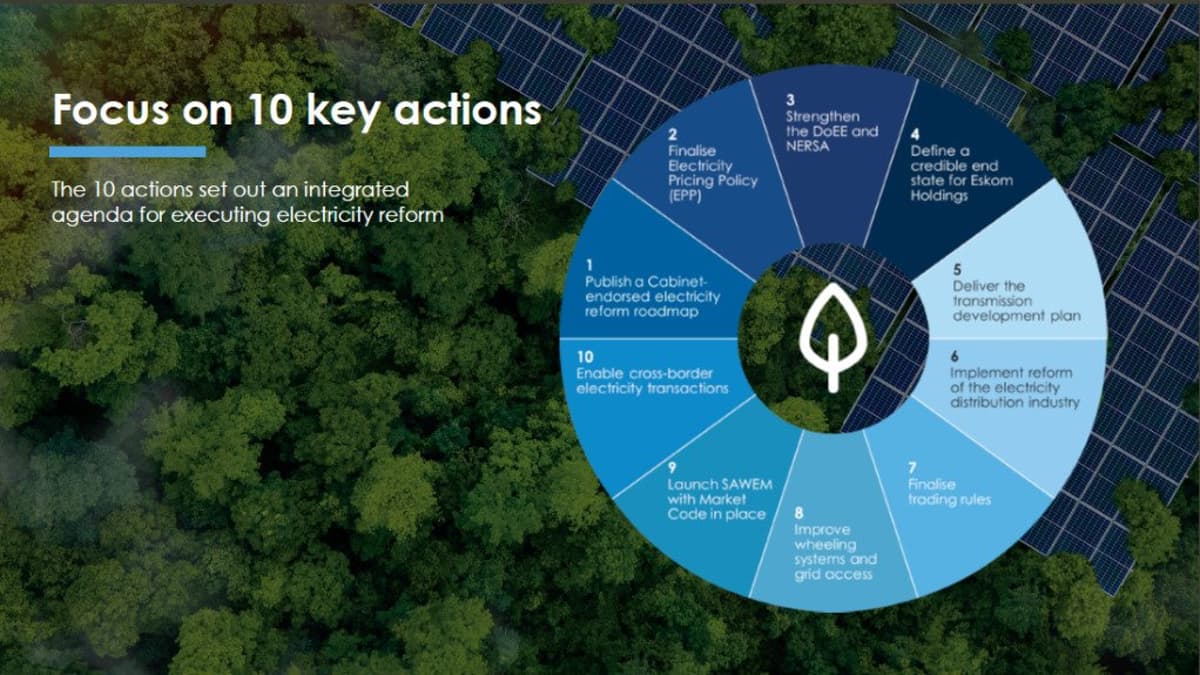
- •Krutham authored “Policy to power” with ten action steps
Pulse Analysis
South Africa’s power crisis has long been tied to Eskom’s monolithic structure, which combines generation, transmission and distribution under a single, financially strained entity. The SAETA report highlights that unbundling—splitting these functions into independent, market‑driven units—mirrors reforms that revitalized utilities in Europe and North America. By separating assets, the market can introduce transparent pricing, competition, and clearer accountability, addressing chronic load‑shedding and the country’s over‑reliance on coal.
For investors, the prospect of a liberalised electricity market is a catalyst for fresh capital inflows. Private financiers are more likely to fund new renewable projects when they can contract directly with generation firms rather than a state‑owned monopoly. The report’s ten‑action roadmap outlines regulatory safeguards, grid‑access rules, and incentives that would de‑risk investments, making South Africa a more attractive destination for green finance. SAETA’s coalition of traders and financiers signals that industry players are ready to mobilise resources once a clear, competitive framework is in place.
Beyond the balance sheet, unbundling carries macro‑economic weight. Reliable, affordable power is a prerequisite for manufacturing growth, digitalisation and job creation. By fostering competition, the reform could drive down tariffs, improve service quality, and accelerate the transition to low‑carbon generation. Policymakers therefore face a strategic choice: maintain the status quo or adopt the reforms championed by SAETA, which promise to align South Africa’s energy system with global sustainability trends while bolstering economic resilience.
Report labels unbundling of Eskom as ‘most important economic reform since 1994'


Comments
Want to join the conversation?
Loading comments...