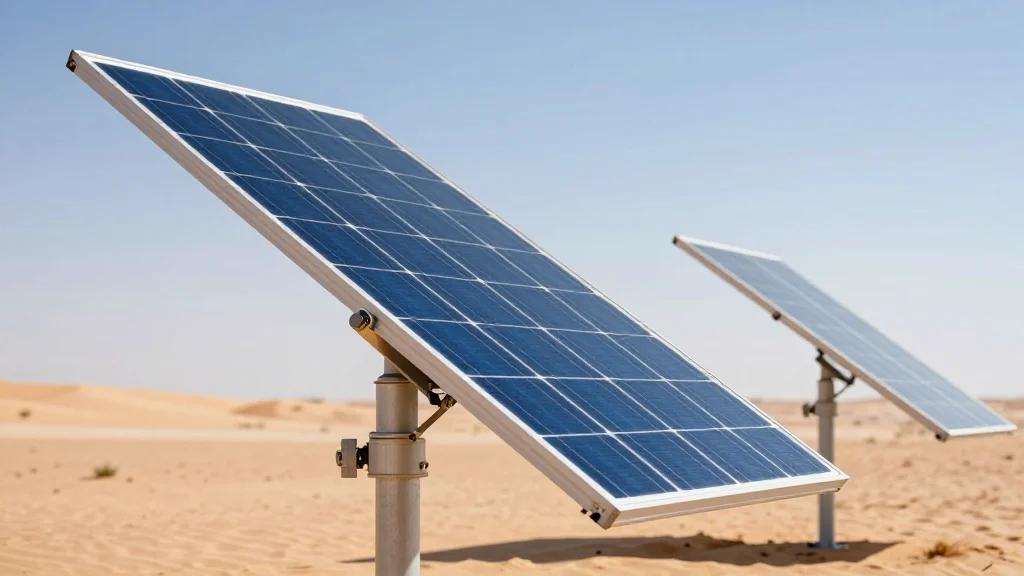
Researchers Find Higher UV Degradation in Tracker-Based PV Systems
Why It Matters
Higher UV‑induced degradation in tracker‑based farms erodes energy yield and project economics, prompting the industry to rethink testing standards and system design for harsh climates.
Key Takeaways
- •Trackers receive up to 1.5× more UV than fixed‑tilt
- •UV‑driven degradation can reach 0.35% per year on trackers
- •Tropical and desert sites show highest module stress
- •IEC 61215 UV dose underestimates field exposure by orders
- •Climate‑specific testing required for reliable PV qualification
Pulse Analysis
The UNSW team’s new UV irradiance model fills a critical gap in photovoltaic reliability research by quantifying how tilt orientation and local atmosphere shape long‑term module wear. By integrating satellite‑derived ozone, aerosol, and cloud data with precise tilt geometry, the model predicts surface UV doses ranging from under 30 W/m² at high latitudes to more than 80 W/m² in arid zones. This granularity enables engineers to forecast degradation pathways that generic accelerated tests miss, especially for emerging high‑efficiency cell architectures that are more UV‑sensitive.
In practical terms, the study shows that single‑axis trackers, prized for boosting daily energy capture, also amplify UV exposure. In desert installations, trackers can absorb up to 1.5 times the UV flux of fixed‑tilt arrays, translating to degradation rates nearing 0.35 % per year—almost double the 0.25 % observed for static systems. Over a 25‑year project life, this disparity can shave several percentage points off the expected output, directly affecting levelized cost of electricity (LCOE) calculations and investor returns. Developers operating in high‑irradiance markets must therefore weigh the performance gains of tracking against the accelerated aging risk.
The implications extend to standards bodies and manufacturers. IEC 61215’s prescribed 15 kWh/m² UV dose can be reached in less than two months in the harshest climates, meaning current qualification tests underrepresent real‑world stress by orders of magnitude. Industry stakeholders are urged to adopt climate‑specific testing regimes, incorporate the UNSW UV model into design software, and consider enhanced protective coatings or module technologies that mitigate photodegradation. Aligning accelerated testing with field‑derived UV exposure will improve reliability forecasts, reduce warranty claims, and support the broader goal of sustainable solar deployment across diverse environments.
Researchers find higher UV degradation in tracker-based PV systems
Comments
Want to join the conversation?
Loading comments...