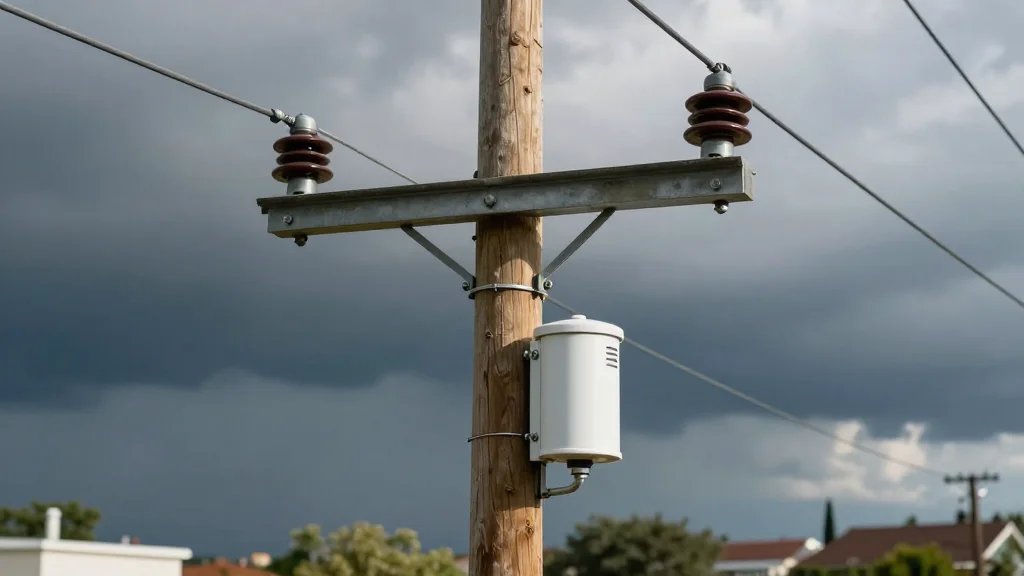
Resilient Grid Design Can Change What Happens when Storms Hit
Why It Matters
By shifting from reactive repairs to proactive, automated fault management, utilities can cut outage durations and associated costs, strengthening reliability for customers and investors alike.
Key Takeaways
- •Fault discrimination reclosers keep more customers powered during storms.
- •Automated underground restoration restores service in under a minute.
- •Distributed intelligence enables autonomous fault isolation without central commands.
- •Targeted grid‑edge automation reduces crew dispatch and restoration costs.
- •Aging distribution assets drive $67 billion annual outage losses.
Pulse Analysis
The United States loses roughly $67 billion each year to power outages, with weather accounting for about 80 % of major incidents. While utilities have improved crew coordination and vegetation management, the underlying distribution system remains built for a less hostile environment. Decades‑old overhead laterals and underground circuits are vulnerable to wind, ice and flood, turning storms into costly, prolonged blackouts. This structural mismatch explains why better preparation alone has not translated into measurable reductions in outage duration or economic loss.
Emerging grid‑edge automation offers a pragmatic path to resilience without a full system overhaul. Fault‑discriminating reclosers on overhead laterals can automatically clear transient faults, keeping customers energized and freeing crews for critical repairs. For underground residential loops, automated isolation and rapid re‑energization can restore power in under a minute, dramatically cutting restoration time. Distributed intelligence pushes decision‑making to the edge, allowing devices to coordinate autonomously even when central communications falter. By deploying these technologies where outage frequency and duration are highest, utilities can shrink the costly react‑and‑repair cycle.
Adoption is gaining traction as regulators and investors demand higher reliability metrics. Utilities that prioritize targeted automation can improve their performance indices, lower outage‑related penalties, and enhance shareholder value. Moreover, the modular nature of these solutions aligns with budget constraints, enabling incremental upgrades rather than massive capital projects. As climate change intensifies storm frequency, the industry is likely to standardize fault discrimination, automated restoration and edge intelligence as core components of a modern, resilient distribution network. The result: a grid that not only survives storms but recovers swiftly.
Resilient grid design can change what happens when storms hit
Comments
Want to join the conversation?
Loading comments...