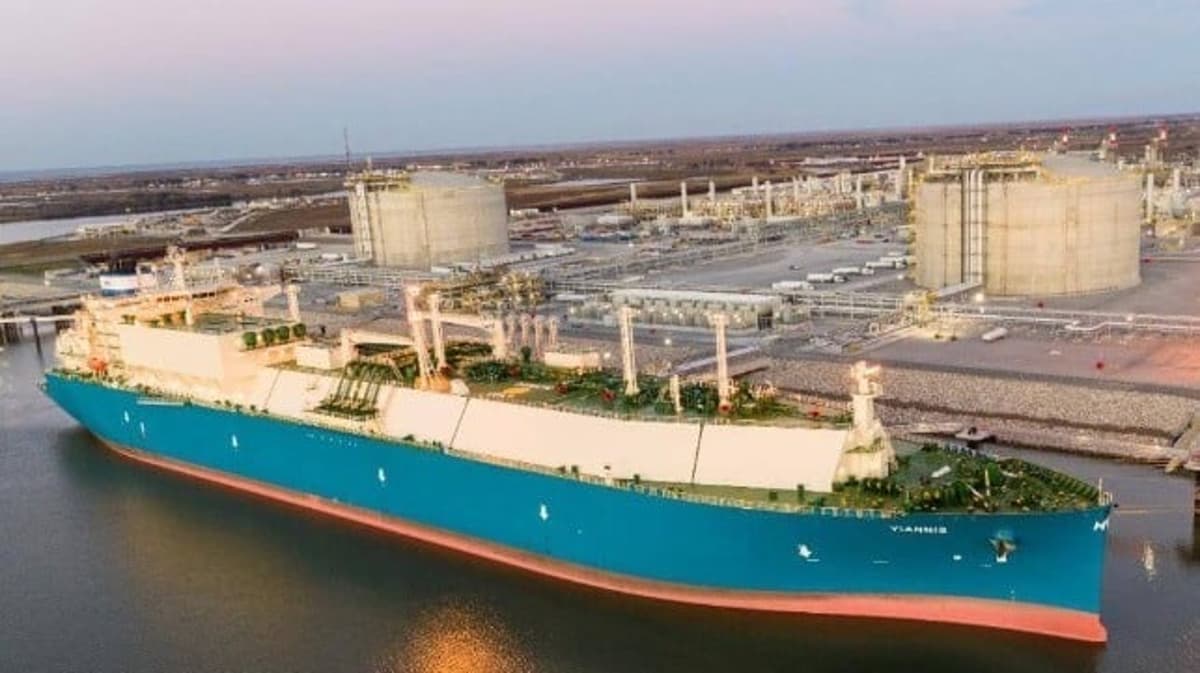
Riding the LNG Wave
Companies Mentioned
Why It Matters
The surge in LNG capacity offers a near‑term pathway for emissions‑intensive sectors to meet climate targets while diversifying energy supply, and it reshapes global trade flows toward North America. Its growing share also strengthens U.S. geopolitical leverage in the energy market.
Key Takeaways
- •U.S. LNG projects raise global share to 33% by 2030
- •LNG cuts CO₂ emissions 30% versus heavy fuel oil
- •LR completed first major LNG cruise ship drydocks in Europe
- •TOTE’s Clean Jacksonville barge performed 400+ LNG bunkering operations
- •Chevron’s Gorgon Stage 3 and Leviathan add billions cubic feet
Pulse Analysis
The 2025 supply jump reflects a strategic pivot toward liquefied natural gas as the bridge fuel for a low‑carbon future. North America’s robust project pipeline—spanning Louisiana LNG, Corpus Christi Trains 8 & 9, CP2 phase 1 and others—has lifted U.S. market share from roughly 25% to an anticipated 33% by decade’s end. This expansion aligns with rising Asian demand, where new import terminals are being built to accommodate the cleaner‑burning fuel, and it offers a hedge against volatile oil prices while delivering a tangible emissions advantage.
Maritime stakeholders are translating the fuel’s environmental promise into operational reality. Classification societies such as ABS and Lloyd’s Register are guiding shipowners through risk‑managed transitions, emphasizing methane‑slip mitigation and lifecycle cost analysis. LR’s recent drydock projects for P&O Cruises’ Iona and Carnival’s Mardi Gras mark the first large‑scale LNG cruise‑ship refurbishments in Europe, showcasing the feasibility of tight maintenance windows and sophisticated safety protocols. Simultaneously, ABS reports that over 70% of new alternative‑fuel vessel orders now specify LNG, underscoring its dominance over emerging options like ammonia.
Infrastructure development is keeping pace with demand. TOTE Services’ Clean Jacksonville, the world’s first membrane LNG barge, has completed more than 400 bunkering operations, demonstrating the scalability of modern storage technology. Parallelly, Chevron’s $2 billion Gorgon Stage 3 decision and the Leviathan field expansion in the eastern Mediterranean add billions of cubic feet of export capacity, reinforcing supply security for Europe and Asia. As classification societies, bunkering firms, and developers align on standards and risk management, the LNG market enters 2026 with strong momentum, positioning the fuel as the cornerstone of global energy and maritime growth for the next decade.
Riding the LNG Wave
Comments
Want to join the conversation?
Loading comments...