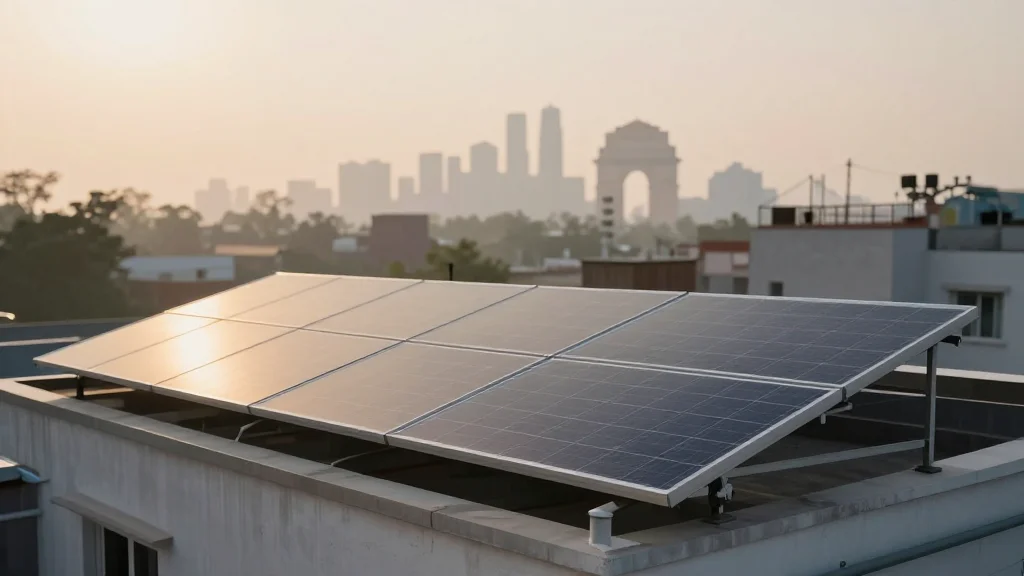
Rooftop Solar Adoption Surges in Delhi as Subsidies, Awareness Drives Boost Installations: Tata Power-DDL
Why It Matters
The rapid uptake reduces grid demand, cuts consumer electricity costs, and advances India’s renewable‑energy targets, positioning Delhi as a model for urban solar deployment.
Key Takeaways
- •Tata Power‑DDL reached 10,466 rooftop solar installations in Delhi.
- •Residential uptake dominates with 8,451 households installing panels.
- •FY 2025‑26 added 5,378 installations, a record 55.75 MW capacity.
- •Subsidies up to ₹1.08 lakh (~$1,300) cut upfront costs.
- •Digital tools and “Solar Sakhis” drive consumer engagement.
Pulse Analysis
Delhi’s rooftop solar market has entered a rapid expansion phase, propelled by the central and state governments’ PM Surya Ghar scheme. Tata Power‑DDL’s ‘Suryansh’ program now reports 10,466 installations delivering 160.3 MWp of capacity, a leap from previous years. The scheme’s financial incentive—up to ₹1.08 lakh (about $1,300) per system—has slashed the initial capital barrier, allowing households and small businesses to consider solar as a viable alternative to grid electricity. Coupled with aggressive awareness campaigns, the policy environment is reshaping the city’s energy mix.
The bulk of the growth comes from residential customers, with 8,451 homes joining the grid, while 2,015 commercial and industrial sites also signed up. In FY 2025‑26 alone, 5,378 new systems added 55.75 MWp, the highest annual increment recorded in the capital. Consumers benefit from lower electricity bills and the ability to export surplus power, shortening the typical two‑ to three‑year payback period. Tata Power‑DDL’s own campuses, now generating 2.1 MWp, illustrate the utility’s commitment to self‑sufficiency.
The surge in rooftop adoption aligns with India’s broader ambition to achieve 450 GW of renewable capacity by 2030. Tata Power‑DDL’s digital toolbox—solar calculators, WhatsApp helplines, and online onboarding—streams the customer journey, while grassroots initiatives like “Solar Sakhis” and metro‑based advertising expand reach into underserved neighborhoods. As more cooperative housing societies and small enterprises come online, the aggregated distributed generation will alleviate pressure on the central grid, reduce peak‑load stress, and provide a scalable model for other Indian metros seeking to meet climate targets.
Rooftop solar adoption surges in Delhi as subsidies, awareness drives boost installations: Tata Power-DDL
Comments
Want to join the conversation?
Loading comments...