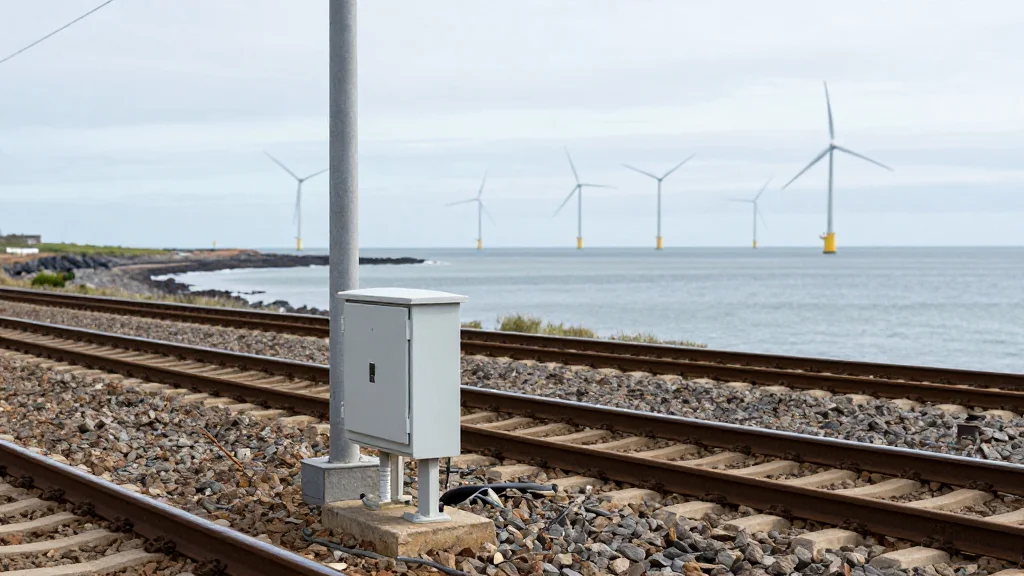
RWE to Provide 65% of Network Rail’s Non-Traction Electricity From Wind Farm
Companies Mentioned
Why It Matters
The contract accelerates Network Rail’s transition to clean power, reducing emissions and stabilising energy costs, while showcasing how public‑sector PPAs can drive large‑scale renewable investment in the UK.
Key Takeaways
- •RWE will supply 65% of Network Rail’s non‑traction power.
- •300 GWh renewable electricity per year for five years.
- •Contract cuts ~168,000 t CO₂e emissions annually.
- •Renewable share rises to ~80% of non‑traction use.
- •Network Rail’s electricity bill hit $1.12 bn in 2023/24.
Pulse Analysis
The UK rail network, a cornerstone of sustainable transport, is now turning its own operations greener. By locking in offshore wind from the Gwynt y Môr farm, Network Rail not only meets a sizable slice of its 2030 renewable ambition but also hedges against volatile energy markets. Offshore wind, with its high capacity factors and declining costs, offers a reliable source for office, depot and station power, complementing the earlier solar agreement and pushing the organization toward an 80% renewable mix for non‑traction electricity.
Under the five‑year corporate power purchase agreement, RWE will deliver 300 GWh annually—enough to offset roughly 168,000 tonnes of CO₂e each year. Financially, the deal helps temper a steep rise in the railway’s electricity spend, which climbed from about $481 million in 2021/22 to $1.12 billion in 2023/24. By securing a fixed price for clean power, Network Rail can better manage its budget while contributing to the UK’s legally binding net‑zero goal for 2050. The contract’s scale also signals confidence in the offshore wind sector’s ability to meet large, public‑sector demand.
Beyond the rail system, this agreement marks the first public‑sector PPA under the UK Government Commercial Agency framework, setting a precedent for other state‑owned entities. It demonstrates how long‑term renewable contracts can unlock investment, improve grid resilience, and deliver measurable emissions cuts. As Great British Railways takes shape, such procurement strategies will be pivotal in aligning infrastructure modernization with climate commitments, reinforcing the UK’s leadership in clean‑energy transition.
RWE to provide 65% of Network Rail’s non-traction electricity from wind farm
Comments
Want to join the conversation?
Loading comments...