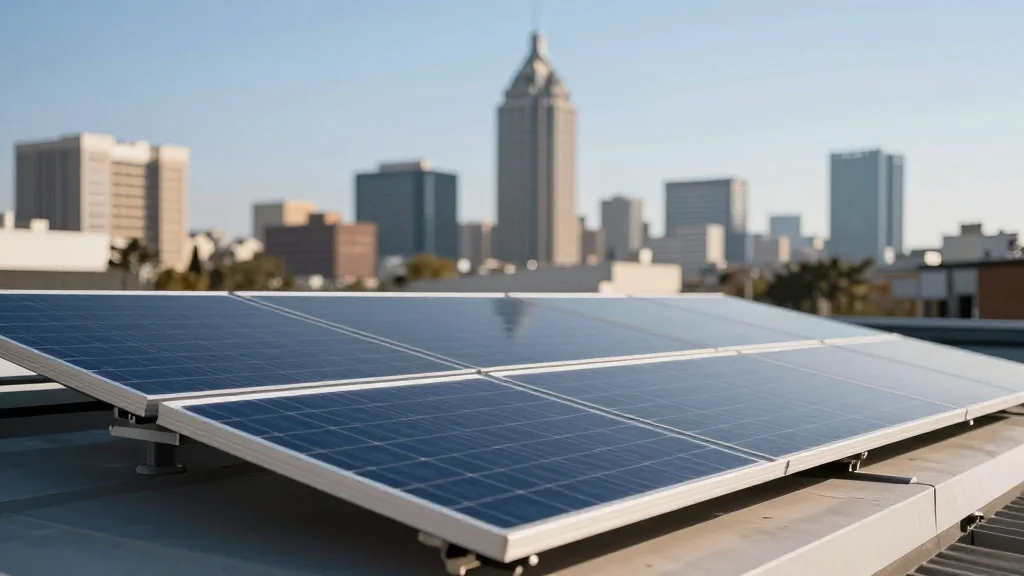
SAPVIA and City Power Forge Collaborative Path for Sustainable Solar Energy in Johannesburg
Why It Matters
Clearing the SSEG backlog and moderating tariff hikes will unlock wider residential solar adoption, bolstering Johannesburg’s grid resilience and supporting South Africa’s renewable‑energy targets.
Key Takeaways
- •SAPVIA and City Power aim to clear 2022‑2025 SSEG backlog
- •Proposed digital portal modeled on Cape Town to speed registrations
- •Tariff shift from prepaid $12 to postpaid $56‑$72 threatens adoption
- •Joint forum planned for ongoing technical exchange and public communication
Pulse Analysis
South Africa’s distributed solar market has surged, yet regulatory bottlenecks threaten its momentum. In Johannesburg, thousands of small‑scale solar owners remain in limbo because SSEG applications submitted between 2022 and August 2025 have not been processed. SAPVIA’s push for a transitional, fast‑track review seeks to restore confidence, allowing households that installed panels under earlier rules to receive formal recognition and grid‑export rights. By resolving this legacy pile, the city can better forecast distributed generation capacity and integrate it safely into the broader network.
A key friction point is the recent tariff restructuring that forces SSEG users to move from prepaid rates of roughly R230 (about $12) to postpaid tariffs ranging between R1,070 and R1,360 (approximately $56‑$72). This steep increase could deter new adopters and penalise early pioneers, undermining voluntary compliance. SAPVIA’s advocacy for a balanced tariff approach—such as retaining prepaid options for non‑exporters or introducing cost‑reflective prepaid tariffs—aims to protect low‑income consumers while ensuring the utility recovers grid‑maintenance costs. Aligning price signals with affordability is essential for scaling residential solar without creating a financial burden.
Looking ahead, both stakeholders see digital transformation as the catalyst for broader adoption. By benchmarking against Cape Town’s online registration portal, Johannesburg can automate application intake, reduce manual errors, and cut processing times dramatically. SAPVIA also proposes a dedicated technical forum and a joint communication campaign to keep the public informed and engaged. These steps promise a more transparent, efficient SSEG ecosystem, fostering grid stability, encouraging investment, and advancing South Africa’s ambition to source a larger share of electricity from renewable sources.
SAPVIA and City Power Forge Collaborative Path for Sustainable Solar Energy in Johannesburg
Comments
Want to join the conversation?
Loading comments...