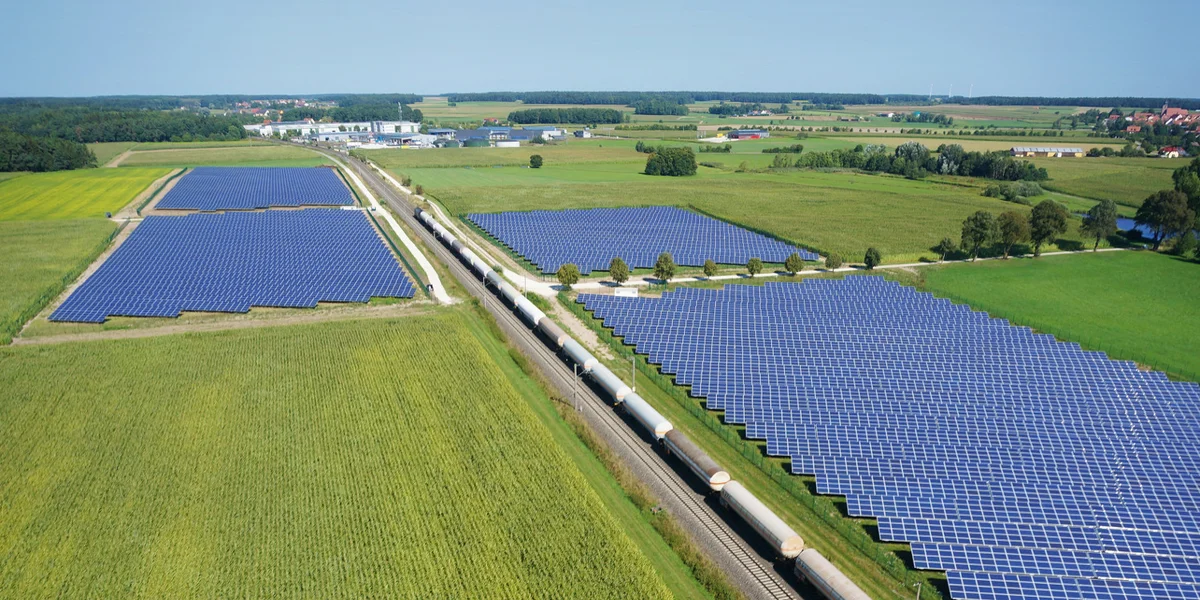
Satellite Breakthrough Enables Accurate Panel-Scale Temperature Mapping for Solar Farms
Why It Matters
Accurate panel‑scale temperature data reduces power‑output simulation bias by 3‑5 %, enhancing grid forecasting and asset management for the rapidly expanding solar sector.
Key Takeaways
- •MODIS 1 km pixels now isolate PV panel temperature.
- •RMSE reduced to 3.7–8.6 °C, cutting error by ~10 °C.
- •Power simulation bias drops 3–5 % with accurate temps.
- •Method accounts for panel emissivity and viewing geometry.
- •Winter shadows remain challenge; future work targets shaded gaps.
Pulse Analysis
Satellite thermal monitoring has long been a cornerstone for estimating land surface temperature, yet utility‑scale solar farms present a unique challenge. Their heterogeneous composition—rows of tilted panels interspersed with bare ground, vegetation, and access roads—confuses traditional land‑surface algorithms, leading to systematic cold biases of up to 10 °C. The inability to separate panel heat from surrounding features hampers precise performance modeling, a critical need as solar capacity scales globally.
The new approach leverages MODIS’s 1‑km thermal infrared observations, but augments them with Sentinel‑2’s high‑resolution optical data to quantify the fractional panel coverage within each pixel. A three‑dimensional geometric model then adjusts for panel tilt, azimuth, and satellite viewing angle, while explicitly modeling the low, directional emissivity of photovoltaic modules. Validation against ground‑based thermocouples at sites in Xinjiang and Sichuan cut RMSE from 10.8‑18.9 °C to 3.7‑8.6 °C, translating into a 3‑5 % reduction in power‑simulation bias—a substantial gain for operators seeking tighter forecast margins.
Beyond immediate accuracy gains, the technique opens pathways for a global, panel‑scale temperature archive, supporting research on degradation, climate impacts, and real‑time asset optimization. The authors acknowledge winter remains problematic due to shadows and snow, prompting plans to model temperature in shaded inter‑row gaps. As solar farms proliferate across diverse climates, such refined satellite‑derived metrics will become essential for grid operators, investors, and policymakers aiming to integrate renewable generation with confidence.
Satellite breakthrough enables accurate panel-scale temperature mapping for solar farms
Comments
Want to join the conversation?
Loading comments...