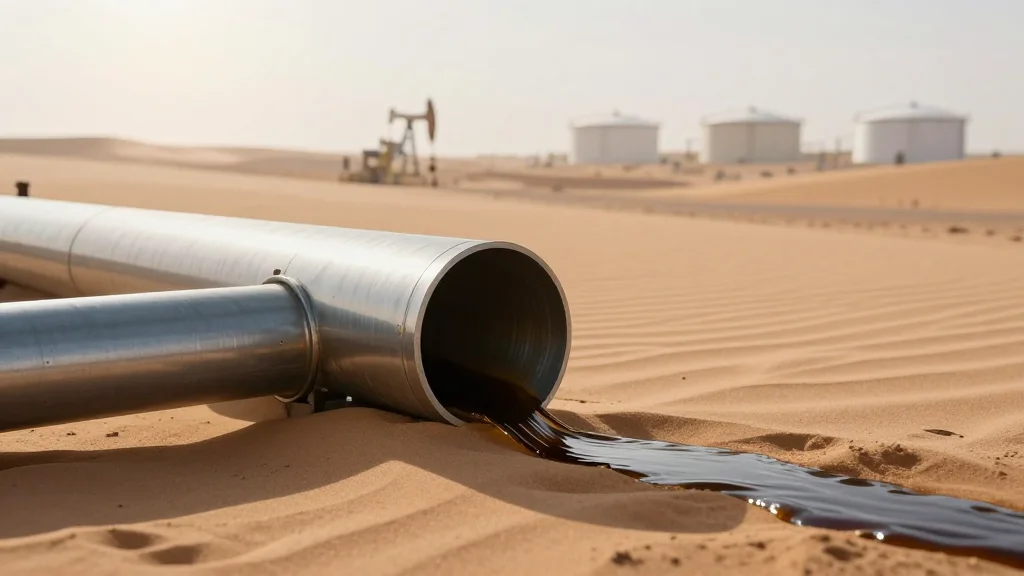
Saudi Arabia Restores Full Capacity on East-West Oil Pipeline to 7 Million Bpd After Attacks
Why It Matters
Restoring the pipeline secures a critical export route, preventing major supply shocks and stabilizing global oil prices amid regional conflict. It also demonstrates Saudi Arabia’s ability to quickly mitigate infrastructure disruptions, a key factor for energy investors.
Key Takeaways
- •East‑West pipeline capacity restored to 7 million barrels per day.
- •Attacks had cut Saudi output by roughly 600,000 barrels daily.
- •Pipeline is Saudi's sole crude export route after Hormuz closure.
- •Manifa field recovered 300,000 barrels per day lost to attacks.
- •Khurais facility still rebuilding 300,000 barrels of capacity.
Pulse Analysis
The East‑West crude pipeline, stretching 1,200 kilometers from the Persian Gulf to the Red Sea, has become Saudi Arabia’s strategic lifeline since the Strait of Hormuz became a chokepoint. With the Hormuz corridor vulnerable to regional tensions, the pipeline carries up to 7 million barrels per day, representing roughly 15 percent of global oil supply. Its capacity not only safeguards Saudi export volumes but also stabilizes world markets by providing an alternative route that bypasses maritime threats.
The recent drone and missile strikes, widely attributed to Iranian forces, knocked roughly 600,000 barrels per day off Saudi production and reduced pipeline flow by 700,000 barrels. Yet the kingdom’s swift repairs—restoring full throughput within days—demonstrate a high degree of operational resilience. By quickly bringing Manifa and Khurais fields back online, Saudi Arabia limited supply disruptions that could have spiked Brent crude prices. The episode underscores how rapid infrastructure recovery can temper market volatility even amid heightened Middle‑East conflict.
Looking ahead, the incident highlights the strategic imperative for oil exporters to diversify transport channels. Investors will monitor Saudi Arabia’s investment in pipeline hardening, aerial defense systems, and alternative export terminals such as the Jizan port. Any prolonged outage could force a shift back to maritime routes, reviving the Hormuz risk premium and pressuring global freight rates. For traders, the quick rebound offers confidence that supply will remain steady, but the underlying geopolitical tension suggests that risk‑adjusted pricing will stay elevated until a durable cease‑fire materializes.
Saudi Arabia restores full capacity on East-West oil pipeline to 7 million bpd after attacks
Comments
Want to join the conversation?
Loading comments...