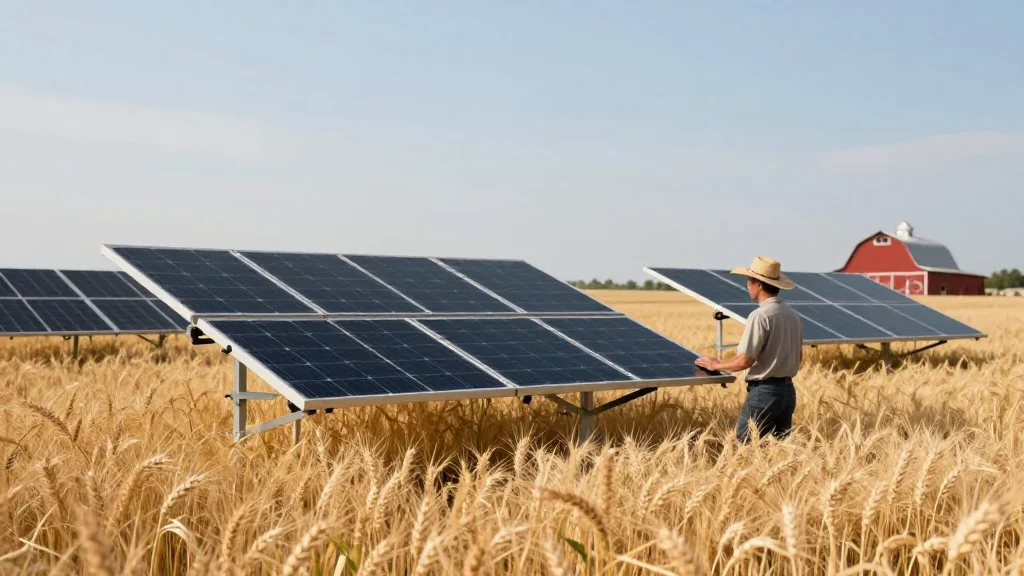
SEIA: Local Solar Bans Threaten the Economic Survival of Family Farms
Companies Mentioned

Why It Matters
Solar on farmland offers a predictable income that can keep family farms viable and preserve rural tax bases, while restrictive local policies risk undermining both clean‑energy goals and agricultural resilience.
Key Takeaways
- •Solar leases pay ≥$1,000 per acre, often outpacing traditional crops
- •Only 0.05% of U.S. farmland hosts solar, versus 95% lost to sprawl
- •Agrivoltaics can double tomato yields and cut evaporation by 65%
- •Local bans blocked a $540,000 annual lease in Ohio
- •Texas solar farms add roughly $12 billion to the rural tax base
Pulse Analysis
Farmers are increasingly treating solar arrays as a financial hedge against the volatility that defines modern agriculture. With fertilizer and diesel prices climbing, a lease that guarantees a steady per‑acre payment provides a rare certainty. The Purdue University–CME Group Ag Economy Barometer shows more than half of surveyed farmers received offers of $1,000 per acre or higher in early 2024, a figure that frequently exceeds the net returns of corn or soy on the same land. This emerging revenue stream helps keep farms in family hands and supports long‑term land stewardship.
Despite the modest footprint—just 0.05% of U.S. farmland by the end of 2024—solar development delivers outsized benefits. Studies, including one in Nature Sustainability, demonstrate that shade from panels can double yields of crops like cherry tomatoes while improving water efficiency by up to 65%. Agrivoltaic models also enable livestock grazing beneath arrays, reducing vegetation management costs and adding a secondary income source. Compared with the 95% of farmland lost to urban expansion between 2001 and 2016, solar’s land use is negligible, and even a fully decarbonized grid would require only about 0.5% of contiguous U.S. land, roughly the area currently mined for surface coal.
The growing policy backlash, however, threatens to curtail these gains. Local governments in states such as Ohio have invoked zoning restrictions to block projects that could have delivered half‑million‑dollar annual leases, stripping farmers of vital cash flow. Beyond the direct financial impact, such bans erode rural tax revenues—Texas alone sees an estimated $12 billion boost from solar‑related taxes—potentially weakening infrastructure and community services. Balancing land‑use concerns with the proven economic and environmental advantages of agrivoltaics will be critical for preserving both the agricultural heritage and the clean‑energy transition.
SEIA: Local solar bans threaten the economic survival of family farms
Comments
Want to join the conversation?
Loading comments...