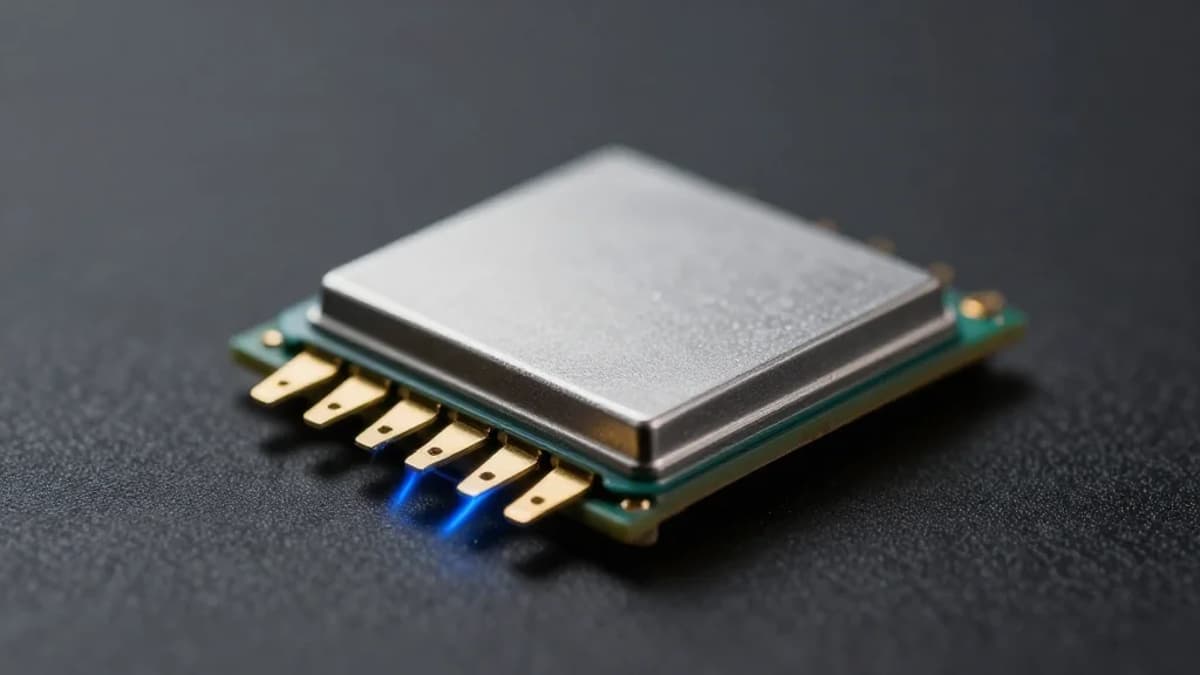
SemiQ Debuting SiC Power Solutions for AI Data Centers and High-Power Infrastructure at APEC
•February 18, 2026
0
Why It Matters
The efficiency gains and thermal advantages of SemiQ’s SiC modules lower operating costs and enable denser AI data‑center designs, accelerating sustainable scaling of high‑performance computing.
Key Takeaways
- •QSiC Gen3 cuts R_ONsp and E_OFF by 30%
- •B3 full‑bridge delivers 120 A, 8.6 mΩ resistance
- •S3 half‑bridge offers 2.4 mΩ, 0.07 °C/W thermal resistance
- •Modules target AI data centers, EV chargers, motor drives
- •Reduced cooling complexity improves system reliability
Pulse Analysis
Silicon‑carbide technology has become a cornerstone for high‑efficiency power conversion, and SemiQ’s Gen3 modules reinforce that trajectory. By slashing specific on‑resistance and turn‑off losses by roughly a third, these devices cut both conduction and switching losses, directly translating into lower heat generation. For AI data centers, where power density and thermal constraints are critical, the reduced cooling burden enables tighter rack layouts and higher compute per watt, a key metric for operators seeking to curb energy bills while expanding capacity.
Beyond data centers, the new module families address broader market pressures. The B3 full‑bridge’s 120‑amp capability and ultra‑low R_DS(on) make it ideal for high‑voltage DC‑DC converters in renewable‑energy storage and industrial motor drives, where efficiency directly impacts profitability. Meanwhile, the S3 half‑bridge’s record‑low thermal resistance (0.07 °C/W) supports high‑current EV charging stations, allowing faster charge rates without oversized heat sinks. These characteristics position SemiQ to capture growth in sectors that demand compact, reliable power solutions.
Strategically, SemiQ’s debut at APEC signals confidence in SiC’s role as the preferred semiconductor for next‑generation power electronics. As AI workloads surge and electric‑vehicle adoption accelerates, the market for high‑performance, low‑loss converters is set to expand dramatically. Companies that integrate SemiQ’s Gen3 modules can achieve measurable cost savings, improve system uptime, and meet sustainability targets, giving them a competitive edge in an increasingly energy‑conscious landscape.
SemiQ debuting SiC power solutions for AI data centers and high-power infrastructure at APEC
0
Comments
Want to join the conversation?
Loading comments...