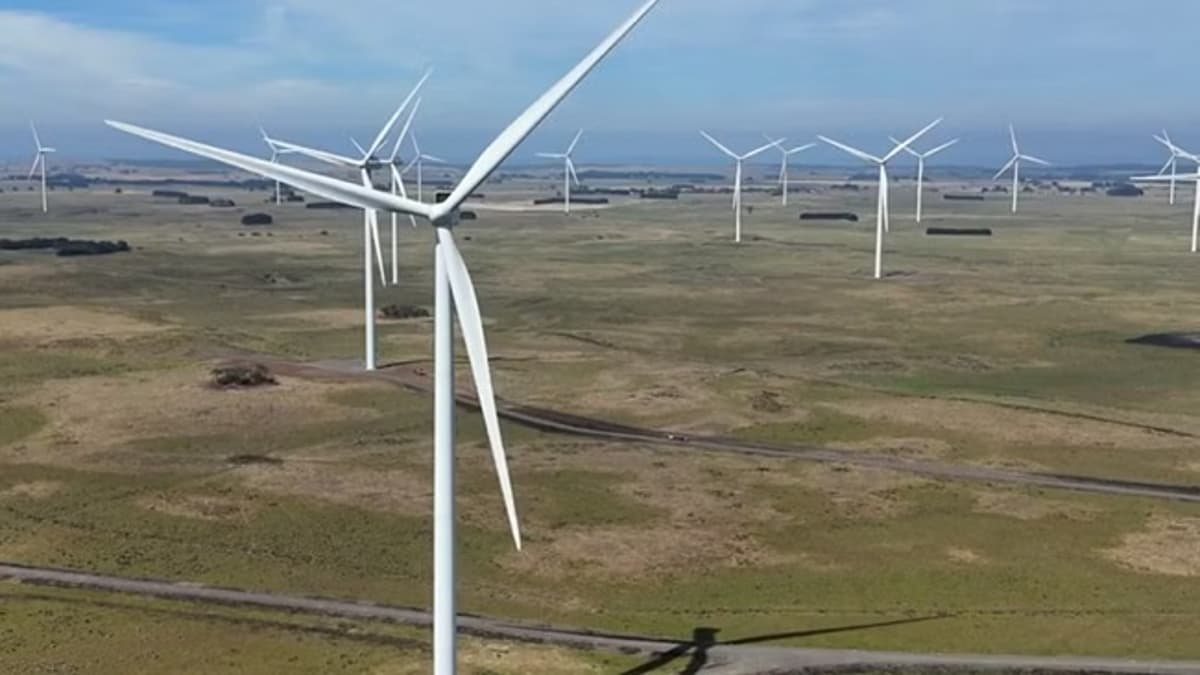
Siemens to Deploy Cloud SCADA for Australian Renewables
•March 4, 2026
0
Why It Matters
The deployment showcases how cloud and AI technologies can streamline multi‑site renewable management, boosting efficiency and regulatory compliance in a rapidly expanding Australian market.
Key Takeaways
- •Siemens deploys AI‑ready cloud SCADA for GPGA’s 1 GW assets.
- •System unifies eight sites via 300k tags in real time.
- •Cloud architecture enables scaling to 3 GW renewable capacity.
- •Future AEMO integration supports real‑time market and grid response.
- •Generative AI assists operators, boosting efficiency and compliance.
Pulse Analysis
Siemens is extending its industrial digital portfolio into Australia’s fast‑growing renewable sector by partnering with automation specialist Mescada to install one of the nation’s largest AI‑ready, cloud‑based SCADA platforms. The Simatic WinCC Open Architecture solution will serve Global Power Generation Australia (GPGA), which currently operates roughly 1 GW of wind, solar‑storage hybrids and battery energy storage systems. By moving control logic to the cloud, the system delivers a single, real‑time view of eight geographically dispersed assets, allowing operators in Canberra to monitor performance, troubleshoot faults and optimise output without the latency of legacy on‑premise hardware.
The deployment ties together roughly 300,000 data tags, normalising disparate communication protocols across the sites and feeding them into a cloud‑native analytics engine. Horizontal scalability is baked into the architecture, meaning GPGA can expand from its current 1.4 GW footprint to an anticipated 3 GW without redesigning the control layer. A second‑phase integration with the Australian Energy Market Operator will enable automated responses to real‑time price signals and grid stability requests, while generative AI assistants provide contextual recommendations, reducing operator workload and improving compliance with market regulations.
From a market perspective, the project signals a broader shift toward digital twins and AI‑driven operations in Australia’s energy transition. Operators that adopt cloud SCADA can achieve higher capacity factors, lower O&M costs, and faster time‑to‑market for new projects, giving them a competitive edge in a landscape increasingly defined by renewable integration and stringent grid codes. Siemens’ involvement also showcases the company’s strategy to leverage its industrial IoT expertise beyond traditional manufacturing, positioning it as a key enabler of the nation’s decarbonisation goals.
Siemens to deploy cloud SCADA for Australian renewables
0
Comments
Want to join the conversation?
Loading comments...