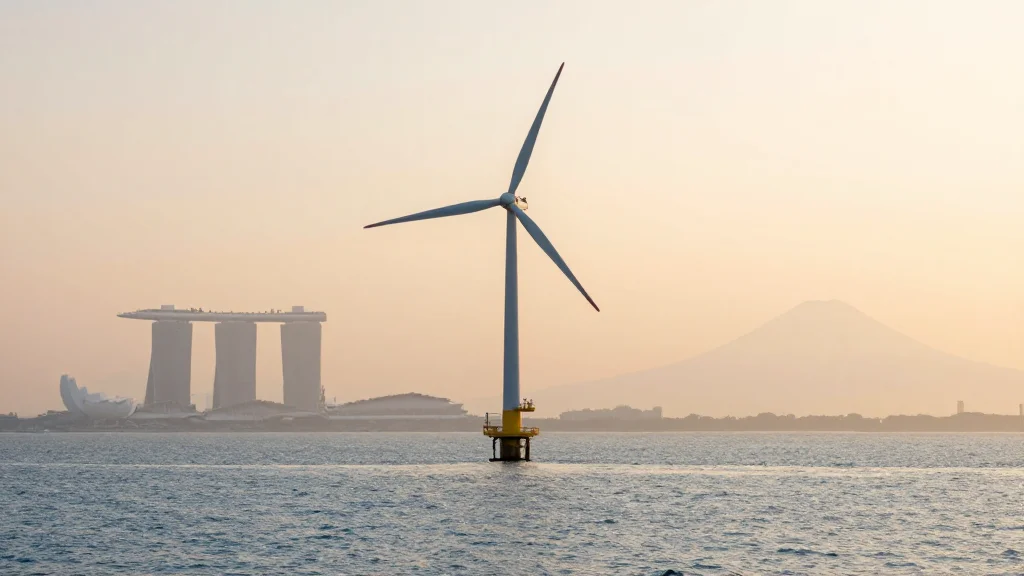
Singapore and Japan Launch Floating Wind Pact as Recharge Summit Kicks Off
Why It Matters
The collaboration fast‑tracks floating wind capacity in a region lacking suitable shallow‑water sites, bolstering energy security and decarbonisation while creating a new export market for Japanese technology.
Key Takeaways
- •Singapore, Japan sign floating wind cooperation agreement
- •Joint R&D to adapt turbines for deep‑water conditions
- •Pact targets Southeast Asian offshore wind markets
- •Collaboration mitigates geopolitical supply‑chain risks
- •Supports both nations' net‑zero 2050 commitments
Pulse Analysis
The Singapore‑Japan floating wind pact arrives at a pivotal moment for the Asia‑Pacific renewables landscape. While onshore and shallow‑water wind have plateaued, floating turbines unlock the vast, high‑wind resources found in the region’s deep seas. Japan, home to industry leaders like Ørsted‑Japan and Mitsubishi Heavy Industries, brings mature blade‑and‑platform designs, whereas Singapore offers a robust financial hub, regulatory agility, and access to emerging markets such as Indonesia and the Philippines. Together, they can streamline certification, share cost‑reduction data, and attract multinational investors seeking stable, long‑term returns.
Geopolitical instability—particularly disruptions in the China‑centric supply chain—has prompted Asian economies to diversify their energy partners. By formalising a joint framework, Singapore and Japan reduce reliance on any single source of components, fostering resilience against export controls or regional tensions. The agreement also dovetails with Singapore’s ambition to become a regional clean‑energy hub, leveraging its port infrastructure for turbine assembly and logistics. For Japan, the pact opens a new export corridor for its floating wind technology, helping the country meet its own 2030 offshore wind target of 10 GW.
Analysts project that floating offshore wind could reach 30 GW in Southeast Asia by 2035, driven by falling levelized costs and supportive policy roadmaps. The Singapore‑Japan partnership is likely to catalyse early‑stage projects, de‑risk financing, and accelerate permitting processes. Investors will watch for pilot farms that demonstrate commercial viability, while policymakers may adopt the joint framework as a template for other bilateral collaborations. Ultimately, the pact not only advances climate goals but also creates a strategic economic corridor that could reshape the regional energy supply chain for decades.
Singapore and Japan launch floating wind pact as Recharge summit kicks off
Comments
Want to join the conversation?
Loading comments...