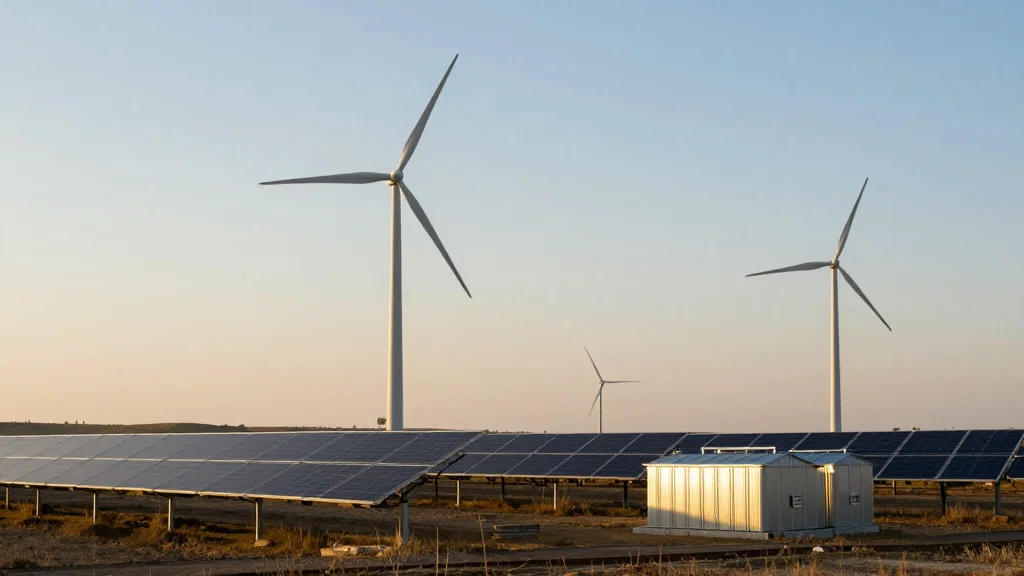
Six Wind Farms, Two Solar Hybrids and Seven-Hour Batteries Win Key CIS Tenders Ahead of Coal Closure
Companies Mentioned
Why It Matters
The contracts deliver the largest single boost to WA’s power supply, securing renewable capacity and long‑duration storage needed to replace coal and keep electricity affordable.
Key Takeaways
- •Six new wind farms provide 1.5 GW capacity, boosting WA’s generation.
- •Two solar‑battery hybrids add 350 MW solar and 1,518 MWh storage.
- •Standalone eight‑hour batteries contribute 282 MW and 2,165 MWh dispatchable power.
- •Over AUD 5 bn (≈US 3.3 bn) investment includes $1.1 bn community benefits.
Pulse Analysis
Western Australia’s power grid is the world’s largest isolated system, lacking interconnections to neighboring states or pumped‑hydro reserves. That isolation makes the recent Capacity Investment Scheme (CIS) tenders especially critical: six wind farms will deliver 1.5 GW of new generation, while two solar‑battery hybrids and two eight‑hour battery projects add over 5 GWh of flexible storage. By coupling intermittent renewables with long‑duration batteries, the state can maintain grid stability as it phases out its coal fleet by 2030.
The financial scale of the awards underscores the economic momentum behind the transition. More than AUD 5 billion (about US 3.3 billion) is earmarked for construction, with roughly AUD 1.1 billion allocated to shared community benefits, another AUD 894.8 million for First Nations programs, and a similar amount for domestic steel supply chains. These figures translate into thousands of jobs across regional areas, from turbine manufacturing to battery assembly, and reinforce government commitments to local industry participation and social licence.
Beyond Western Australia, the tender outcomes signal a broader shift in Australia’s energy policy. The federal government’s emphasis on clean, dispatchable power addresses the nation’s 82 percent renewable target for 2030, while the inclusion of long‑duration storage tackles the “missing middle” of firm capacity. However, critics note that many CIS projects have stalled, prompting calls for tighter delivery milestones and possible rebidding, especially for wind assets. If the state meets its rollout schedule, the WA model could become a template for other isolated grids worldwide, demonstrating how coordinated public‑private investment can accelerate decarbonisation without compromising reliability.
Six wind farms, two solar hybrids and seven-hour batteries win key CIS tenders ahead of coal closure
Comments
Want to join the conversation?
Loading comments...