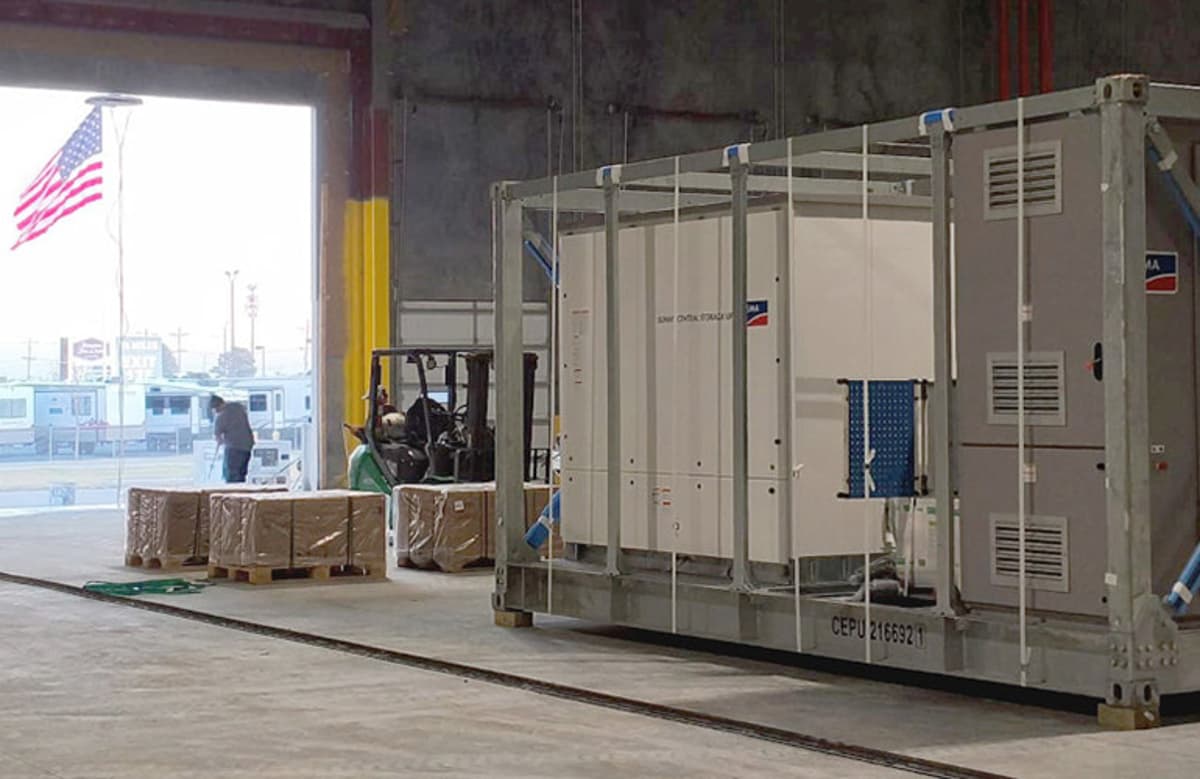
SMA Now Assembling Medium-Voltage Power Stations in Arkansas
Why It Matters
Local MVPS integration shortens project lead times and bolsters the U.S. renewable‑energy supply chain, positioning SMA and CEP to capture expanding utility‑scale solar and storage markets.
Key Takeaways
- •SMA's Arkansas plant integrates German inverters with U.S. transformers.
- •Domestic MVPS assembly reduces delivery lead times for utility-scale projects.
- •Skidded 20‑ft containers simplify installation of solar and storage systems.
- •First customer shipment expected by mid‑2026, signaling market uptake.
Pulse Analysis
SMA Solar Technology AG, a leading German inverter manufacturer, has taken a decisive step toward localizing its supply chain by opening an integration hub in North Little Rock, Arkansas. The facility partners with CEP, a seasoned U.S. engineering firm, to combine SMA’s high‑efficiency central inverters with domestically produced medium‑voltage transformers and switchgear. The resulting medium‑voltage power stations are pre‑assembled in a 20‑foot skidded container, allowing final testing on site before shipment. By moving the integration stage to the United States, SMA shortens the distance between production and deployment, mitigating logistical bottlenecks that have plagued trans‑Atlantic deliveries.
The domestic assembly line directly addresses the accelerating demand for utility‑scale solar and battery projects across the United States. Developers have struggled with long lead times for custom‑engineered power stations, often waiting months for components to arrive from Europe. With SMA’s Arkansas hub, the turnaround can shrink to weeks, giving project owners greater flexibility to meet tight construction schedules and financing deadlines. Moreover, sourcing transformers locally bolsters supply‑chain resilience amid global semiconductor shortages, while the standardized skid format simplifies on‑site installation and reduces civil‑engineering costs.
Looking ahead, the first major MVPS delivery slated for mid‑2026 serves as a proof point for broader adoption. If the model proves cost‑effective, SMA and CEP could replicate the integration concept in other regions, creating a network of U.S.‑based assembly sites that support the nation’s renewable‑energy targets. The move also signals to competitors that a hybrid approach—German engineering paired with American manufacturing—can deliver both performance and speed. As the solar market continues its rapid expansion, such localized solutions are likely to become a cornerstone of the industry’s growth strategy.
SMA now assembling medium-voltage power stations in Arkansas
Comments
Want to join the conversation?
Loading comments...