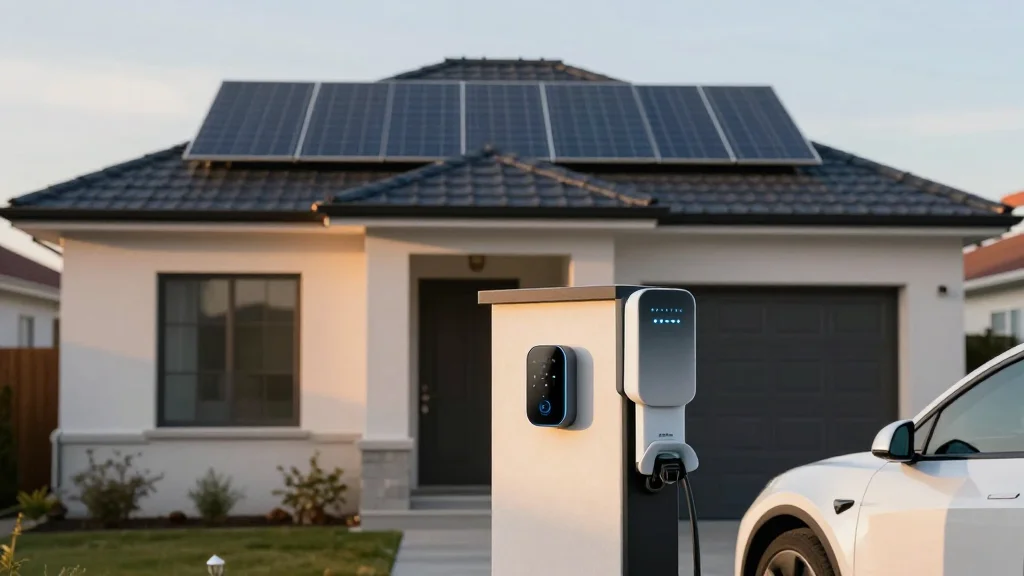
Smart-Meter-Enabled Partnership Aims to Integrate Solar, Storage and EV Charging to Lower Grid Costs
Why It Matters
Granular, real‑time DER data lets utilities plan more accurately, defer expensive infrastructure upgrades and lower household bills, while ratepayers gain automated savings and reliability.
Key Takeaways
- •Sense and ev.energy combine smart‑meter data with DER orchestration.
- •AMI 2.0 enables million‑reads‑per‑second, real‑time home energy visibility.
- •Optimized EV charging could shave $30 B in utility costs by 2035.
- •Utilities can prevent transformer overloads by device‑level load coordination.
- •Ratepayers gain automated, cost‑saving control of solar, storage, and EV charging.
Pulse Analysis
The rapid diffusion of residential solar panels, battery storage and electric‑vehicle chargers has turned every home into a mini‑power plant. Traditional smart meters, which reported usage in 15‑ to 60‑minute intervals, are no longer sufficient for utilities that need to balance a highly variable grid. AMI 2.0 meters, capable of a million reads per second, provide the granular data stream required to understand how distributed energy resources (DERs) interact in real time, enabling more precise demand forecasts and faster response to grid stress.
Sense’s partnership with ev.energy marries that high‑resolution meter data with a cloud‑based DER orchestration platform. The combined solution gives utilities a device‑by‑device view of solar output, battery charge state and EV charging schedules, allowing them to shift loads away from congested transformers or peak‑price periods. According to a joint study with The Brattle Group, optimized EV charging alone could avoid $30 billion in system costs by 2035, translating into roughly a 10% reduction in household electricity bills. By automating these adjustments, utilities can defer costly upgrades to distribution infrastructure while delivering measurable savings to customers.
Beyond immediate cost benefits, the collaboration signals a broader shift toward a bidirectional, customer‑centric grid. Real‑time visibility empowers ratepayers to enroll in dynamic pricing programs without manual intervention, ensuring their vehicles are charged when electricity is cheapest and cleanest. For utilities, the ability to manage DERs at the feeder level enhances resilience against outages and supports equity goals by extending grid benefits to all neighborhoods. As more utilities adopt AMI 2.0 and DER platforms, the industry moves closer to a fully integrated, low‑carbon energy ecosystem.
Smart-meter-enabled partnership aims to integrate solar, storage and EV charging to lower grid costs
Comments
Want to join the conversation?
Loading comments...