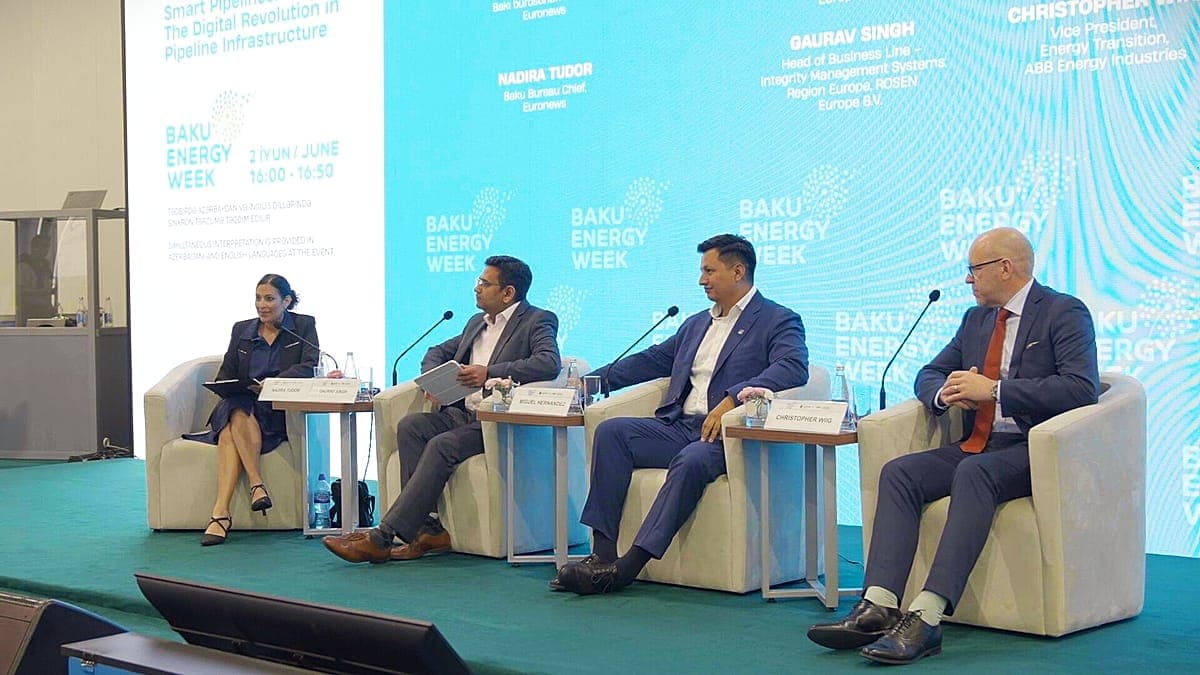
Smart Pipelines: Can AI Protect the World’s Energy Lifelines?
Companies Mentioned
Why It Matters
Cutting leak‑related losses and extending pipeline life saves billions while bolstering global energy security; however, the success of AI‑driven maintenance hinges on preserving decades of field expertise.
Key Takeaways
- •500,000 km of pipelines require renovation worldwide
- •Leaks cost >$7 billion annually, 40% undetected first day
- •AI predictive models rely on decades of field data
- •Smart‑pipeline investments could reach $2.4 billion by 2030
- •Potential operating cost cuts up to 30% with analytics
Pulse Analysis
The aging network of oil and gas pipelines represents both a massive liability and a catalyst for digital transformation. With half‑a‑million kilometres overdue for upgrades, the industry faces $7 billion in annual leak‑related losses, a figure that dwarfs many individual energy projects. Real‑time sensor arrays and machine‑learning analytics are emerging as the most viable path to early detection, allowing operators to intervene before small anomalies evolve into catastrophic failures. This shift mirrors broader trends in heavy‑industry digitisation, where data‑driven insights replace costly, schedule‑driven inspections.
At the heart of the AI revolution lies data—historical inspection runs, anomaly logs, and corrosion patterns collected over decades. Firms like ROSEN have consolidated over 26,000 inspections, billions of recorded anomalies, and millions of kilometres of pipeline footage into centralized warehouses, creating the training ground for predictive models. Yet the "silver tsunami" of retiring engineers threatens to erode the tacit knowledge that enriches these datasets. Without seasoned professionals to validate, label, and contextualise the data, machine‑learning outputs risk becoming opaque or inaccurate, underscoring the need for hybrid teams that blend domain expertise with digital skill sets.
Security and trust add another layer of complexity. As pipelines become increasingly software‑dependent, cyber‑physical vulnerabilities rise, prompting industry leaders to stress personnel, physical, and cyber security in equal measure. Investment forecasts—$2.4 billion in the region by 2030—reflect confidence that smart‑pipeline technologies can deliver up to 30% cost reductions while enhancing resilience. For investors and policymakers, the message is clear: embracing AI‑enabled maintenance offers a pathway to safeguard critical energy corridors, but success will depend on marrying cutting‑edge analytics with the human expertise that fuels them.
Smart pipelines: Can AI protect the world’s energy lifelines?
Comments
Want to join the conversation?
Loading comments...