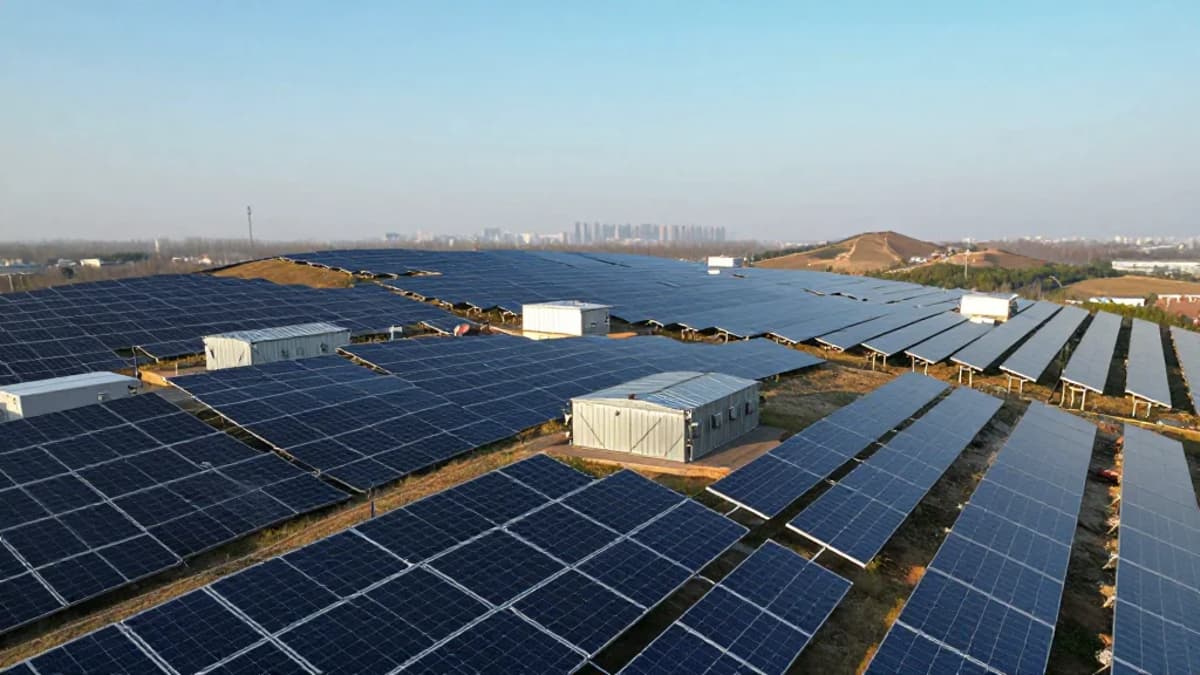
Solar and Battery Project Sent to State Planning Authority by Far Away Objectors Gets All-Clear
•March 9, 2026
0
Why It Matters
The decision shows regulatory willingness to advance large‑scale renewable projects despite remote opposition, signaling stronger momentum for Australia’s clean‑energy transition and underscoring the need for genuine local stakeholder engagement.
Key Takeaways
- •100 MW solar + 100 MW/400 MWh battery approved.
- •81 of 83 objections originated over 100 km away.
- •Project sits within Central‑West Orana Renewable Energy Zone.
- •IPC addressed fire risk, worker housing, decommissioning.
- •Federal approval achieved in less than two months.
Pulse Analysis
The Burroway Solar Farm marks a pivotal addition to New South Wales’ Central‑West Orana Renewable Energy Zone, a government‑driven corridor designed to concentrate large‑scale wind and solar assets. By coupling a 100 MW photovoltaic array with a 100 MW/400 MWh lithium‑ion battery, the development provides both generation capacity and firming capability, addressing the intermittency that has long constrained solar penetration. The approval underscores the state’s commitment to meeting its 2030 renewable targets and demonstrates how integrated storage can unlock higher utilisation rates for rural solar projects.
Despite 83 formal submissions, the Independent Planning Commission found that 93 percent of objections originated more than 100 km from the site, with only a single local comment within 25 km. This geographic disconnect highlights a broader challenge for developers: remote critics can amplify perceived risks—such as fire, land degradation, or ‘panel poisoning’—without direct exposure to the project’s on‑ground realities. The IPC’s decision to cancel a public meeting after zero registrations further illustrates the difficulty of mobilising genuine community dialogue in sparsely populated agricultural districts.
The swift federal clearance—completed in under two months—combined with the state’s green light signals a maturing regulatory pathway for hybrid solar‑battery schemes. Investors are likely to view Burroway as a proof point that large‑scale storage can be bundled with generation to satisfy both grid reliability and policy mandates. As more REZs mature, we can expect accelerated siting of similar projects, provided developers continue to address fire safety, worker accommodation, and end‑of‑life rehabilitation in their consent conditions.
Solar and battery project sent to state planning authority by far away objectors gets all-clear
0
Comments
Want to join the conversation?
Loading comments...