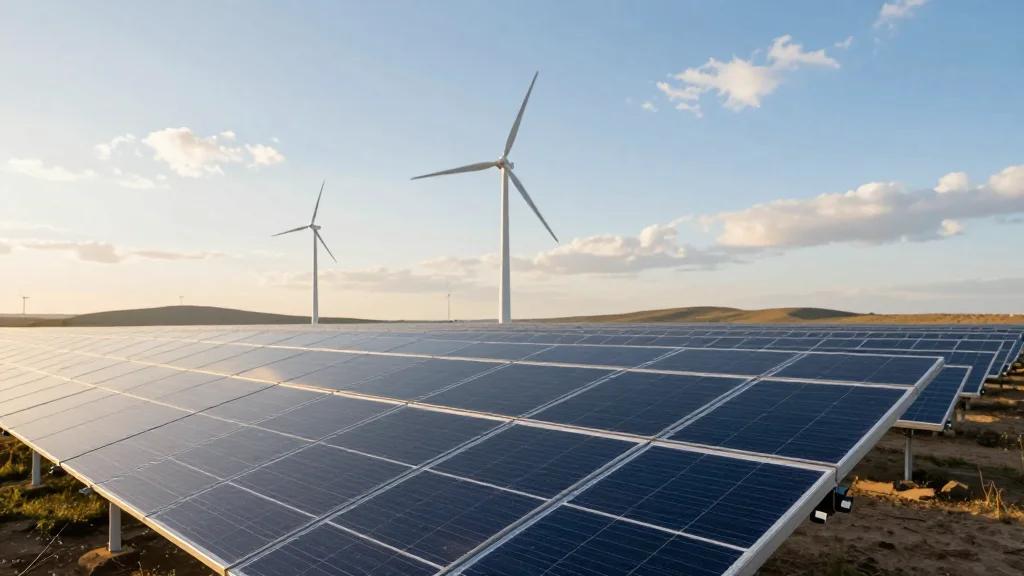
Solar and Wind Take over Global Power Growth in 2025
Why It Matters
The data confirms renewables have become the primary driver of power‑sector growth, reshaping investment, policy and grid‑planning priorities for utilities and governments worldwide.
Key Takeaways
- •Solar and wind added ~6× more capacity than all other sources combined
- •New renewable capacity met almost all electricity demand growth in 2025
- •Australia and Europe lead per‑capita deployment, supported by large storage assets
- •Nuclear generation stagnated; renewables set to outpace coal and gas by 2030
Pulse Analysis
The 2025 capacity surge marks a watershed moment for the global power mix. According to IRENA statistics, solar and wind together contributed six times the gigawatts of new capacity that coal, gas, nuclear, hydro and other renewables delivered combined. This unprecedented pace was fueled by aggressive targets in Australia, where a national roadmap aims for 82% renewable electricity by 2030, and by European grids that leverage cross‑border interconnections to balance variability. The result is a renewable‑led expansion that satisfies almost the entire incremental demand driven by population growth and the electrification of transport, industry and heating.
Financial markets are responding to the shift with a flood of capital into solar‑wind projects, storage solutions and associated supply chains. The construction sector now dwarfs traditional fossil‑fuel builds, delivering projects faster and at lower cost, while pumped‑hydro and battery installations—particularly the 18 kWh per capita storage capacity in Australia—provide the flexibility needed for high‑penetration renewables. Investors are re‑allocating from legacy coal and gas assets toward green infrastructure, prompting a re‑pricing of risk and a surge in green bond issuance. Meanwhile, Europe’s abundant pumped‑hydro potential, estimated at 1,200 TWh, offers a near‑term buffer that reduces the urgency for large‑scale hydrogen or compressed‑air storage.
Looking ahead, the trajectory suggests that combined solar, wind and hydro generation will eclipse coal and gas output by 2030, accelerating the decarbonization of the electricity sector. Policymakers must focus on reinforcing transmission networks, standardizing storage incentives, and ensuring workforce development keeps pace with construction demand. Emerging markets such as Chile and Pakistan, which saw rapid per‑capita deployments in 2025, will become critical battlegrounds for technology transfer and financing. As renewables cement their role as the cheapest and most resilient energy source, the industry’s challenge will be to sustain growth while managing grid stability and integrating increasingly electrified end‑uses.
Solar and wind take over global power growth in 2025
Comments
Want to join the conversation?
Loading comments...