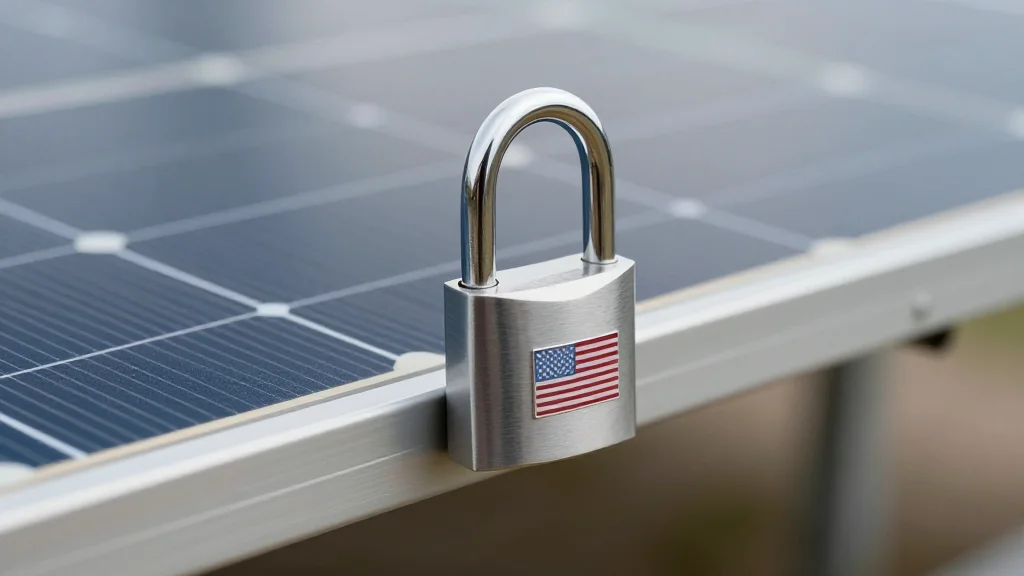
Solar Developers Face High-Stakes Tax Credit Risks as FEOC Rules Tighten
Why It Matters
FEOC rules directly affect the financial foundation of new solar and storage projects, reshaping investment decisions and supply‑chain strategies across the U.S. renewable sector.
Key Takeaways
- •FEOC rules can disqualify projects from 30‑70% tax credit support
- •Material assistance limits target equipment from prohibited foreign entities
- •Projects with >15% Chinese debt risk losing tax equity financing
- •Tax insurers now add exclusions for FEOC risk pending Treasury guidance
Pulse Analysis
The Inflation Reduction Act’s recent amendment, colloquially called the One Big, Beautiful Bill, introduced Foreign Entity of Concern (FEOC) restrictions that reshape the economics of U.S. solar and storage projects. By tying eligibility for the technology‑neutral Sections 48E (solar) and 45Y (storage) to the provenance of equipment, equity and debt, the rule aims to systematically sever Chinese influence in the renewable supply chain. Projects placed in service from 2025 onward must now demonstrate that no prohibited foreign entity provides material assistance, that U.S. taxpayers do not hold excessive Chinese equity or debt, and that control clauses do not give Chinese owners effective decision‑making power.
In practice, the new thresholds have turned routine contract language into compliance landmines. A standard warranty granting a vendor exclusive repair rights or a royalty‑free IP clause on a purchase order dated after July 4, 2023 can trigger an automatic “effective control” violation, jeopardizing up to 70 % of a project's capital cost that would otherwise be covered by tax credits. Treasury released interim guidance on equipment limits in February, but guidance on equity and debt exposure is still expected in Q3 2024, leaving developers in a holding pattern as they scramble to re‑write master supply agreements and restructure financing.
The uncertainty has already rippled through the tax‑equity market, banks and insurers. Investors with any Chinese equity stake or more than 15 % of debt sourced from Chinese lenders are stepping back, fearing disqualification from the credits. Meanwhile, tax‑insurance carriers are adding FEOC exclusions or conditioning coverage on further Treasury clarification, tightening the cash‑flow safety net that many developers rely on. Although a potential U.S.–China summit may ease geopolitical tensions, experts like Keith Martin do not expect legislative rollback, suggesting FEOC rules will remain a permanent factor in project finance modeling and supply‑chain risk assessments for the next decade.
Solar developers face high-stakes tax credit risks as FEOC rules tighten
Comments
Want to join the conversation?
Loading comments...