Why It Matters
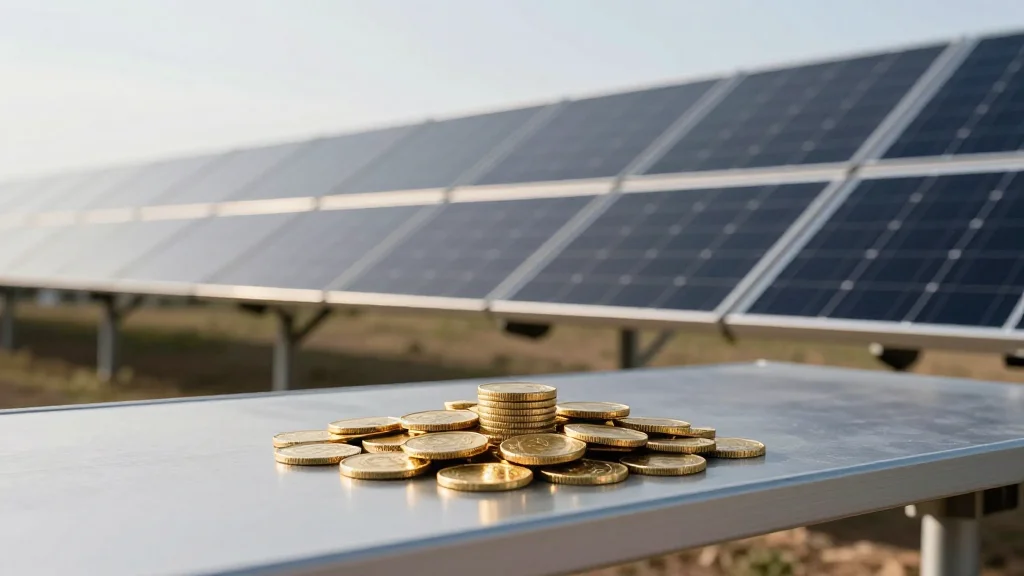
The funding boom accelerates solar capacity expansion and signals strong investor confidence amid clearer policies, reshaping the renewable‑energy market.
Key Takeaways
- •$11.1 bn funding marks 131% YoY growth.
- •Debt deals hit $8.9 bn, highest in a decade.
- •Solar project acquisitions total over 18 GW this quarter.
- •Downstream firms led M&A with 19 of 28 transactions.
- •Venture capital fell YoY but rose 74% QoQ.
Pulse Analysis
The first quarter of 2026 has become a watershed moment for the solar industry, as corporate capital inflows more than doubled compared with the same period last year. Analysts attribute the surge to a combination of clearer regulatory frameworks, robust demand from utilities and corporate buyers, and the easing of supply‑chain constraints that plagued the sector in 2024‑25. With $11.1 bn raised across 53 transactions, investors are signaling that solar is no longer a niche play but a core component of global decarbonisation strategies.
Debt financing led the charge, delivering $8.9 bn in 28 deals—an increase of 154% year‑on‑year and the strongest level in more than a decade. This shift toward leveraged structures reflects lenders’ confidence in predictable cash flows from long‑term power purchase agreements. Venture‑capital activity, while down 21% from Q1 2025, rebounded 74% from the previous quarter, indicating that early‑stage innovators remain attractive to risk‑tolerant funds. Public‑market financing contributed $1.1 bn, underscoring continued appetite for listed solar vehicles.
The capital influx translated into over 18 GW of project acquisitions, with developers and independent power producers snapping up 11.9 GW alone. Downstream companies dominated M&A, accounting for 19 of 28 deals, a clear sign that the value chain is consolidating around firms that can integrate manufacturing, installation and operations. Such consolidation is expected to drive cost efficiencies and accelerate deployment timelines, positioning solar to capture a larger share of the projected 1,200 GW of new renewable capacity needed by 2030. Stakeholders should watch for further debt‑driven expansion as policy certainty persists.
Solar funding hits $11.1bn in Q1
Comments
Want to join the conversation?
Loading comments...