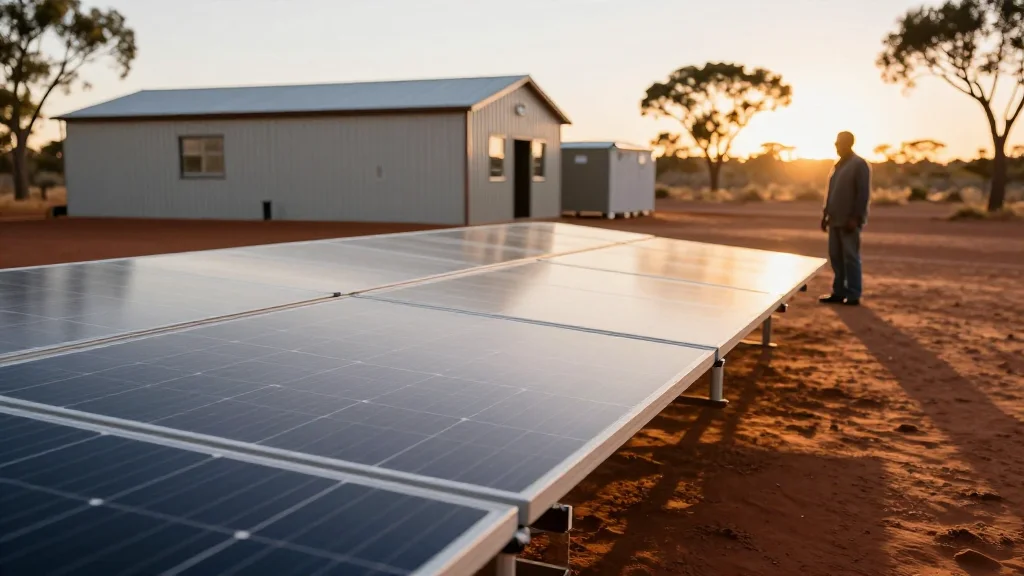
Solar Insiders Podcast: The Small Company Taking Giant Steps to Close the Energy Gap
Why It Matters
Closing the energy gap improves health, education and economic outcomes for remote Indigenous communities and demonstrates a replicable model for renewable micro‑grids across Australia.
Key Takeaways
- •Original Power targets energy access for NT First Nations.
- •Small-scale solar projects reduce reliance on diesel generators.
- •Company partners with local councils for microgrid installations.
- •Funding secured from Australian Renewable Energy Agency (ARENA).
- •Initiative aims to cut regional emissions by 30% by 2030.
Pulse Analysis
Australia’s remote Northern Territory still relies heavily on diesel generators, a costly and polluting solution that leaves many First Nations communities without reliable power. Energy insecurity hampers everything from school attendance to telehealth services, widening socioeconomic gaps. By focusing on localized solar micro‑grids, Original Power addresses both the supply shortfall and the broader climate impact, positioning renewable energy as a catalyst for community resilience.
Original Power’s model blends community‑owned solar panels with battery storage, creating self‑sufficient micro‑grids that can be scaled quickly. The company leverages a $5 million AUD (≈$3.3 million USD) grant from the Australian Renewable Energy Agency to fund design, procurement and installation, while collaborating with regional councils to streamline permitting. This partnership approach reduces upfront capital barriers for Indigenous groups and ensures that the technology aligns with local cultural and environmental priorities.
The initiative signals a shift in Australia’s renewable landscape, where small, agile firms can complement large‑scale solar farms by delivering tailored solutions to underserved regions. Policymakers are watching as Original Power’s pilot projects demonstrate measurable emission cuts and cost savings, potentially informing future funding mechanisms and regulatory frameworks. If replicated, this model could accelerate the nation’s transition to a low‑carbon economy while delivering tangible benefits to some of its most vulnerable populations.
Solar Insiders Podcast: The small company taking giant steps to close the energy gap
Comments
Want to join the conversation?
Loading comments...