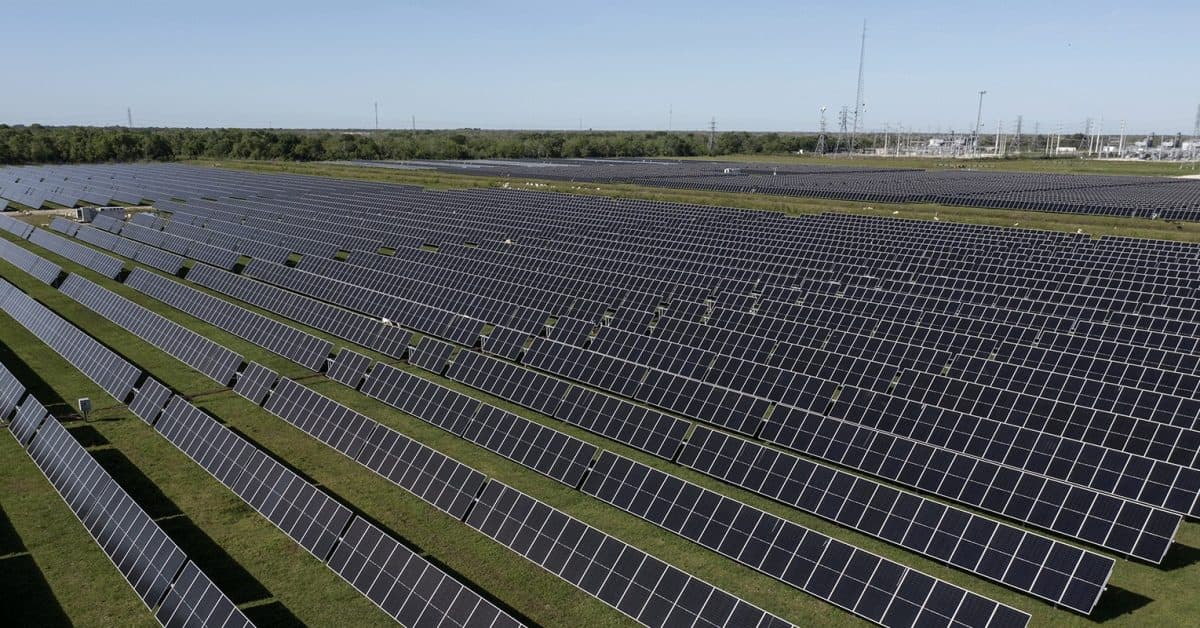
Solar Is Crushing Gas Growth Worldwide, a New Report Finds
Why It Matters
The shift reduces exposure to fuel price volatility and geopolitical risk, accelerating the transition to cheaper, domestically sourced clean energy. Investors and policymakers must adjust strategies as gas loses its role as a transition fuel.
Key Takeaways
- •Solar added 636 TWh in 2025, 17× gas growth.
- •61 of 124 gas‑dependent economies have passed peak gas generation.
- •G7 gas output fell 50 TWh while renewables rose 123 TWh in 2025.
- •US supplied 26% of global gas generation, dominating remaining growth.
- •India’s gas share dropped to 2.3% of electricity mix in 2025.
Pulse Analysis
The Ember analysis underscores a decisive pivot in the global power sector: solar is now the dominant engine of new capacity, eclipsing natural‑gas by a wide margin. Between 2020 and 2025, solar’s 636 TWh surge dwarfed the 38 TWh rise in gas, pushing the gas share of electricity down to 21.8%. This trend reflects falling solar costs, faster deployment cycles, and the growing ability of renewables to meet baseload needs through storage and grid integration, reshaping investment priorities for utilities and independent power producers.
Geopolitical shocks have amplified the shift. Russia’s 2022 invasion of Ukraine and the 2026 Middle‑East conflict exposed the fragility of imported gas supplies, prompting Europe and Asia to accelerate domestic renewable builds. While the United States still generates a quarter of the world’s gas power, its growth is now the primary source of any remaining gas expansion, highlighting a geographic concentration that could become a strategic vulnerability. G7 nations collectively reduced gas output by 50 TWh in 2025, while renewables added 123 TWh, signaling a rapid erosion of gas’s former status as the default transition fuel.
Emerging economies are bypassing gas altogether. China, India, and Brazil—accounting for roughly 42% of global electricity demand—have kept gas shares low, with India’s gas proportion falling to 2.3% of its mix. This pattern suggests that future megaprojects will prioritize solar, wind, and storage, driving the world toward a potential global peak in gas generation. Policymakers and investors should therefore recalibrate risk models, focusing on renewable‑centric portfolios and the ancillary services needed to support a grid increasingly powered by intermittent sources.
Solar is crushing gas growth worldwide, a new report finds
Comments
Want to join the conversation?
Loading comments...