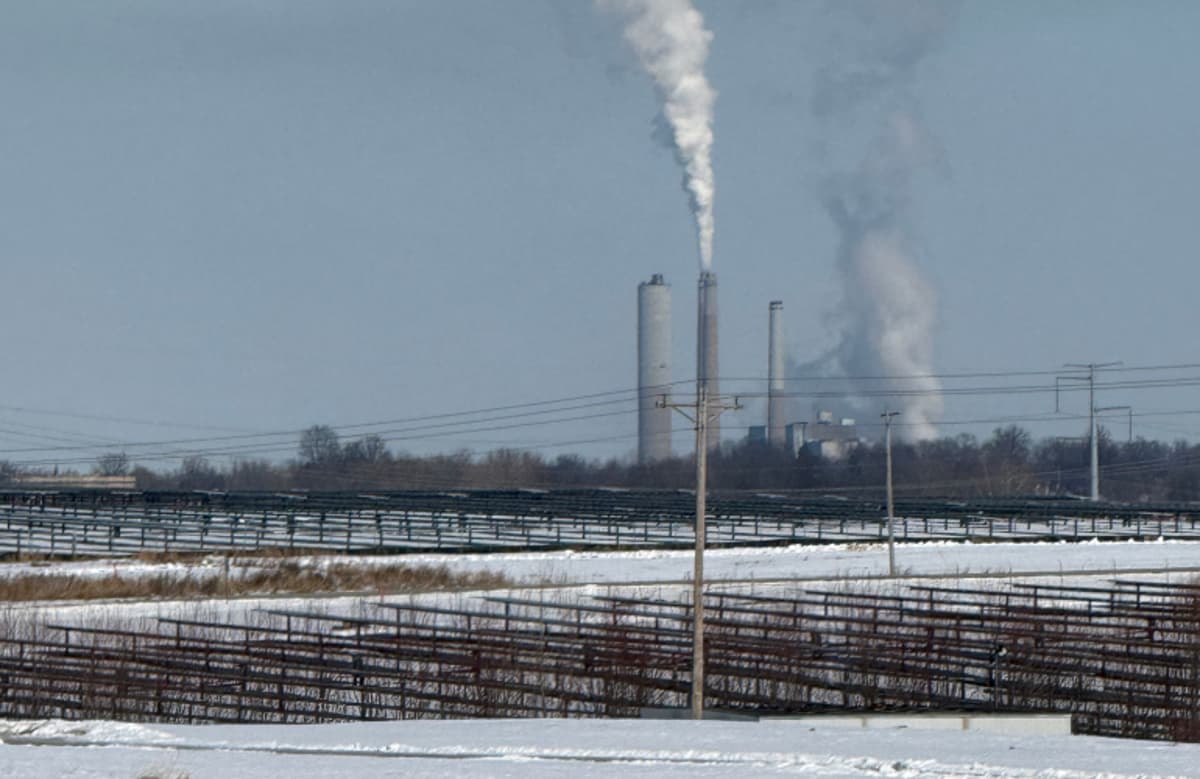
Solar + Storage Project Comes Online in Shadow of Indiana Coal-Fired Plant
Why It Matters
The shift accelerates Indiana’s transition from coal to cleaner energy, enhancing grid reliability and delivering economic incentives for the local community. It signals broader utility‑scale renewable adoption in the Midwest’s traditionally coal‑heavy markets.
Key Takeaways
- •250 MW solar, 180 MWh storage now operational
- •Replaces two 1960s coal units at 2‑GW plant
- •Gas will take over remaining coal units
- •AES commits $1.1 billion to Pike County investments
- •Energy‑community status raises tax credit to 40 %
Pulse Analysis
The Petersburg Energy Center marks a pivotal step in the Midwest’s energy transformation, as AES Indiana replaces aging coal capacity with a sizable solar‑plus‑storage complex. By installing 250 MW of photovoltaic generation alongside a 180 MWh battery, AES not only curtails emissions but also provides fast‑response power that can smooth intermittent output. This configuration supports the plant’s reliability mandate while the adjacent coal units transition to natural gas, creating a hybrid system that balances baseload stability with renewable flexibility.
Beyond the technical merits, the project carries substantial economic weight for Pike County. AES’s $1.1 billion investment plan, spanning 2024‑2025, underscores a commitment to job creation and local infrastructure. The designation as an Energy Community elevates the state tax credit to 40 %, a financial lever that encourages further private capital in the region. Coupled with the earlier 800 MWh battery installation, the new assets enhance grid resilience, reduce peak‑load costs, and position the county as a model for clean‑energy‑driven economic development.
Nationally, utilities are increasingly pairing solar farms with storage to meet both regulatory decarbonization targets and market demand for dispatchable renewables. AES’s approach reflects a broader industry trend of retrofitting legacy fossil‑fuel sites with low‑carbon technologies, leveraging existing transmission corridors and land assets. As more coal plants in the United States face retirement or conversion, projects like Petersburg illustrate a pragmatic pathway to maintain reliability, capture tax incentives, and accelerate the renewable transition in traditionally coal‑dependent regions.
Solar + storage project comes online in shadow of Indiana coal-fired plant


Comments
Want to join the conversation?
Loading comments...