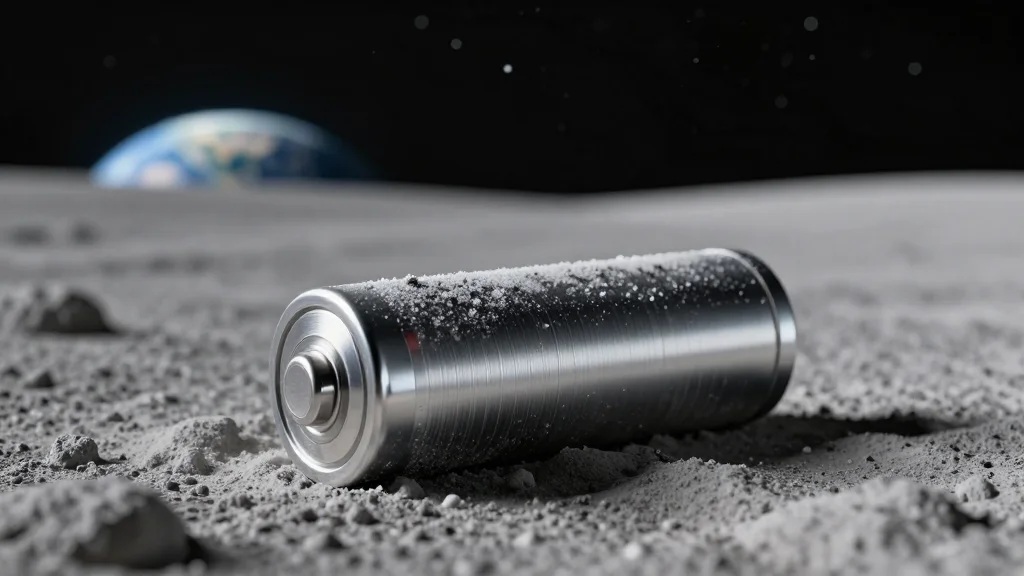
Solidion Technology Announces Patented Extreme-Climate Battery Technology Targeting Aerospace and AI Applications
Companies Mentioned
Why It Matters
The technology addresses a critical power‑reliability gap in extreme environments, giving aerospace firms a safer, lighter energy source while opening diversified revenue streams for Solidion across space and clean‑energy sectors.
Key Takeaways
- •Gen‑ECB operates from –80 °C to +60 °C using graphene thermal management
- •Batteries achieve >380 Wh/kg energy density with solid‑state electrolytes
- •Targets satellite, LEO AI data centers, crewed spacecraft, lunar infrastructure
- •Patented technology positions Solidion for multi‑planetary supply‑chain partnerships
- •Expands revenue potential into EVs and terrestrial UPS markets
Pulse Analysis
Solidion Technology’s Generation Extreme‑Climate Battery (Gen‑ECB) tackles one of the toughest engineering challenges in the burgeoning space economy: reliable power across temperature swings that can exceed 140 °C. By embedding graphene’s superior thermal conductivity inside each cell, the system can shed heat during intense solar exposure and draw warmth from solar panels when ambient temperatures plunge to –80 °C. This active temperature regulation mitigates thermal runaway risk and extends cycle life, a critical advantage for satellites, low‑Earth‑orbit AI data centers, and crewed vehicles that cannot afford power interruptions.
The Gen‑ECB platform is complemented by Solidion’s suite of solid‑state cells, including silicon‑rich lithium‑ion, anode‑less lithium metal, and lithium‑sulfur chemistries that promise energy densities above 380 Wh/kg. In spacecraft design, every kilogram saved translates into additional payload capacity or reduced launch cost, while non‑flammable electrolytes address stringent safety standards for crewed missions. By delivering high‑energy, lightweight, and thermally stable power packs, Solidion positions itself to support lunar habitats, surface rovers, and deep‑space probes where conventional batteries would either overheat or freeze.
Beyond aerospace, the same temperature‑resilient chemistry can be leveraged for electric‑vehicle packs that must perform in Arctic winters and desert heat, as well as for uninterruptible power supplies protecting AI‑driven data centers from grid fluctuations. As the global clean‑energy transition accelerates, manufacturers that can guarantee safety, density, and reliability gain a competitive edge. Solidion’s patented portfolio also opens licensing opportunities with established battery OEMs, potentially generating recurring revenue streams while the company scales production. Investors are likely to view the technology as a strategic asset in the multi‑planetary and terrestrial power markets.
Solidion Technology announces patented extreme-climate battery technology targeting aerospace and AI applications
Comments
Want to join the conversation?
Loading comments...