Spain’s Offshore PV Potential Estimated at 6.48 GW
Why It Matters
Floating solar could deliver a sizable, low‑conflict renewable supply that complements offshore wind, bolsters grid stability, and speeds Spain’s path to carbon neutrality.
Key Takeaways
- •Spain could host up to 6.48 GW floating solar capacity.
- •Potential covers 6.2‑9% of Spain’s electricity demand.
- •High‑potential sites concentrate in Strait of Gibraltar and Canary Islands.
- •Depth constraints limit installable capacity despite larger maritime area.
- •Study urges inclusion of offshore PV in future maritime spatial plans.
Pulse Analysis
Spain’s sunny coastline has long been a cornerstone of its renewable strategy, but land‑based solar faces mounting competition for space and public acceptance. Floating photovoltaic (FPV) systems sidestep these constraints by harnessing the cooling effect of seawater, which can boost output by up to 10% compared with equivalent on‑shore farms. As European nations chase aggressive decarbonisation targets, FPV offers a way to expand generation capacity without sacrificing valuable agricultural or urban land, positioning Spain as a potential leader in this emerging niche.
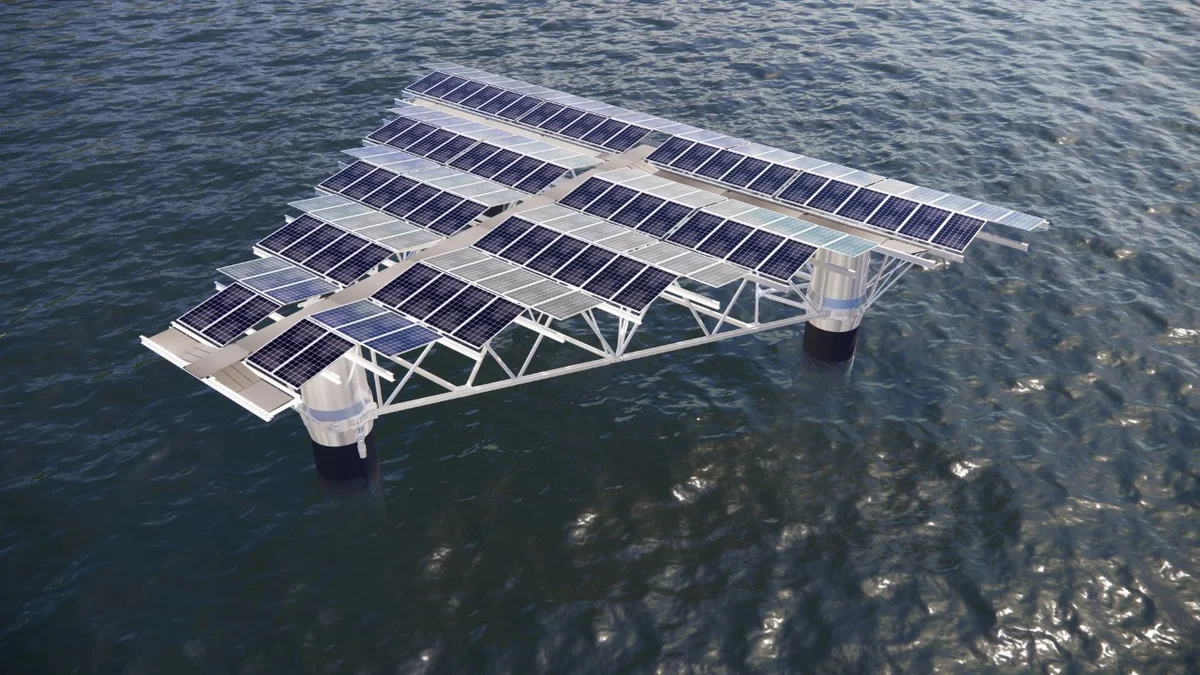
The University of A Coruña’s recent study applied Spain’s Maritime Spatial Planning (POEM) framework to map installable FPV capacity. By modeling the Dutch‑engineered Merganser platform—each unit delivering 0.52 MW—the researchers identified two scenarios. In high‑potential offshore‑wind zones, up to 6.48 GW could be deployed, largely around the Strait of Gibraltar and the Canary Islands. A broader, less restrictive scenario yields 4.45 GW, with the Mediterranean basin emerging as the main hub. Crucially, water depth proved a limiting factor; deeper waters increase mooring costs and spacing, curbing the practical footprint despite larger total area.
The findings carry clear policy implications. Spain’s current POEM does not earmark zones for offshore PV, creating regulatory ambiguity that could stall investment. Incorporating FPV into future maritime plans would provide developers with certainty, encourage hybrid wind‑solar projects, and diversify the offshore renewable mix. For the industry, the study signals a viable pathway to shorter payback periods—reported as low as 2.8 years for some FPV pilots—and a new revenue stream that complements wind‑generated power, enhancing overall grid resilience as the nation scales up its clean‑energy ambitions.
Spain’s offshore PV potential estimated at 6.48 GW
Comments
Want to join the conversation?
Loading comments...