Regulatory uncertainty in Spain threatens investment pipelines, while clearer frameworks elsewhere shape financing terms that are critical for Europe’s grid‑scale storage transition and renewable integration.
Europe’s battery energy storage system (BESS) market has accelerated over the past decade, buoyed by the EU’s Clean Energy Package that integrates storage into electricity market rules. This policy push has unlocked new revenue streams, such as capacity and ancillary services, encouraging investors to scale projects across the continent. Yet, the pace of deployment varies sharply between member states, reflecting divergent national policies, grid readiness, and permitting environments.
In Spain, the absence of a fully operational regulatory framework remains a critical bottleneck. Although draft capacity‑market mechanisms aim to remunerate large‑scale batteries, implementation has slipped beyond the early‑2026 target, leaving developers without reliable, long‑term cash flows. Italy, by contrast, offers structured procurement schemes that have generated strong auction demand, but developers still grapple with fragmented permitting authorities that delay project timelines. These national disparities directly affect lenders’ risk assessments, as predictable revenue and clear market rules are prerequisites for financing.
Nuveen Infrastructure’s recent activities illustrate how sophisticated investors navigate this landscape. After commissioning a 30 MW BESS in Finland, the firm is co‑developing an 800 MW portfolio in Italy, emphasizing sponsor creditworthiness, grid certainty, and robust warranty structures. Banks now demand a hybrid revenue mix—combining contracted tolling contracts with merchant exposure—to mitigate market volatility. Continued grid upgrades and coordinated policy signals across Europe will be essential to unlock further BESS capacity and sustain the continent’s clean‑energy ambitions.
By Cameron Murray · February 3, 2026
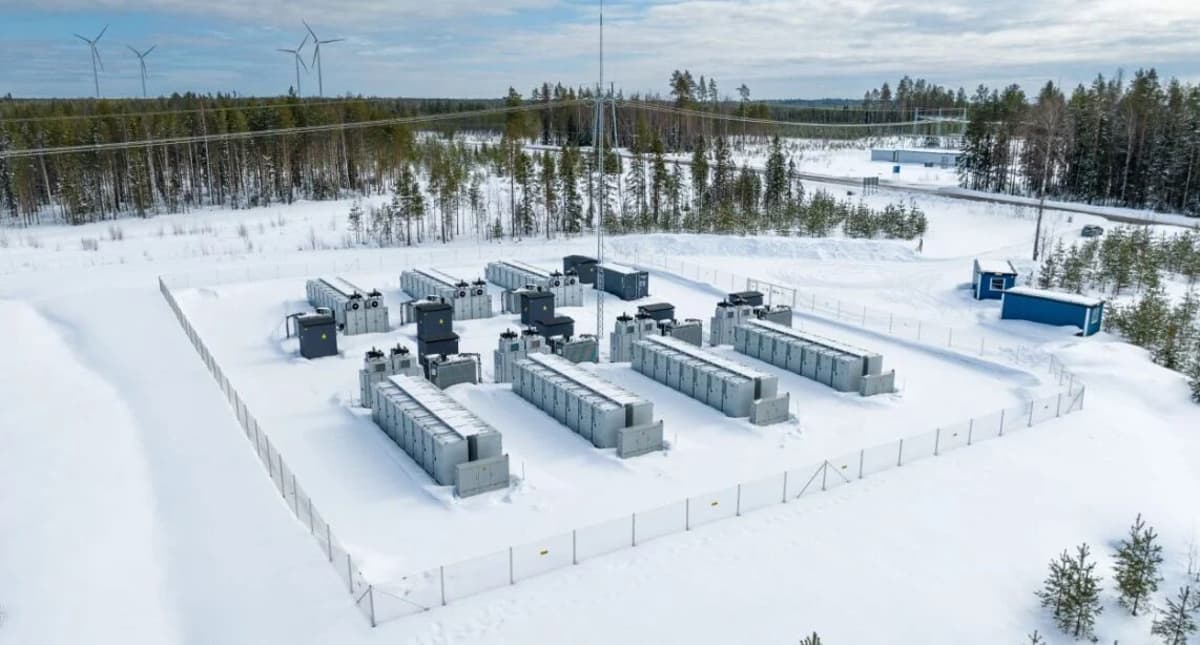
A project in northern Finland owned by Nuveen Infrastructure and Ilmatar. Image: Ilmatar.
While steps are being taken, Spain still lacks the market mechanisms and regulatory framework for large‑scale energy storage. That’s according to Isabel Rodriguez de Rivera, managing director of investor Nuveen Infrastructure, in conversation with Energy‑Storage.news.
Rodriguez de Rivera will be speaking on the “Tolls are Trending, Merchant is Waning: Structuring Bankable Deals in 2026” panel discussion on Day One of the Energy Storage Summit 2026, which runs on 24‑25 February in London, put on by Solar Media, part of Informa Markets.
Nuveen, formerly Glennmont Partners, is a London‑headquartered investor active in clean energy and battery energy storage systems internationally. It commissioned a 30 MW BESS in Finland last year (pictured above) and has also partnered with Exus Renewables to deploy 800 MW of projects in Italy.
Rodriguez de Rivera is also speaking today on the “How Solar & Storage Valuations Are Responding to Market Pressures?” panel at the Solar Finance and Investment Europe (SFIE) event, also Solar Media‑run.
Energy‑Storage.news: How would you characterise the current state of the European energy storage market, in terms of the key trends, major successes and achievements, and challenges still to be overcome?
Isabel Rodriguez de Rivera: In recent years, Europe has experienced substantial growth in the deployment of BESS, despite a moderate slowdown in market expansion in 2024. The European Union has taken significant steps to integrate energy storage into its electricity market framework through the Clean Energy Package. Nevertheless, challenges remain.
Same question, but for specific national markets you are observing?
Italy: Benefits from public support regimes are the base revenue stream, like the Capacity Market or the Electric Storage Capacity Procurement Mechanism (MACSE), which has generated significant appetite from producers resulting in an extremely competitive auction. In Italy, one of the main obstacles is the slow and complex permitting process, paired with the fragmentation of responsibilities among local, regional and national authorities. Bankability in these projects heavily relies on revenue streams as well as warranty coverage.
Spain: One of the main barriers is the absence of a comprehensive regulatory framework. Despite progress in recent years the regulatory landscape remains incomplete. There is no remunerated market for the flexibility services these assets can provide, and administrative procedures remain complex. Capacity markets, which will be designed to allow commercial‑scale batteries to participate, are currently being developed in Spain. These markets were expected to be implemented in late 2025 or early 2026 but there has not been strong signalling yet.
The bankability of BESS projects in Spain – similar to those in Italy – depends on several key factors that lenders and investors use to assess risk and project viability.
How is the financing of BESS projects evolving?
Banks are evolving in their understanding of more complex revenue streams for BESS, which are fundamental for bankability as well as the interrelation of various revenue streams in hybrid assets. A key focus is placed on ensuring bankability with:
Project sponsors’ strength
Grid certainty
Appropriate warranty coverage
Regulatory and market frameworks – to participate in capacity and ancillary service mechanisms as well as centralised and local grid service tenders
Sufficient hedging revenue streams
Closely related to that is how projects are monetised: how is the balance between merchant and tolling/fixed revenue schemes changing?
This varies depending on the set‑up of the promoter as well as risk appetite; typically a good balance of contracted revenues and merchant is preferred to ensure bankability, secured long‑term revenues and to provide certain enhancement of equity returns.
Grid and long interconnection backlogs are commonly cited as a major challenge: what measures do you see being taken to alleviate this, and how would you assess/estimate their impact?
Investment in grids – generally across Europe.
Comments
Want to join the conversation?
Loading comments...