Energy News and Headlines
  • All Technology
  • AI
  • Autonomy
  • B2B Growth
  • Big Data
  • BioTech
  • ClimateTech
  • Consumer Tech
  • Crypto
  • Cybersecurity
  • DevOps
  • Digital Marketing
  • Ecommerce
  • EdTech
  • Enterprise
  • FinTech
  • GovTech
  • Hardware
  • HealthTech
  • HRTech
  • LegalTech
  • Nanotech
  • PropTech
  • Quantum
  • Robotics
  • SaaS
  • SpaceTech
AllNewsDealsSocialBlogsVideosPodcastsDigests

Energy Pulse

EMAIL DIGESTS

Daily

Every morning

Weekly

Sunday recap

NewsDealsSocialBlogsVideosPodcasts
EnergyNewsStudy Highlights Onshore Power Supply Challenge for LNG-Powered Ships
Study Highlights Onshore Power Supply Challenge for LNG-Powered Ships
Global EconomyEnergy

Study Highlights Onshore Power Supply Challenge for LNG-Powered Ships

•February 4, 2026
0
Seatrade Maritime
Seatrade Maritime•Feb 4, 2026

Companies Mentioned

ZIM

ZIM

ZIM

Why It Matters

The findings highlight a hidden barrier to EU ports’ 2030 OPS mandate, affecting both emission targets and the economic competitiveness of LNG‑fuelled fleets.

Key Takeaways

  • •OPS mandates EU ports by 2030 for emissions reduction
  • •LNG ships with membrane/Type B tanks struggle with low pressure
  • •Dual‑fuel boilers can burn BOG on OPS, causing inefficiency
  • •Emergency BOG venting risk low but methane impact high
  • •Study urges shared BOG management practices and regulatory review

Pulse Analysis

European ports are racing to meet the 2030 on‑shore power supply (OPS) requirement, a cornerstone of the EU’s maritime decarbonisation agenda. OPS allows vessels to shut down auxiliary engines, cutting local pollutants and greenhouse gases. However, LNG‑fuelled ships face a unique challenge: managing boil‑off gas (BOG) that naturally evaporates from cryogenic fuel tanks. When a vessel plugs into shore power, its traditional BOG‑handling systems—primarily engines and generators—are offline, forcing operators to rely on alternative solutions that may not align with OPS efficiency goals.

Technical nuances further complicate the picture. Membrane and Type B LNG tanks operate at lower pressures, limiting their ability to store BOG for extended periods while docked. In contrast, Type C tanks tolerate higher pressures, offering a buffer against rapid gas buildup. Dual‑fuel boilers and auxiliary engines can combust BOG on‑site, but doing so while connected to OPS often results in over‑burning, wasting fuel and undermining the environmental benefits of shore power. The worst‑case scenario—emergency venting of methane—remains rare, yet its climate impact is severe given methane’s 85‑fold global warming potential over 20 years.

Policy makers and ship owners must reconcile these technical constraints with regulatory objectives. The CE Delft report urges the maritime community to exchange operational best practices for BOG management under OPS, and to consider temporary regulatory flexibilities—such as reduced FuelEU penalties—for vessels lacking advanced BOG‑handling equipment. Aligning OPS mandates with realistic ship capabilities will safeguard emission reductions, preserve competitive equity, and accelerate the broader transition toward cleaner, sustainable shipping.

Study highlights onshore power supply challenge for LNG-powered ships

Gary Howard, Middle East correspondent · February 4, 2026 · 3 Min Read

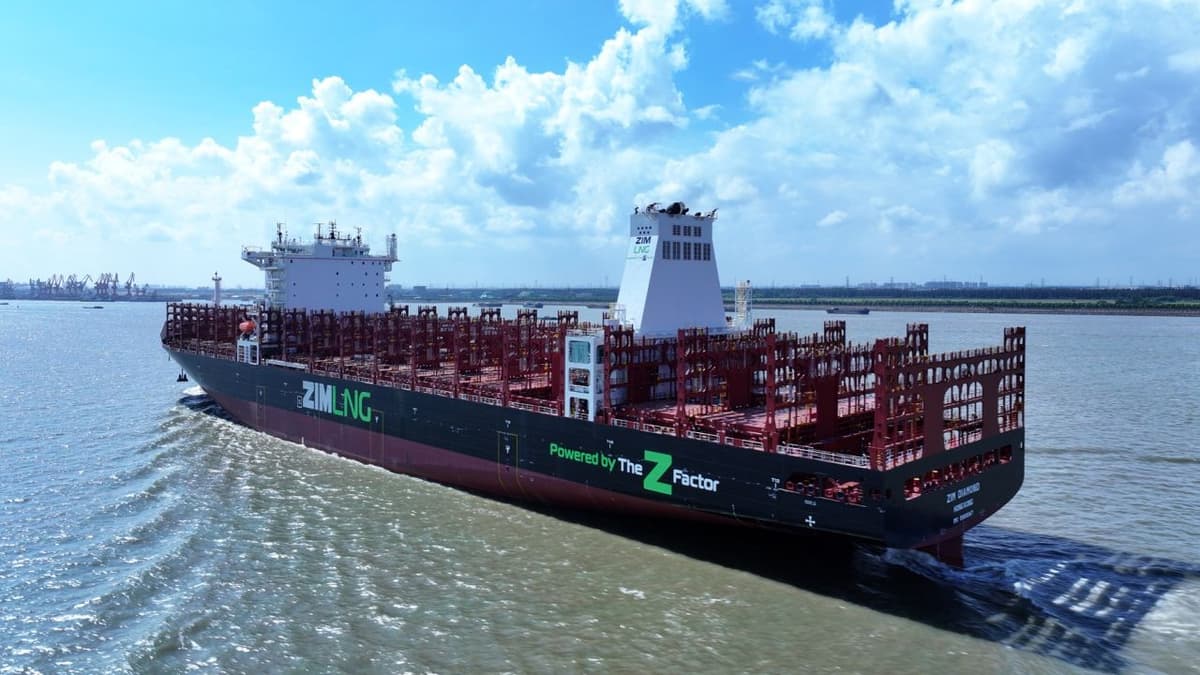
![Image: Zim container ship]

Article

Two technologies aimed at reducing emissions from shipping may face a compatibility challenge for vessels in port, according to a report by CE Delft commissioned by German environmental association Nabu.

The report explores calls by LNG‑powered vessels at berths with on‑shore power supply (OPS), a service some European ports will be mandated to offer from 2030. Vessels connecting to OPS shut off their engines and generators, reducing emissions of greenhouse gases and pollutants in port, meeting their energy requirements through a physical connection to the power grid ashore.

For many LNG‑fuelled ships, the engines and generators are the main method of using the boil‑off gas (BOG) produced as LNG in its fuel tanks evaporates. BOG must be managed through venting, burning, reliquefaction, or some other method to prevent a dangerous build‑up of pressure in the tanks.

The study found that ships with membrane and Type B tanks are particularly affected due to their lower pressure tolerance, while Type C tanks can handle higher pressures and therefore handle BOG build‑up for longer.

While vessels equipped with dual‑fuel boilers can continue to burn BOG while connected to OPS, Nabu said this can lead to inefficient use of energy as much more gas is burned than is required to meet the heating needs onboard.

The study found that the risk of LNG‑powered ships using OPS having to perform emergency venting of BOG was relatively low due to the use of dual‑fuel boilers and dual‑fuel auxiliary engines, although it could not confirm a gas‑fired or dual‑fuel boiler was present on all of the ships it studied. There is also a question as to how BOG would be managed should it not be possible to use the boiler.

Venting BOG to the atmosphere is a worst‑case scenario from an environmental perspective as methane has a global warming potential around 85 times higher than carbon dioxide over a 20‑year period. The procedure is not allowed except in emergency situations.

As a first step in addressing the potential problem, the study recommends the sharing of operational experience on BOG management while connected to OPS to avoid the unnecessary combustion of the gas, or an emergency venting.

The report also recommends further investigation into the optimal combination of regulatory requirements on energy efficiency and use of OPS while avoiding additional emissions and wasting energy.

“For older ships without alternative BOG management options, temporary special rules – such as reduced FuelEU penalties for limited OPS hours – could be justified. However, possible negative effects such as higher emissions, reduced incentives for cleaner sustainable technologies, and distortions of competition must be carefully weighed,” said Nabu, summarising the report.

Non‑OPS‑compliant LNG ships should never have a monetary advantage over those in compliance, it added.

Author

Gary Howard – Middle East correspondent for Seatrade Maritime News.

Read Original Article
0

Comments

Want to join the conversation?

Loading comments...