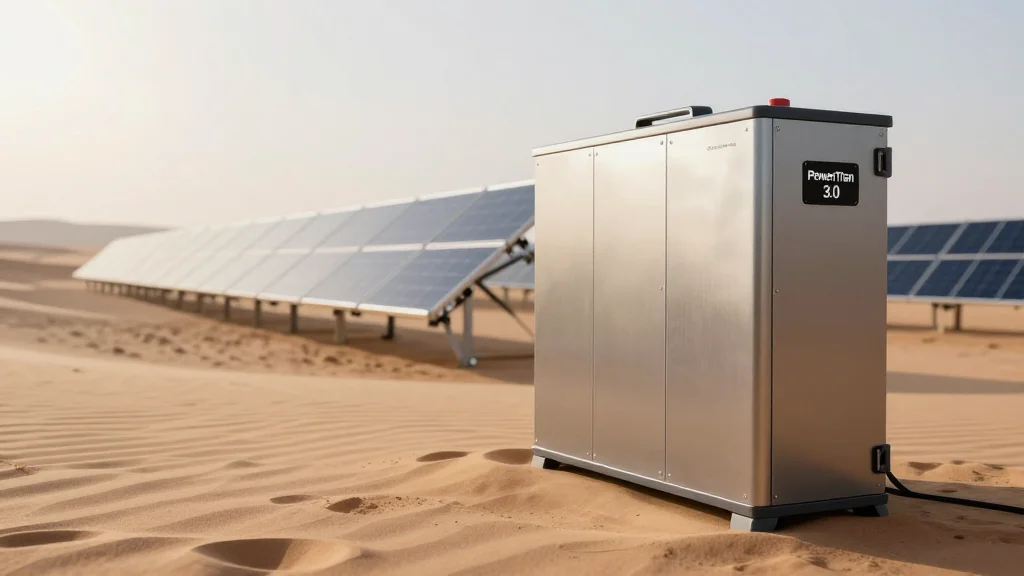
Sungrow to Supply 7.5 GWh Battery System for Abu Dhabi’s First Round‑the‑Clock Renewable Project

Companies Mentioned
Why It Matters
The Sungrow‑Masdar deal demonstrates that gigascale renewable‑plus‑storage projects can overcome the intermittency that has long limited solar’s role in baseload generation. By delivering 24/7 clean power, the RTC project could reduce the UAE’s reliance on natural‑gas peaker plants, cutting carbon emissions and operational costs. Moreover, the project's design—high efficiency, temperature‑tolerant hardware—offers a replicable blueprint for other sun‑rich, hot climates seeking to transition to low‑carbon grids. If the RTC model proves economically viable, it could accelerate the Gulf’s shift toward renewable‑dominant electricity mixes, influencing regional policy, attracting further private investment, and reshaping the global energy market toward storage‑centric solutions.
Key Takeaways
- •Sungrow to deliver 7.5 GWh of PowerTitan 3.0 battery storage for Abu Dhabi’s RTC project.
- •Masdar and EWEC’s RTC combines 5.2 GW solar PV with a total 19 GWh BESS.
- •Storage units achieve 99.3 % peak efficiency and 90 % round‑trip efficiency.
- •System designed for operation up to 55 °C, suitable for desert environments.
- •Project slated for 2027 commissioning, aiming to provide round‑the‑clock renewable power.
Pulse Analysis
Sungrow’s entry into the UAE’s flagship RTC project signals a strategic pivot toward high‑temperature, high‑capacity storage solutions that address the Gulf’s unique operational challenges. The partnership leverages Sungrow’s silicon‑carbide conversion technology, which not only pushes efficiency margins but also reduces cooling requirements—a cost advantage in a region where ambient temperatures regularly exceed 40 °C. This technical edge could give Sungrow a competitive foothold against rivals like Tesla and LG Energy Solution, which have historically focused on temperate‑climate deployments.
From a market perspective, the RTC project serves as a litmus test for the economic viability of baseload renewables in oil‑rich economies. If the project meets its tariff targets, it could catalyze a wave of similar contracts across the GCC, prompting utilities to re‑evaluate legacy generation assets. The scale of the storage component—nearly 20 GWh—also suggests that future financing structures will increasingly bundle solar and storage into single, bankable packages, simplifying capital allocation for sovereign wealth funds and private investors alike.
Looking ahead, the success of the RTC initiative will hinge on the integration of advanced grid‑management software and demand‑response mechanisms that can fully exploit the 8‑hour charge/16‑hour discharge profile. As digital infrastructure expands in the region, the ability to synchronize storage dispatch with real‑time load patterns will become a decisive factor in achieving the promised 24/7 clean power. Should these systems perform as projected, the UAE could set a new global benchmark for renewable baseload delivery, reshaping investment flows toward storage‑centric renewable projects worldwide.
Sungrow to Supply 7.5 GWh Battery System for Abu Dhabi’s First Round‑the‑Clock Renewable Project
Comments
Want to join the conversation?
Loading comments...