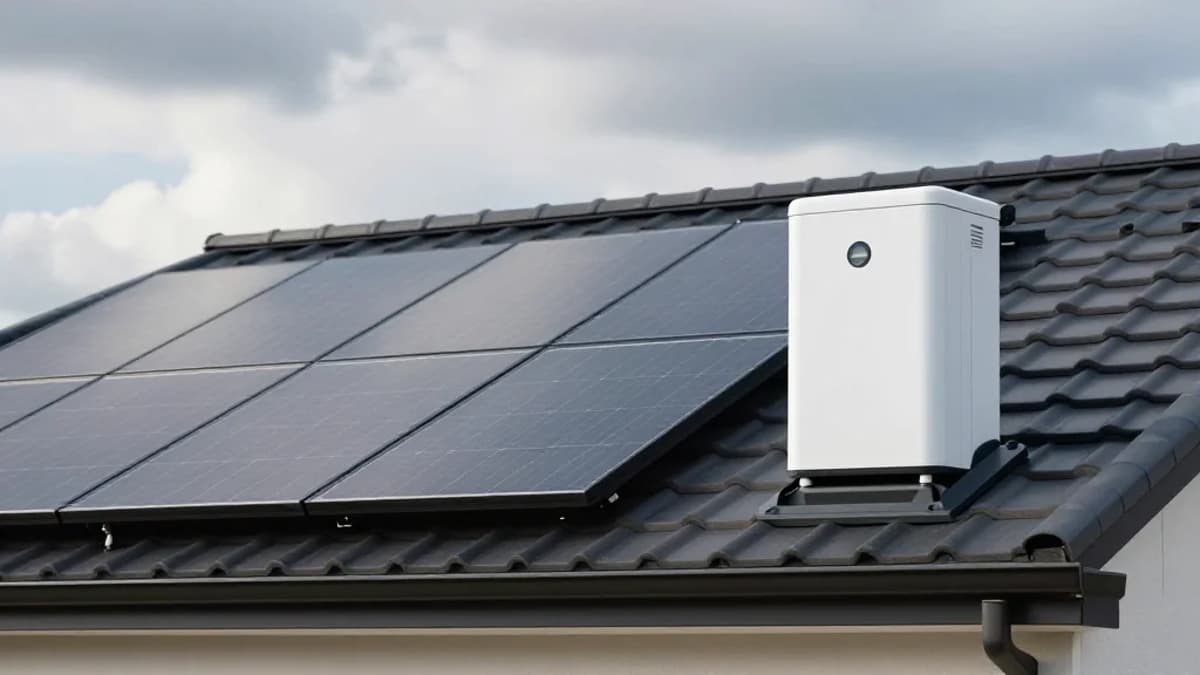
Sunrun Installation Volumes Fall in Q4 2025 as VPP Capacity Grows
•March 2, 2026
0
Why It Matters
The slowdown highlights the challenges of scaling residential solar amid complex utility and tax environments, while Sunrun’s strategic shift could reshape profit dynamics in the distributed energy market.
Key Takeaways
- •Q4 subscriber additions fell 17% YoY.
- •Storage attachment rate rose to 71%.
- •Affiliate channel volume to drop over 40% in 2026.
- •Joint venture targets 300 MW for 40,000 homes.
- •Stock fell 35% after earnings, erasing half gains.
Pulse Analysis
Sunrun’s fourth‑quarter 2025 report shows a clear slowdown in its core residential solar business. Subscriber additions dropped 17% year‑over‑year to 25,475, while gross subscriber value slipped 2% to $50.2 million and net subscriber value plunged 30% to $9.1 million. Installation volumes also contracted, with solar capacity down 11% and storage capacity down 5% compared with the prior year. The dip arrives as the One Big Beautiful Bill Act (OBBBA) continues to reshape tax incentives, but the immediate impact on order flow remains negative.
In response, Sunrun is trimming its reliance on affiliate channels, which historically supplied roughly one‑third of its volume. Management projects a more than 40% reduction in affiliate‑driven installations for 2026, while direct sales are expected to grow in the high single‑digit to low double‑digit range. This strategic pivot reflects the mounting complexity of utility rate structures, storage integration, and investment‑tax‑credit compliance that many competitors struggle to navigate. By concentrating on higher‑margin projects and quality‑focused customer acquisition, Sunrun aims to bolster its “upfront net subscriber value” margins despite lower total volumes.
The company’s recent joint venture with Hannon Armstrong Sustainable Infrastructure Capital could inject up to 300 MW of capacity across more than 40,000 homes, providing a new financing avenue and diversifying risk. This partnership aligns with Sunrun’s broader vision of building the nation’s largest distributed power plant, leveraging its 4 GWh of networked battery storage and participation in 18 utility “home‑to‑grid” programs that dispatched 425 MW in 2025. While Sunrun anticipates modest volume declines in 2026, the focus on high‑margin, VPP‑enabled deployments positions it to capture incremental revenue as regulatory certainty improves.
Sunrun installation volumes fall in Q4 2025 as VPP capacity grows
0
Comments
Want to join the conversation?
Loading comments...