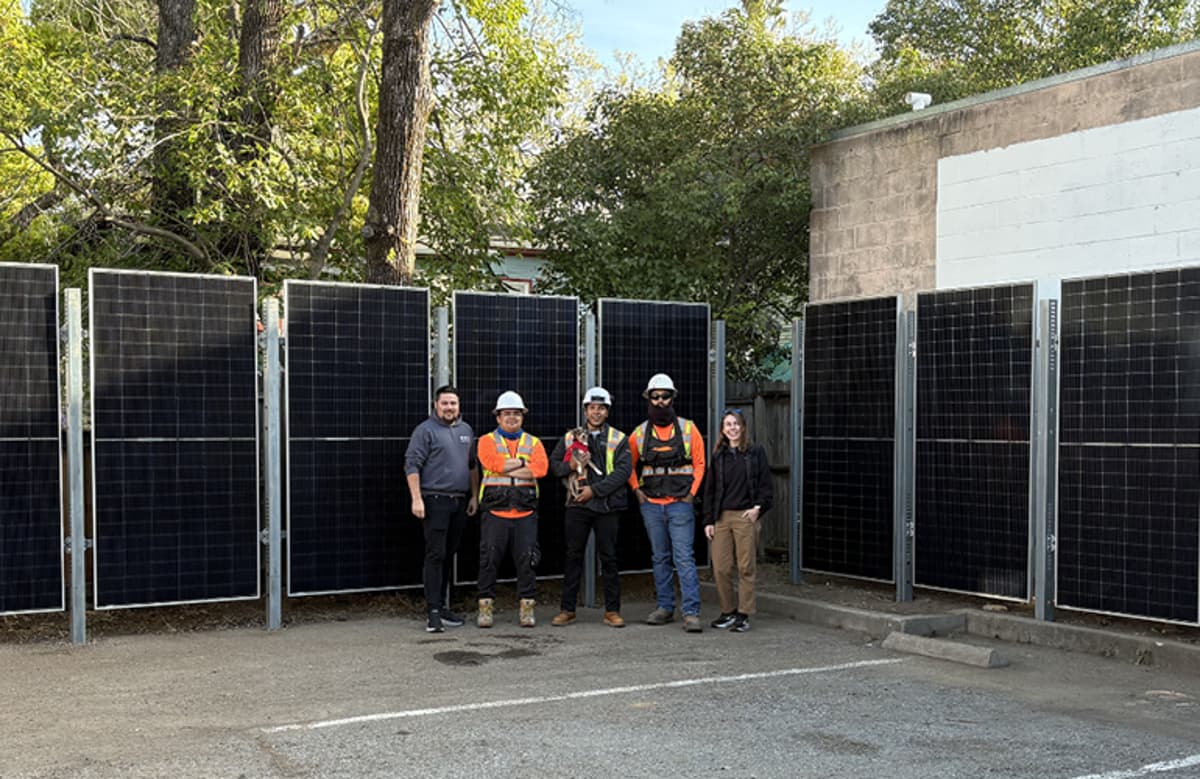
Sunzaun Installs 1st Vertical Solar Fence in US Urban Neighborhood
Why It Matters
Vertical bifacial solar offers a practical pathway for dense urban commercial properties to adopt renewable energy without sacrificing valuable roof or parking space. Demonstrating viable savings and aesthetic benefits could unlock a large, previously untapped market for solar installers.
Key Takeaways
- •First vertical bifacial solar fence installed on U.S. urban parking lot
- •16 panels generate $5k‑$10k annual savings for Bodhi Hot Yoga
- •Installation preserved all parking spaces and added aesthetic bollards
- •Data will guide future urban solar projects and reflectivity designs
Pulse Analysis
Vertical bifacial solar panels have long been a staple in European agriculture, where they line field edges to capture sunlight from both sides. By standing panels vertically, developers can harvest diffuse and reflected light, shifting peak output toward morning and evening hours. This orientation sidesteps the footprint constraints of traditional rooftop or ground‑mounted arrays, making it an attractive solution for cities where land is scarce and zoning rules are strict. The technology’s ability to turn a perimeter fence into a power‑generating asset redefines how urban developers think about renewable integration.
The Bodhi Hot Yoga installation illustrates the concept in practice. Sunzaun’s crew erected 16 bifacial modules, each 8‑9 feet tall, along the studio’s back parking lot in roughly ten days, a modest delay from the projected five‑day timeline. Crucially, no parking spots were lost; protective bollards were added, turning the fence into a visual upgrade. A white‑painted wall behind the panels serves as a test surface to boost rear‑face irradiance, a tactic that could be replicated with reflective facades or paved surfaces. Early financial models predict $5,000‑$10,000 in yearly electricity savings, a meaningful reduction for a business whose bills surged past $2,000 per month due to high‑energy heating and humidity systems.
If the forthcoming year of performance data validates these savings and demonstrates consistent bifacial gains, the model could catalyze broader adoption across dense commercial districts. Developers would gain a low‑impact, code‑friendly solar option that preserves existing parking and roof structures while delivering clean energy. Moreover, the approach aligns with municipal sustainability goals and could attract incentives aimed at retrofitting existing urban assets. As cities grapple with climate targets and limited space, vertical bifacial installations may become a cornerstone of the next wave of urban renewable projects.
Sunzaun installs 1st vertical solar fence in US urban neighborhood
Comments
Want to join the conversation?
Loading comments...