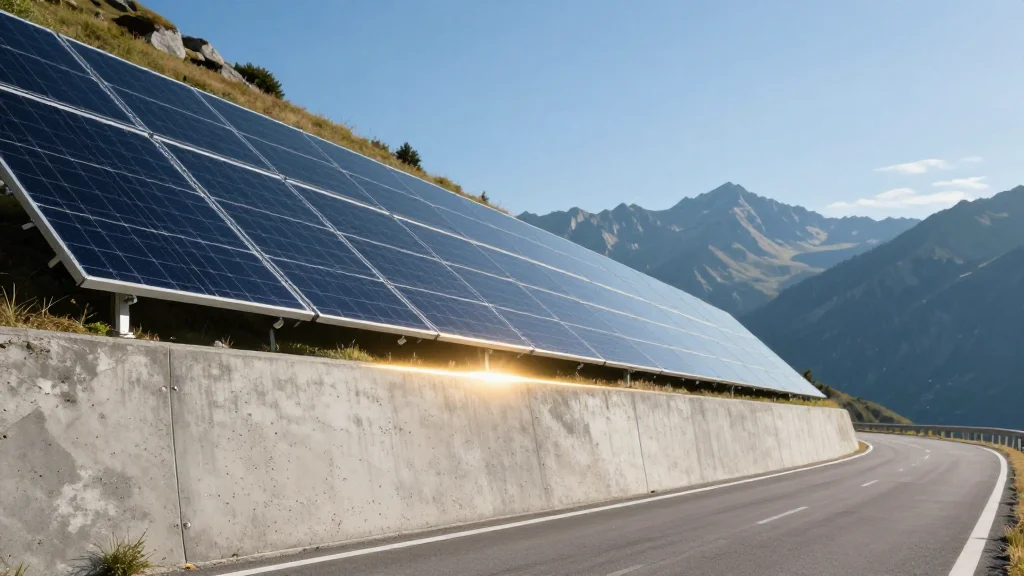
Switzerland Launches Call for PV Deployment on Cantonal Road Retaining Walls
Why It Matters
The program unlocks underused public infrastructure for clean energy, accelerating Switzerland’s renewable targets while avoiding new land consumption. It creates a new revenue stream for private partners and demonstrates a scalable model for other regions.
Key Takeaways
- •Grisons offers 50 road retaining walls for solar projects
- •Application deadline set for 31 Aug 2026
- •Participants handle financing, construction, operation, and decommissioning
- •Cantonal office will self‑install cost‑effective PV for road power
- •Initiative supports land‑saving renewable expansion across Swiss infrastructure
Pulse Analysis
Switzerland’s push to repurpose existing infrastructure for renewable generation is gaining momentum, and Grisons’ retaining‑wall solar call exemplifies this trend. By targeting 50 cantonal road walls, the canton sidesteps the land‑use constraints that often stall new solar farms, aligning with national goals to increase renewable electricity to 50% of consumption by 2030. The approach also leverages the high‑altitude, south‑facing geometry typical of Alpine roadways, delivering higher capacity factors than flat‑ground installations.
The program’s six‑stage procurement—starting with an expression of interest and culminating in building permits—places the full project risk on private partners, from financing to eventual de‑commissioning. Selection criteria such as structural integrity, orientation, and proximity to grid connections ensure that only technically viable sites advance. By granting exclusive usage rights without direct public compensation, Grisons creates a low‑overhead pathway for investors while retaining ownership of the underlying infrastructure. The Technical Office’s parallel plan to self‑install cost‑effective PV further diversifies supply sources and demonstrates a hybrid public‑private model.
Regionally, the initiative signals to European utilities that Swiss cantons are open to innovative, land‑efficient solar solutions, potentially spurring cross‑border collaborations. For the broader market, it highlights a replicable template: identify underused civil assets, set clear technical thresholds, and let private capital assume lifecycle responsibilities. As climate policies tighten and grid congestion rises, such infrastructure‑embedded solar projects could become a cornerstone of the continent’s clean‑energy transition.
Switzerland launches call for PV deployment on cantonal road retaining walls
Comments
Want to join the conversation?
Loading comments...