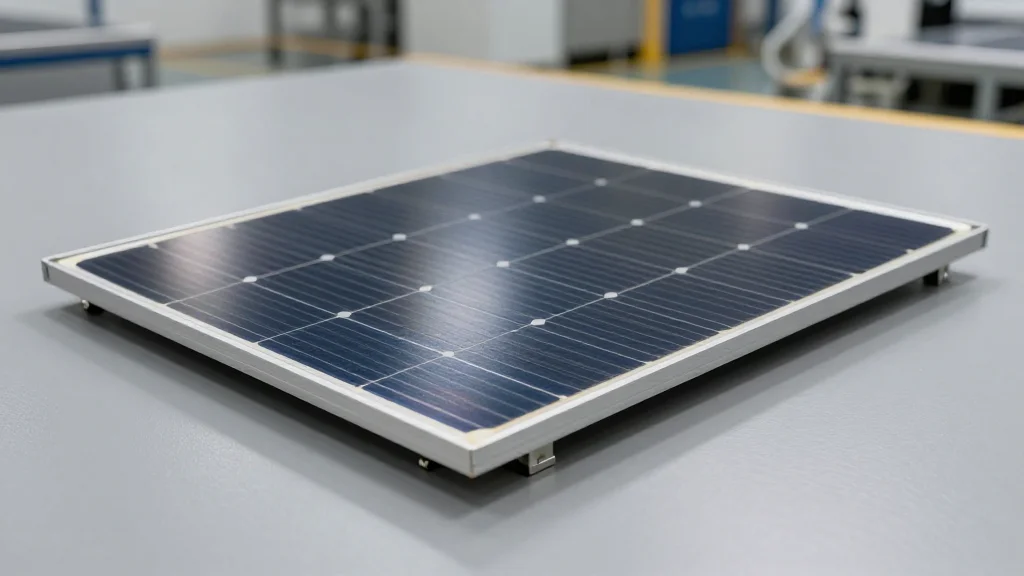
Tandem PV Launches Commercial Perovskite-Silicon Manufacturing in California
Why It Matters
The factory demonstrates that next‑generation, high‑efficiency solar modules can be produced domestically, promising lower levelized costs and greater supply‑chain resilience for utility‑scale projects.
Key Takeaways
- •40 MW perovskite‑silicon line begins production in Fremont.
- •Panels achieve 29.7% efficiency, under 1% annual loss.
- •Facility targets high‑volume output by 2028, boosting US solar supply.
- •Higher efficiency cuts land and BOS costs for utility projects.
- •DOE and California Energy Commission fund domestic next‑gen solar manufacturing.
Pulse Analysis
Perovskite‑silicon tandem cells have long been hailed for their ability to capture a broader spectrum of sunlight, pushing efficiencies beyond the 25‑30% ceiling of conventional silicon. Tandem PV’s new Fremont line, the first commercial‑scale effort in the United States, validates that the delicate perovskite layer can survive the rigors of high‑volume production while maintaining a sub‑1% annual power loss. By scaling devices to 60 times the size of early prototypes, the company shows that the material stack can be integrated into standard module formats without sacrificing durability.
The timing is strategic. AI‑driven workloads and exploding data‑center capacity are driving unprecedented electricity demand, pressuring developers to squeeze more power from each acre of solar‑farm land. Higher module efficiency directly reduces land acquisition and balance‑of‑system (BOS) expenses, which together account for a sizable share of total project costs. Domestic manufacturing also mitigates supply‑chain disruptions that have plagued the industry, especially after recent geopolitical shocks. Federal incentives and California’s aggressive clean‑energy targets further sweeten the economics for early adopters of tandem technology.
Looking ahead, Tandem PV plans to ship its first modules for customer trials later this year, with a roadmap toward full‑scale production by 2028. If the company meets its targets, the technology could compress levelized cost of energy (LCOE) enough to challenge traditional silicon dominance, prompting utilities and large‑scale developers to reconsider module selection criteria. Competitors are racing to commercialize similar tandem solutions, but Tandem PV’s early mover advantage, combined with policy backing, positions it to shape the next wave of U.S. solar deployment.
Tandem PV launches commercial perovskite-silicon manufacturing in California
Comments
Want to join the conversation?
Loading comments...