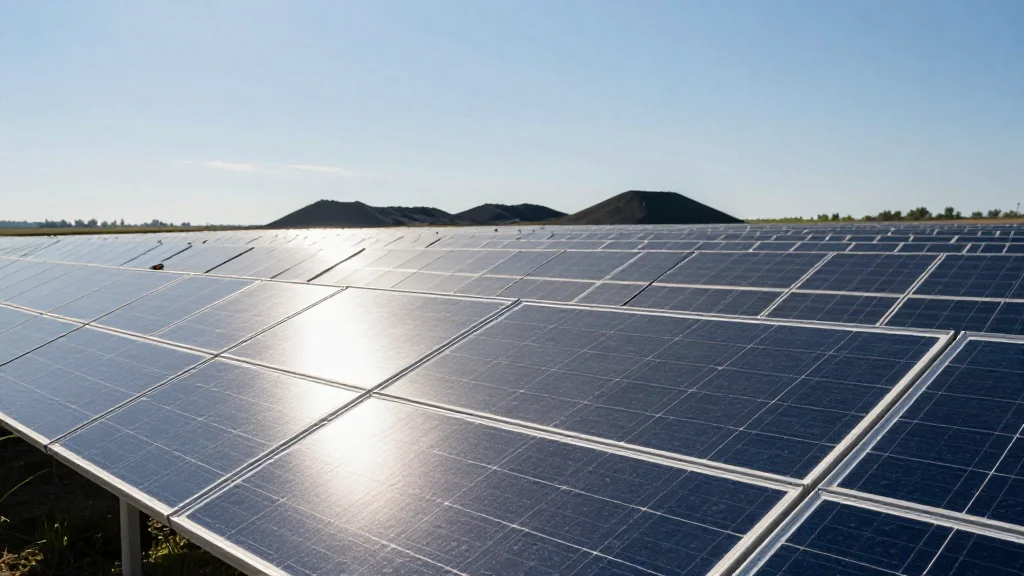
Texas Solar to Overtake Coal on ERCOT Grid in 2026, EIA Forecast Shows

Why It Matters
The projected solar‑coal crossover in ERCOT signals a decisive move toward cleaner electricity in the United States’ largest power market. By displacing coal, solar reduces carbon emissions, curtails water usage associated with coal cooling, and lessens the health impacts of particulate pollution. The shift also illustrates how market mechanisms—low operating costs and competitive pricing—can drive renewable adoption even in regions traditionally linked to fossil fuels. Nationally, Texas’s contribution of roughly 40 % of new solar capacity in 2026 positions the state as a pivotal engine of the country’s renewable expansion. This could accelerate federal climate goals, influence investment flows toward storage and grid modernization, and reshape the competitive landscape for generators across the nation.
Key Takeaways
- •EIA forecasts Texas utility‑scale solar will generate 78 billion kWh in 2026, surpassing coal’s 60 billion kWh.
- •Solar’s share of ERCOT generation rose from 4 % in 2021 to 12 % in 2025; coal’s share fell from 19 % to 13 %.
- •In March 2025, solar produced 4.33 billion kWh versus coal’s 4.16 billion, the first monthly crossover.
- •For 2027, solar is projected at 99 billion kWh, widening the gap to 33 billion kWh over coal’s 66 billion.
- •Texas is expected to account for about 40 % of U.S. solar capacity added in 2026, equal to 14 billion kWh.
Pulse Analysis
The ERCOT solar‑coal crossover is less a one‑off event and more a symptom of a broader market realignment. Texas’s energy‑only market, which rewards the lowest‑cost generator each hour, has naturally favored solar as its capital costs have plummeted and its capacity factor has risen with newer, higher‑efficiency panels. Coal, burdened by fixed fuel‑handling costs and aging infrastructure, cannot compete on price without substantial subsidies or carbon pricing—tools that have not been widely adopted in Texas.
Historically, Texas’s power mix has been shaped by abundant natural gas and a legacy of coal plants built during the 1970s and 1980s. The rapid deployment of solar, driven by private‑sector investment and favorable siting, is now rewriting that narrative. As solar capacity continues to expand, the next strategic challenge will be integrating storage to smooth out the seasonal dip in winter months. Battery installations, pumped hydro, and demand‑response programs will become critical to ensure reliability while preserving the cost advantages that solar currently enjoys.
Looking forward, the 2026 forecast could serve as a catalyst for policy makers to accelerate grid‑modernization initiatives. If solar maintains its trajectory, ERCOT may see a reduction in price spikes during summer peaks, lower overall system emissions, and a more resilient grid less dependent on fuel‑price volatility. Investors are likely to interpret the crossover as a green light for further capital allocation to Texas solar projects, potentially spurring a wave of new development that could cement the state’s leadership in the national renewable transition.
Texas Solar to Overtake Coal on ERCOT Grid in 2026, EIA Forecast Shows
Comments
Want to join the conversation?
Loading comments...