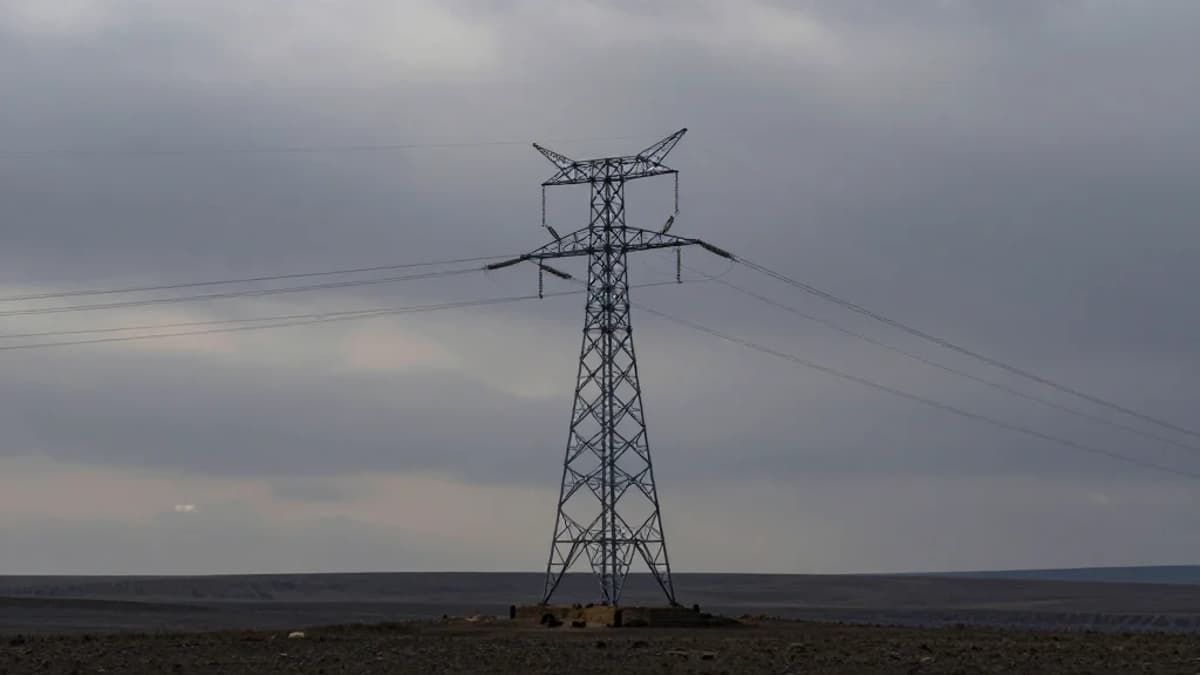
THE BIG PICTURE (Infographic): Blackouts in 2025
•March 2, 2026
0
Why It Matters
The expanding reliability risks threaten utility earnings, increase outage costs, and accelerate capital spending on storage, grid reinforcement and advanced protection, making grid resilience a top priority for investors and regulators worldwide.
Key Takeaways
- •2025 outages highlight voltage stability as emerging reliability threat
- •Data‑center loads create new, unplanned grid stability challenges
- •High renewable penetration stresses transmission, requiring storage and inertia
- •Extreme weather still accounts for half of U.S. outage customers
- •NERC calls for accelerated infrastructure and gas‑electric coordination
Pulse Analysis
The International Energy Agency’s annual Electricity series has traced a clear evolution in outage causality. While the 2024 edition still emphasized weather‑related storms and fuel‑supply shortfalls, the 2025 report flagged variable‑renewable droughts and the growing dependence on dispatchable capacity, long‑duration storage, and system inertia. By early 2026 the agency warned that operational complexity—particularly voltage stability, reactive‑power balance and protection coordination—has become the dominant reliability frontier as renewable penetration climbs above 40 % in many grids. This transition reshapes risk models and forces utilities to reconsider traditional adequacy metrics.
Real‑world events in 2025 illustrate those emerging threats. In the United States, a high‑voltage line failure in Virginia forced 40 data‑center loads (≈1.8 GW) onto backup power, creating a sudden voltage dip that NERC now classifies as a “large‑load” stability risk. Similar inverter‑based resource (IBR) ride‑through limits contributed to over 15 GW of unexpected generation loss across ten bulk‑power incidents. Across Europe, the Iberian Peninsula experienced an over‑voltage cascade that islanded the grid, while Chile’s 500‑kV substation protection malfunction plunged 98 % of the nation into darkness. These cases highlight the need for robust protection settings and real‑time reactive‑power management.
For investors and policymakers, the operational shift translates into a surge of capital‑intensive projects. Grid operators are accelerating deployment of synchronous condensers, FACTS devices and high‑capacity batteries to restore inertia and support voltage regulation. Regulators are revising N‑1 reliability standards to incorporate large, non‑traditional loads such as hyperscale data centers. Meanwhile, transmission planners are reassessing corridor redundancy after incidents in Brazil and Mexico revealed the fragility of long‑distance links. The convergence of climate‑driven extremes and renewable‑driven complexity makes grid resilience a decisive factor in utility earnings forecasts and in the broader energy transition narrative.
THE BIG PICTURE (Infographic): Blackouts in 2025
0
Comments
Want to join the conversation?
Loading comments...