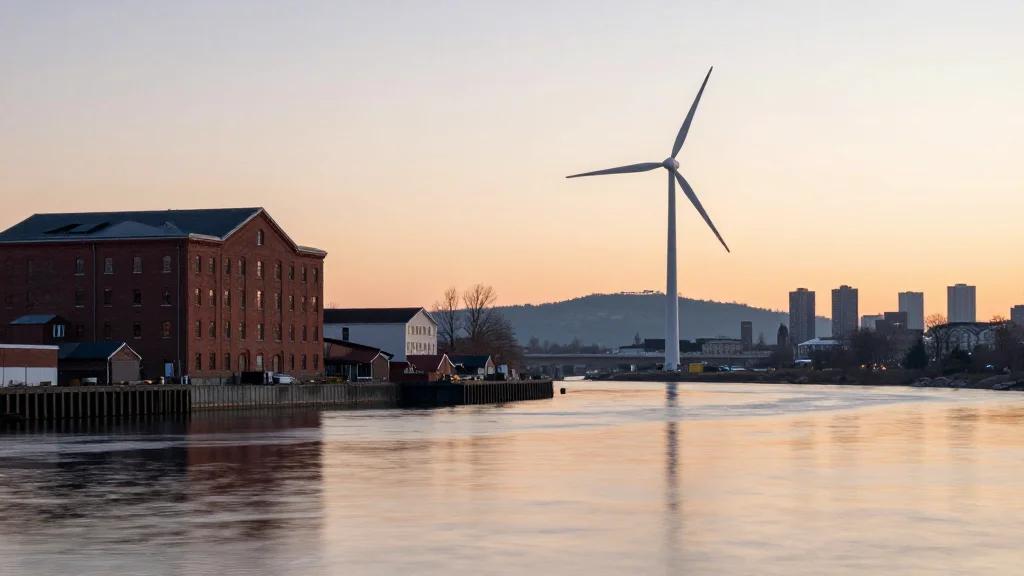
The City Of Providence, Rhode Island Is Ready To Decarbonize
Why It Matters
The revolving fund creates a self‑sustaining financing engine that accelerates Providence’s climate‑resilience agenda while reducing utility costs and carbon emissions. It positions the city as a regional leader in municipal decarbonization and demonstrates a scalable model for other U.S. municipalities facing shrinking federal support.
Key Takeaways
- •Providence launches $3 M green revolving fund for municipal decarbonization.
- •Fund targets rooftop solar, electrification, and energy‑efficiency upgrades.
- •City aims for net‑zero emissions in municipal buildings by 2040.
- •22 electrification projects cover 1.2 M sq ft, 22% of portfolio.
- •Energy use fell 7% since 2020, saving $3.2 M in incentives.
Pulse Analysis
Providence’s climate‑resilience push builds on a century‑long legacy of industrial contamination, from PFAS‑laden waterways to Superfund sites. By establishing a green revolving fund, the city adopts a financing model that recycles savings from energy‑efficiency projects back into new initiatives, a strategy proven in European municipalities and increasingly adopted in U.S. cities. This approach aligns with the broader shift toward circular capital structures that reduce reliance on volatile federal grant pipelines, especially as the current administration scales back climate programs.
The $3 million seed capital will be drawn from the city’s capital improvement budget and administered by the Department of Sustainability. Early projects focus on rooftop solar installations at park maintenance facilities and electrification of municipal HVAC systems, leveraging the fund’s requirement that each investment generate measurable cost reductions. So far, Providence has completed 22 electrification projects covering 1.2 million square feet, secured $3.2 million in utility incentives, and installed 1.4 MW of on‑site renewable capacity that will supply roughly 5% of municipal electricity demand. These milestones have already cut energy consumption by 7% across city‑owned buildings, providing a solid performance baseline for the revolving fund’s repayment cycle.
If successful, Providence’s model could become a template for mid‑size American cities seeking climate leadership without steady federal funding. The fund’s emphasis on equity—targeting projects that benefit historically disadvantaged neighborhoods—addresses criticism that market‑based climate tools often bypass environmental‑justice communities. As other municipalities observe Providence’s progress toward its 2040 net‑zero target, the green revolving fund may catalyze a wave of locally financed decarbonization efforts, reshaping how cities fund sustainable infrastructure nationwide.
The City Of Providence, Rhode Island Is Ready To Decarbonize
Comments
Want to join the conversation?
Loading comments...