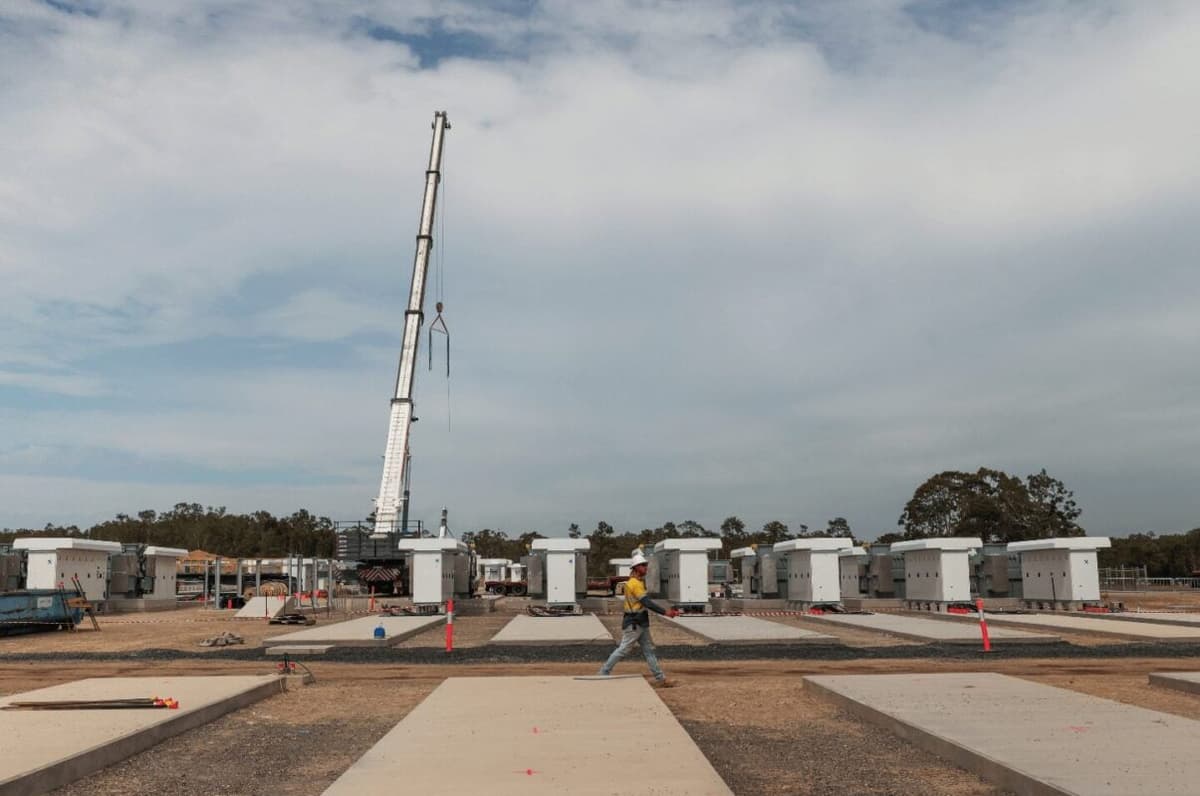
‘The Cost Declines in Lithium-Ion Tech Provide Very Attractive Pricing’: ASL on NSW’s Recent 12GWh LDES Tender
•February 12, 2026
0
Why It Matters
The shift to lithium‑ion storage lowers system costs and accelerates Australia’s renewable transition, while providing long‑term revenue certainty that attracts capital.
Key Takeaways
- •12 GWh lithium‑ion awarded, outcompeting pumped hydro
- •ASL levels playing field via cost‑adjusted 20‑year battery life
- •Long‑duration contracts provide 14‑year revenue certainty
- •NSW aims 42 GWh storage by 2034, 30 GWh secured
- •Flexible tender schedule boosts investor confidence
Pulse Analysis
Lithium‑ion battery costs have fallen dramatically, reshaping the economics of long‑duration energy storage (LDES) in Australia. By applying a technology‑agnostic framework that spreads a battery’s 20‑year lifespan over a 50‑year cost horizon, ASL demonstrates that modern BESS can deliver lower levelised costs than traditional pumped hydro. This methodological shift not only reflects the rapid price trajectory of lithium‑ion cells but also reduces upfront capital risk, making batteries a compelling option for large‑scale grid support.
New South Wales’ aggressive storage roadmap—30 GWh already contracted and a 42 GWh target by 2034—relies on predictable, long‑term contracts such as LTESAs that guarantee cash flow for up to 14 years. These contracts mitigate financing uncertainty and enable developers to secure debt on favourable terms. The clear procurement plan and the ability to adjust tender volumes in response to market signals further enhance investor confidence, positioning NSW as a benchmark for other jurisdictions seeking to integrate flexible, cost‑effective storage.
Looking ahead, the upcoming Energy Storage Summit Australia will spotlight hybrid generation concepts and evolving revenue models, underscoring the sector’s momentum. As tender rounds in 2026 and 2027 potentially expand beyond the current 12 GWh allocations, stakeholders will watch for additional cost reductions and policy tweaks that could accelerate deployment. The convergence of cheaper lithium‑ion technology, robust contractual frameworks, and collaborative industry forums signals a decisive move toward a more resilient, low‑carbon Australian grid.
‘The cost declines in lithium-ion tech provide very attractive pricing’: ASL on NSW’s recent 12GWh LDES tender
0
Comments
Want to join the conversation?
Loading comments...