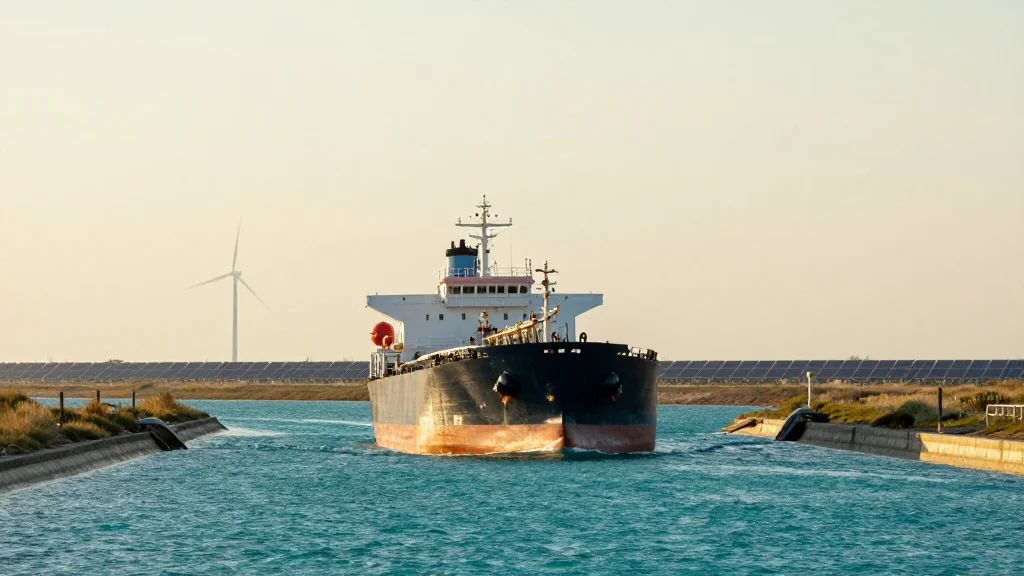
The Global Energy Supply in a Decade ‘Is Not a World We’re Going to Recognize’
Why It Matters
Disruptions to a key oil route amplify energy‑security risks and accelerate the shift toward renewables, directly influencing climate‑policy timelines and investment strategies worldwide.
Key Takeaways
- •US-Iran conflict threatens Strait of Hormuz, a key oil route
- •Diversified renewables boost resilience against energy shocks, experts say
- •Global emissions must drop 13.4% annually to hit net‑zero, per RFF
- •Solar electricity growth exceeds 35% yearly, outpacing forecasts
- •Natural‑gas demand could rise 56% above 2024 levels by 2050
Pulse Analysis
The escalating geopolitical tension between the United States and Iran has highlighted the fragility of the Strait of Hormuz, through which roughly 20% of global oil passes. A prolonged closure would force nations to rethink strategic petroleum reserves and accelerate investments in alternative supply chains. Energy analysts see this as a catalyst for policy reforms that prioritize energy diversification, especially as the cost curve for renewables continues to steepen.
Resources for the Future’s Global Energy Outlook 2026 underscores that the window for limiting warming to 1.5 °C is rapidly closing. Modeling from the IEA, ExxonMobil and other groups converges on a stark figure: emissions must decline by about 13.4% each year to meet net‑zero pathways. The report notes that the 2020 pandemic‑induced 5% drop was an outlier, and without sustained reductions, the projected peak in emissions around 2030‑35 will lock in higher temperatures.
Despite these challenges, solar power emerges as a bright spot, with generation expanding over 35% annually—far outpacing even the most aggressive forecasts. This surge is driven by falling panel costs, supportive policy frameworks, and scaling of utility‑scale projects. Conversely, natural‑gas consumption is projected to rise up to 56% above 2024 levels by mid‑century, raising concerns about methane leakage. The juxtaposition of rapid solar growth and expanding gas use illustrates the complex transition landscape, where energy security, climate ambition, and geopolitical risk intersect. Stakeholders must balance short‑term reliability with long‑term decarbonization to navigate the coming decade.
The Global Energy Supply in a Decade ‘Is Not a World We’re Going to Recognize’
Comments
Want to join the conversation?
Loading comments...