The Global Floating Wind Industry Flexes Its Muscles (Including California, Too)
Why It Matters
Floating wind offers a scalable path to meet deep‑water offshore targets, unlocking new revenue streams and accelerating decarbonization for both the U.S. and the broader market. The emerging cross‑border collaborations strengthen supply chains and reduce technology risk, positioning participants as leaders in the next wave of renewable energy.
Key Takeaways
- •California targets 25 GW of offshore wind, focusing on floating turbines
- •Norway and Japan partner to accelerate floating wind technology validation
- •Ming Yang joins Norwegian Offshore Wind, boosting China‑Europe supply chain ties
- •California‑Denmark MoU aims to combine clean‑tech innovation and resilience
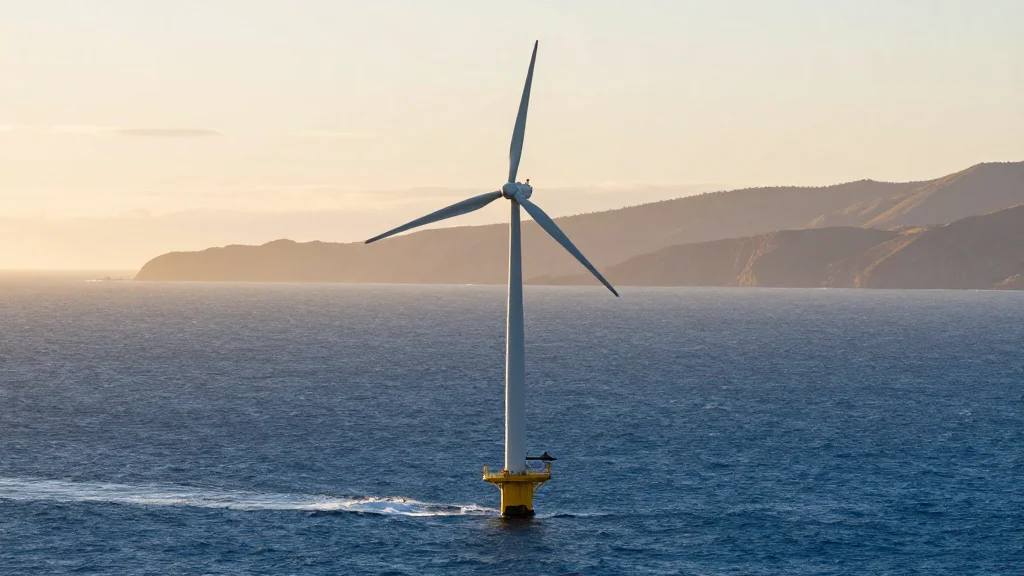
- •Floating platforms enable deep‑water sites unsuitable for fixed monopiles
Pulse Analysis
The United States is witnessing a resurgence in floating offshore wind, driven largely by California’s aggressive 25‑gigawatt target. Deep‑water coastal zones, which are unsuitable for traditional monopile foundations, can now host turbines on buoyant platforms tethered to the seabed. This technology not only expands the viable offshore acreage but also aligns with California’s broader climate agenda and its desire to become a global clean‑energy hub. By leveraging federal research investments from the early 2000s, the state is converting past R&D into commercial projects, attracting both domestic innovators and foreign partners.
Internationally, the floating‑wind sector is coalescing around strategic alliances. Norway’s partnership with Japan’s FLOWRA aims to standardize testing protocols at the METCentre, accelerating technology validation and supply‑chain development. Simultaneously, China’s Ming Yang Smart Energy has secured membership in the Norwegian Offshore Wind (NOW) consortium, signaling a deliberate push to embed Chinese manufacturing within European projects. These collaborations create a multinational ecosystem that shares risk, harmonizes standards, and speeds up deployment, making floating wind a truly global industry.
For investors and policymakers, the convergence of state‑level ambition, cross‑border cooperation, and advancing technology translates into a compelling growth narrative. Floating wind projects promise higher capacity factors in deep‑water regions, opening new markets beyond the shallow‑water sites that dominate current offshore capacity. As California partners with Denmark and other innovators, the U.S. is poised to rebuild a domestic supply chain that can compete internationally. The momentum suggests that, regardless of federal policy swings, the floating wind market will continue to expand, delivering gigawatts of clean power and substantial economic opportunities through jobs, manufacturing, and export potential.
The Global Floating Wind Industry Flexes Its Muscles (Including California, Too)
Comments
Want to join the conversation?
Loading comments...