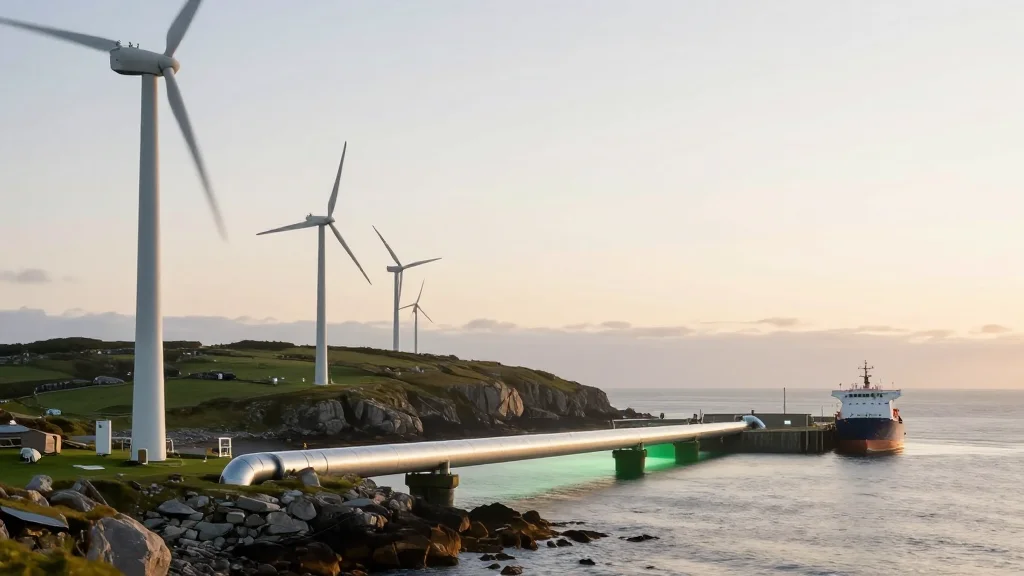
The Hydrogen Stream: Ireland’s LCOH on Par with Morocco, Brazil
Companies Mentioned
Why It Matters
Ireland’s competitive LCOH positions it as a viable European hydrogen exporter, reinforcing the continent’s shift toward clean‑fuel supply chains. The parity with low‑cost producers underscores the economic viability of renewable power‑to‑X projects in mature markets.
Key Takeaways
- •Ireland’s green hydrogen cost €160‑205/MWh, pipeline to Rotterdam.
- •Costs match Morocco, South Africa, Brazil despite slightly higher range.
- •Strong wind, policy support, skilled workforce boost Ireland’s export potential.
- •Europe’s hydrogen demand drives pipeline routes to Netherlands and Germany.
- •Thyssenkrupp nucera orders jump 119% to €391 M, signaling market growth.
Pulse Analysis
The Fraunhofer ISE‑ESB study introduces a data‑driven framework that quantifies Ireland’s levelised cost of hydrogen (LCOH) against traditional export hubs. By modeling the full supply chain—from wind‑farm generation through electrolysis to delivery in Rotterdam, Duisburg and Stade—the researchers demonstrate that Irish green hydrogen can compete on price while offering lower carbon intensity. This analysis validates Ireland’s renewable energy roadmap, which envisions a substantial expansion of offshore wind capacity to meet both domestic demand and export ambitions.
Beyond raw cost parity, Ireland benefits from a confluence of strategic factors. Robust wind regimes deliver high capacity factors, while the Irish government’s clear policy signals—including tax incentives and grid‑flexibility mandates—reduce investment risk. The study identifies pipeline transport as the most cost‑effective export method, leveraging existing North Sea infrastructure to reach the European hydrogen market swiftly. Such logistical advantages, combined with a skilled workforce and a stable regulatory environment, position Ireland to become a key node in the continent’s hydrogen value chain, potentially supplying fuel for industry, transport and power generation.
The Irish findings resonate within a broader global surge in hydrogen activity. Australia’s Arena program is advancing large‑scale projects, France’s Qair is rolling out commercial refuelling stations, and Estonia’s Elcogen is scaling solid‑oxide electrolyser production. Meanwhile, Germany’s thyssenkrupp nucera reported a 119% rise in new orders, reflecting heightened corporate demand. Together, these developments signal a maturing market where cost‑competitiveness, infrastructure readiness, and policy support converge to accelerate the transition to a low‑carbon economy.
The Hydrogen Stream: Ireland’s LCOH on par with Morocco, Brazil
Comments
Want to join the conversation?
Loading comments...