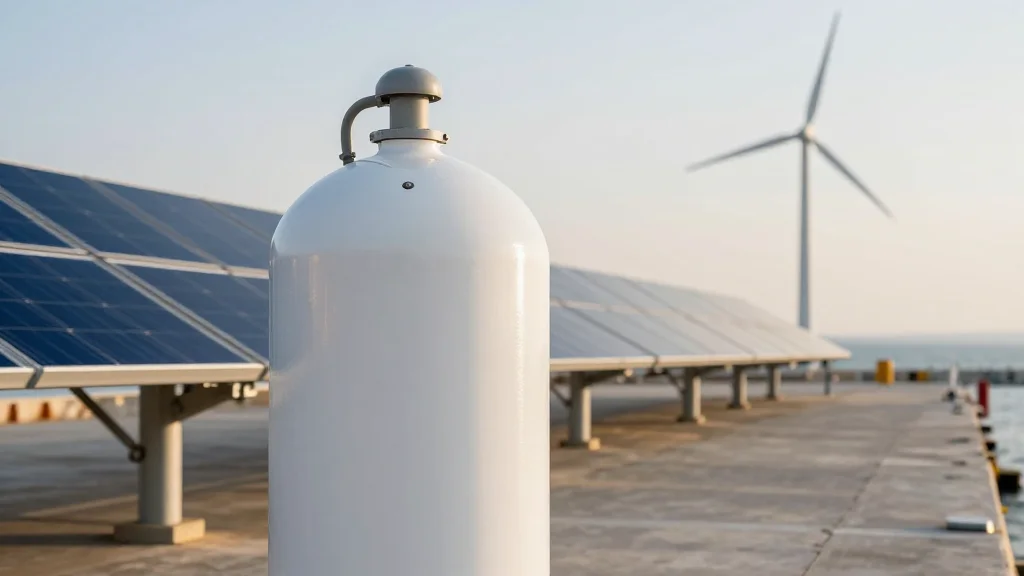
The Hydrogen Stream: Levelized Cost of Hydrogen at Mediterranean Ports Can Be as Low as €2.5/kg for Hybrid Systems
Companies Mentioned
Why It Matters
These cost projections make hydrogen competitive with fossil fuels for maritime and aviation applications, accelerating the energy transition in a region critical to European trade. The accompanying commercial roll‑outs and EU backing signal a rapid scaling of low‑carbon fuel infrastructure.
Key Takeaways
- •LCOH at Mediterranean ports as low as $2.9/kg in hybrid setups
- •Solar delivers 18‑24% capacity factor; wind reaches ~30% at select sites
- •Jaze New Energy builds 300k‑ton green H₂‑to‑fuel plant in China
- •ITM Power teams with Rheinmetall for Europe‑wide 5‑7k‑ton e‑fuel hubs
- •Ceres solid‑oxide stack promises 30% higher efficiency than low‑temp electrolysis
Pulse Analysis
The University of Naples Federico II’s new analysis quantifies the economics of hydrogen generation at key Mediterranean gateways. By integrating high‑resolution GIS, meteorological data and renewable‑energy modelling, the researchers demonstrate that fully renewable electrolyser operations would cost between $6.5 and $10.1 per kilogram, while hybrid configurations that draw on grid power can drop to $2.9 per kilogram in optimal locations. Solar photovoltaic installations emerge as the most reliable energy source across all ports, delivering 18‑24% capacity factors, whereas wind turbines can outperform solar where local wind regimes are strong, reaching near‑30% capacity factors.
Parallel to these findings, the industry is witnessing a cascade of capital‑intensive projects that could translate low‑cost hydrogen into commercial reality. China’s Jaze New Energy is investing roughly $521 million to construct a 300,000‑ton green hydrogen‑to‑aviation‑fuel facility that blends agricultural residues with wind power. In Europe, ITM Power has sealed a strategic deal with Rheinmetall to supply electrolyser modules for the Giga PtX network, targeting 5,000‑7,000 tonnes of e‑fuel per plant across the continent. Meanwhile, Ceres unveiled a solid‑oxide electrolyser stack operating at 450‑630 °C, promising a 30% efficiency uplift over conventional low‑temperature units, and Sunfire introduced a prefabricated 50 MW alkaline electrolyser that cuts installation time and cost. The EU’s latest PCI list, featuring 100 hydrogen projects, further cements regulatory momentum.
The convergence of low production costs, breakthrough electrolyser technologies, and robust policy frameworks positions hydrogen to become a cornerstone of the decarbonisation agenda, especially for sectors like shipping and aviation that are hard to electrify. As Mediterranean ports adopt hybrid renewable‑grid mixes, they can offer competitively priced, low‑carbon fuel to vessels navigating one of the world’s busiest trade corridors. This cost trajectory, combined with scaling of e‑fuel hubs and ammonia import infrastructure, suggests a rapid expansion of the hydrogen value chain, potentially reshaping global energy markets within the next decade.
The Hydrogen Stream: Levelized cost of hydrogen at Mediterranean ports can be as low as €2.5/kg for hybrid systems
Comments
Want to join the conversation?
Loading comments...