The U.S. Is Using an Iranian Smuggling Tactic to Sneak Oil Out of the Gulf
Companies Mentioned
Why It Matters
By bypassing Iran’s restrictions, the U.S. helps sustain global oil supplies and stabilizes prices, while exposing the risks of clandestine maritime logistics. The tactic also signals a shift in how the United States counters sanctions‑evasion strategies employed by adversaries.
Key Takeaways
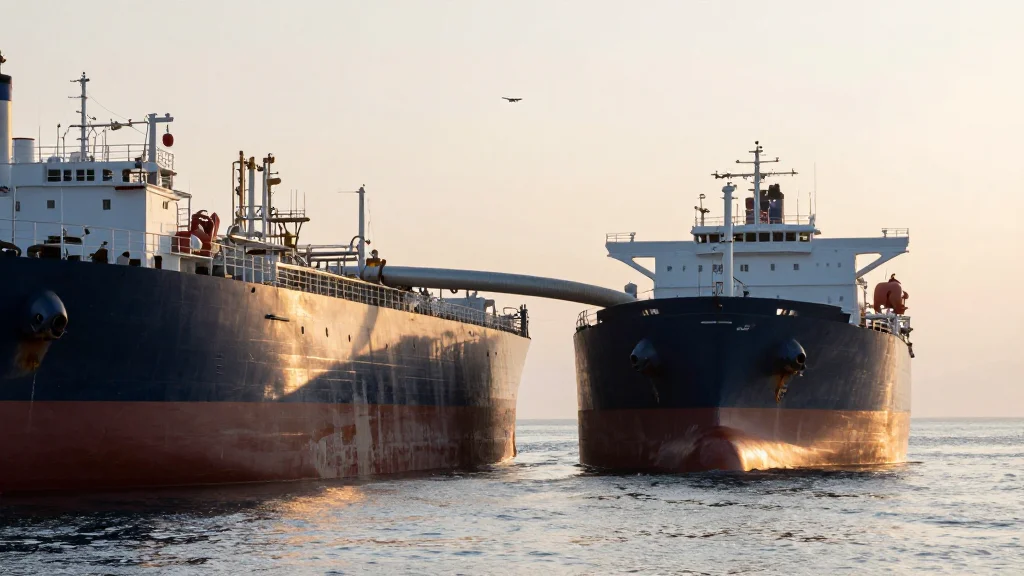
- •U.S. runs covert ship‑to‑ship oil transfers near Strait of Hormuz
- •Over 90 ships moved ~90 million barrels since early May
- •Operations use drones, helicopters, and disabled transponders for stealth
- •UAE’s ADNOC and Kuwait Oil Tanker Company are primary participants
Pulse Analysis
The Strait of Hormuz, a chokepoint through which about 20% of world oil passes, has been effectively sealed by Iran following the February 2026 conflict. Traditional tanker routes were halted, prompting a scramble for alternative pathways to avoid a supply shock. In response, the United States adopted a technique pioneered by Tehran: low‑profile, ship‑to‑ship transfers conducted just outside the strait’s jurisdiction. This approach allows crude to be moved from smaller regional tankers onto Very Large Crude Carriers (VLCCs) that can then navigate around the blockade, preserving export volumes for Gulf producers.
The logistics chain is highly technical and risky. U.S. forces coordinate aerial surveillance via drones and helicopters, while participating vessels switch off AIS transponders and dim lights to evade detection. Transfer pairs linger for 24‑40 hours, creating a narrow window for loading and unloading. Compliance checks are handled by a U.S. naval office in Bahrain, requiring detailed ownership disclosures and cargo verification. Though the operation avoids direct naval escort, the lack of standard reporting raises collision hazards, especially at night. Industry players such as Greece‑based Dynacom and Kuwait Oil Tanker Company have signed on, but they must accept heightened operational uncertainty and potential Iranian retaliation.
Strategically, the covert network serves multiple purposes. It cushions global markets from a sudden oil shortfall, curbing inflationary pressure that would follow a full strait closure. At the same time, it demonstrates Washington’s willingness to employ adversary playbooks, blurring the line between conventional force projection and covert logistics. While the volume—roughly 90 million barrels to date—is modest compared with pre‑war daily flows, the precedent could reshape maritime risk management and sanction‑evasion countermeasures for years to come.
The U.S. is using an Iranian smuggling tactic to sneak oil out of the Gulf
Comments
Want to join the conversation?
Loading comments...